





Description
Product Introduction
The FIFE CDP-01-MH is a legacy web guiding control assembly used in material-handling equipment to maintain alignment during unwinding, processing, and rewinding. It is associated with moving-sensor center-guiding applications and is relevant to paper converting, film processing, printing, and metal-strip handling systems.
Its value lies in maintaining the original control architecture without forcing an immediate system redesign. However, the suffix matters: the CDP-01 family includes different configurations, and the correct replacement depends on the installed controller, signal amplifier, sensor arrangement, actuator type, and application-specific software settings.
Key Technical Specifications
The CDP-01-MH is a configuration-specific controller. The general FIFE CDP-01 manual documents the controller family, while surplus listings identify the MH model as a discontinued 120 VAC web tracker control assembly. Confirm the exact unit nameplate and supplementary documentation before purchasing.
| Parameter | Technical Specification |
|---|---|
| Manufacturer | FIFE |
| Model | CDP-01-MH |
| Product category | Web guiding control assembly |
| Control function | Moving-sensor center guiding |
| Operating voltage | 120 VAC reported by surplus supplier; verify nameplate |
| Frequency | 50/60 Hz documented for the CDP-01 family |
| Power consumption | 210 VA documented for the general CDP-01 family; confirm MH configuration |
| Sensor interface | Compatible FIFE sensors; exact configuration must be verified |
| Actuator interface | Configuration-dependent electromechanical or hydraulic guiding equipment |
| Control modes | Automatic, manual, and servo-center functions documented for the CDP-01 family |
| Firmware and configuration | Application-specific software, matrix setup, and state-machine identifiers |
| Product status | Discontinued; surplus or repair options may be available |
Sources:
Important specification note: Do not treat the general CDP-01 family specifications as a complete CDP-01-MH electrical drawing. Verify the exact voltage, motor output, signal-amplifier revision, connector assignments, and application-specific firmware against the unit documentation.
Application Scenarios & the “Trench” Experience
A web guide failure rarely happens at a convenient time. A rewinder may be running a full production order when the web begins drifting toward one edge. Operators slow the line, adjust tension, and check the sensor. Nothing changes. If the controller has failed, every minute spent troubleshooting without a compatible spare adds to scrap risk and production downtime.
The CDP-01-MH is relevant to legacy web-guiding installations where its specific moving-sensor configuration is required.
- Paper converting — Rewinder alignment — Maintains web position during winding, helping prevent telescoping rolls and uneven edges when the controller, sensor, and actuator are correctly configured.
- Flexible packaging — Film processing — Supports lateral web-position control for plastic films passing through rollers and converting stations.
- Printing — Web registration and material tracking — Works within a guiding system that must maintain material alignment as the substrate moves through the machine.
- Metal processing — Strip handling — Can support compatible guiding arrangements used to maintain strip position during recoiling and material transfer.
- Textile manufacturing — Continuous web handling — Applies to compatible equipment where lateral movement can cause wrinkles, edge damage, or downstream alignment problems.
These are application areas for web-guiding systems, not a guarantee that every machine in these industries accepts the CDP-01-MH. Compatibility depends on the installed hardware and control configuration.
Field replacement scenario
Consider a converting line that stops maintaining web center after its existing controller develops an internal fault. The maintenance team checks sensor output and actuator movement, then confirms that the controller is no longer responding correctly.
The plant has two practical options: repair the existing unit or source a compatible replacement. A matching CDP-01-MH can reduce the scope of the intervention, but only if its voltage, application software, signal amplifier, and actuator configuration match the installed system.
Before authorizing shipment, the maintenance lead compares the original nameplate, model suffix, serial number, and software identifiers against the proposed spare. After installation, the team checks actuator direction, sensor calibration, guide-point settings, and automatic operation before returning the line to production.
The practical lesson: Fast shipping helps only when the replacement is electrically and functionally compatible. A mismatched controller can turn a straightforward repair into a longer outage.
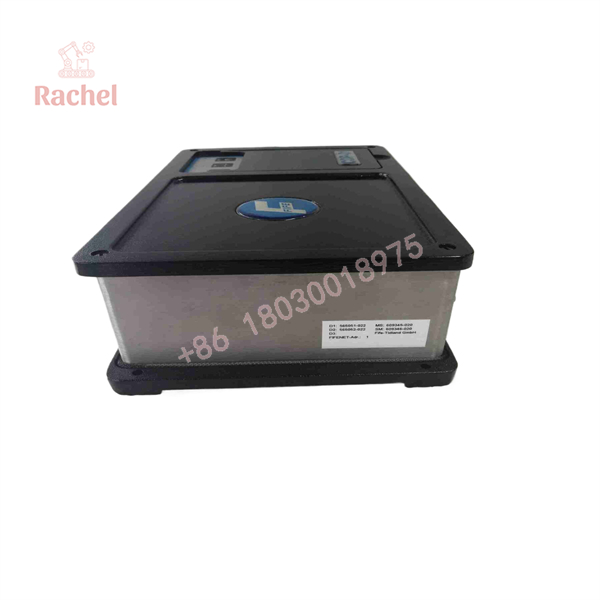
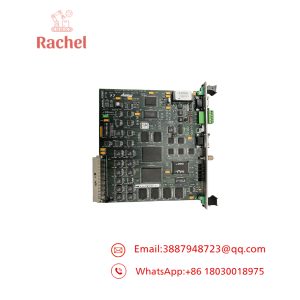
CDP-01-MH
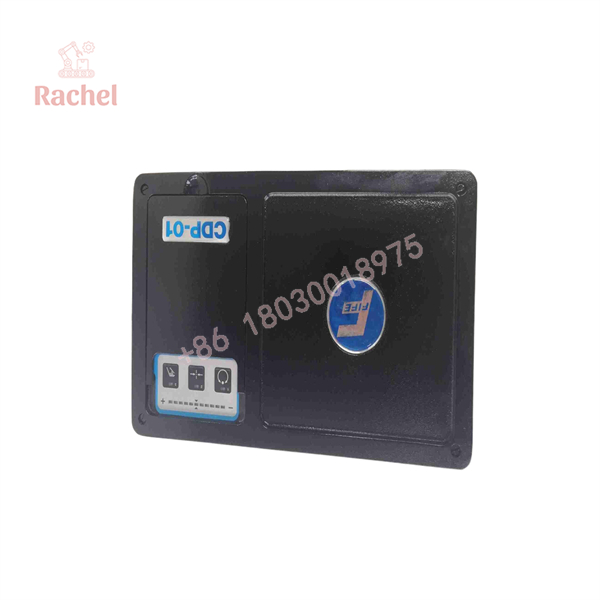
CDP-01-MH
Transparency SOP: Quality Assurance & Testing
For a discontinued controller, the inspection process should establish both physical condition and functional compatibility. The following is the recommended acceptance procedure for a CDP-01-MH. It should not be interpreted as confirmation that a particular seller has completed these tests.
1. Inbound Inspection
- Photograph the nameplate, serial number, model suffix, and enclosure.
- Inspect seals, connector pins, terminal blocks, and signs of previous repairs.
- Record corrosion, impact damage, missing covers, and unauthorized modifications.
- Treat labels and seals as supporting evidence, not conclusive proof of authenticity.
2. Live Functional Testing
- Power the unit using the voltage specified on its nameplate.
- Check startup behavior, front-panel controls, and available status indicators.
- Verify sensor inputs and actuator outputs on a suitable test setup.
- Confirm that the test reproduces the required application configuration; a power-on check alone is insufficient.
3. Electrical Checks
- Inspect the power input, connectors, protective earth, and relevant internal components.
- Measure electrical parameters against the applicable service documentation.
- Use insulation-resistance testing only when authorized by the OEM procedure and appropriate for the connected electronics. Applying a megohmmeter indiscriminately can damage electronic circuits.
4. Firmware and Configuration Verification
- Record the firmware revision, matrix setup number, and state-machine number where applicable.
- Compare these identifiers with the original controller and application-specific documentation.
- Verify signal-amplifier compatibility and any configuration-specific requirements before approving the spare.
5. Final QC and Packaging
- Document test results and any limitations.
- Separate tested, repaired, and untested inventory in the sales record.
- Use antistatic protection where appropriate, secure the connectors, and package the assembly against impact and moisture.
- Include the applicable warranty terms and return conditions.
Purchasing recommendation: Request a written test report tied to the unit’s serial number. If the supplier claims the controller was tested on a live FIFE system, ask which sensor, actuator, and configuration were used.
The Veteran’s Tech Trap Guide
⚠️ Trap 1: Assuming Every CDP-01 Variant Is Interchangeable
The CDP-01 family includes multiple variants, including MM, MH, and MHH configurations. Similar front panels or enclosure dimensions do not establish functional equivalence. Match the complete model designation and application-specific documentation before ordering.
❗ Trap 2: Getting the Supply Voltage Wrong
The general CDP-01 documentation describes 115/230 VAC selection, while a surplus listing identifies the CDP-01-MH as 120 VAC. Do not assume that a selector setting, internal transformer, or previous modification matches your installation. Check the nameplate and wiring documentation first. Disconnect the supply before opening the enclosure.
⚠️ Trap 3: Overlooking Firmware and Application Settings
Record the matrix setup, state-machine identifier, and firmware revision before removing the original controller. The supplementary documentation identifies application-specific software part numbers and notes a signal-amplifier firmware requirement for certain configurations. Do not apply that requirement indiscriminately to every CDP-01 installation.
❗ Trap 4: Restarting Without Checking Guide Direction
A replacement may power up normally while the guide responds in the wrong direction or hunts around the setpoint. Photograph the wiring and existing settings before removal. During commissioning, verify sensor polarity, actuator direction, guide-point calibration, system gain, and mechanical travel limits with the web stopped.
Frequently Asked Questions
Q1. Is the FIFE CDP-01-MH discontinued?
Yes. Industrial surplus supplier Radwell lists the CDP-01-MH as discontinued by the manufacturer. Repair services and residual inventory may still be available, but stock levels and condition vary.
Q2. Can I replace my existing CDP-01-MH without changing the system wiring?
Not without verification. Compare the complete model number, supply voltage, connector assignments, sensor type, actuator arrangement, and application-specific software identifiers. A replacement that fits mechanically may still be incompatible electrically or functionally.
Q3. Is the CDP-01-MH hot-swappable?
Do not treat it as a hot-swappable module. The FIFE installation manual directs technicians to remove power before connecting or disconnecting cables and before installing the controller. Isolate the supply and follow the machine’s lockout/tagout procedure before replacement.
Q4. Can the firmware be upgraded or copied from the original controller?
Do not assume that firmware can be transferred or upgraded in the field. The documented CDP-01 configuration uses application-specific software identifiers. Obtain the applicable supplementary manual and confirm the available programming or service procedure with the OEM or a qualified repair provider before changing any configuration.
Q5. Is a refurbished or surplus CDP-01-MH reliable enough for production use?
It can be a practical option for maintaining legacy equipment, provided the unit passes appropriate functional tests and matches the installed configuration. However, a visual inspection or basic power-on test does not establish long-term reliability. Ask for the unit’s condition classification, test report, repair history if available, and written warranty terms.
Q6. Does the product come with a 12-month warranty?
A 12-month warranty should be confirmed in writing with the seller. Warranty coverage depends on the supplier and the item’s condition; it should not be assumed to be an original FIFE factory warranty. Verify coverage for repair, replacement, return shipping, and failures discovered during commissioning.
Q7. Why can a surplus CDP-01-MH cost less than buying directly from the OEM?
Discontinued equipment is often sold through independent surplus channels rather than current OEM production. Pricing can reflect inventory age, condition, testing scope, warranty coverage, and availability. A lower price does not by itself prove that a unit is counterfeit or defective, and a higher price does not guarantee authenticity. Ask for traceable identification, clear condition disclosure, and a documented return policy.

 Start Chat


