





Description
3. Product Introduction & Engineering Value
The relay inside a FIELDVUE digital valve controller is easy to overlook until it’s the reason a valve won’t respond correctly — and getting the relay type wrong is one of the most common mistakes in DVC6200 maintenance, because “single-acting” and “reverse” both have to match the actuator, not just the controller model.
The 38B5786X092 is Fisher’s Relay B: a single-acting reverse relay, standard bleed, built specifically into the DVC6200/DVC6205 pneumatic block. Per Fisher’s own documentation, Output B pressure is used for double-acting and single-acting reverse applications — as the input signal decreases, the relay increases drive pressure to the nozzle, and output pressure responds accordingly. This is a direct-fit OEM part, not a generic pneumatic relay, and it needs to match the actuator’s failure-mode requirement exactly.
4. Technical Specifications
Descriptive parameters (verified against Fisher/Emerson documentation):
- Relay designation: Relay B (single-acting, reverse) — printed on a label affixed to the relay body
- Bleed type: Standard bleed (not the low-bleed variant, which carries a separate part number)
- Compatible controllers: FIELDVUE DVC6200 series, DVC6205
- Application type: Single-acting reverse — used where output pressure decreases as input signal decreases (opposite convention from Relay A/C)
- Zero Power Condition (ZPC): Determined by relay type — confirm the actual failsafe direction (valve open or closed on loss of power) against your specific actuator and relay combination before installation
- Physical scope: Relay assembly including shroud/cover components (per parts documentation)
- Housing compatibility: Housing A/B configurations exist per actuator type (Housing B used for GX actuator, Housing A for others) — confirm which housing your controller uses
- Part number family: Related but distinct part numbers exist for double-acting (Relay A), single-acting direct (Relay C), low-bleed, and extreme-temperature variants — do not substitute across these without verification
5. Field Application & The “Trench” Experience
Illustrative scenario — not a specific reported incident:
A common failure mode in the field: a DVC6200 stops responding correctly after a relay replacement, and troubleshooting reveals the tech installed a Relay A (double-acting) or Relay C (single-acting direct) instead of the required Relay B (single-acting reverse). Because these relays are physically similar and mount into the same pneumatic block, the mismatch isn’t always obvious on sight — it shows up as a valve driving in the wrong direction relative to the setpoint, or failing to seat correctly on loss of signal. The fix is confirming the relay type against the actuator’s actual fail-safe requirement, not just re-ordering “a DVC6200 relay.”
Specific application scenarios:
- Control valve fail-closed applications on a Fluid Catalytic Cracking Unit slide valve, where the reverse-acting relay’s failure direction must match the safety requirement exactly
- Compressor anti-surge valve actuators, where a wrong-direction relay swap can create a dangerous surge condition rather than the intended protective response
- Steam letdown valve control on utility systems, where standard-bleed (versus low-bleed) selection affects both response speed and air consumption in continuously modulating service
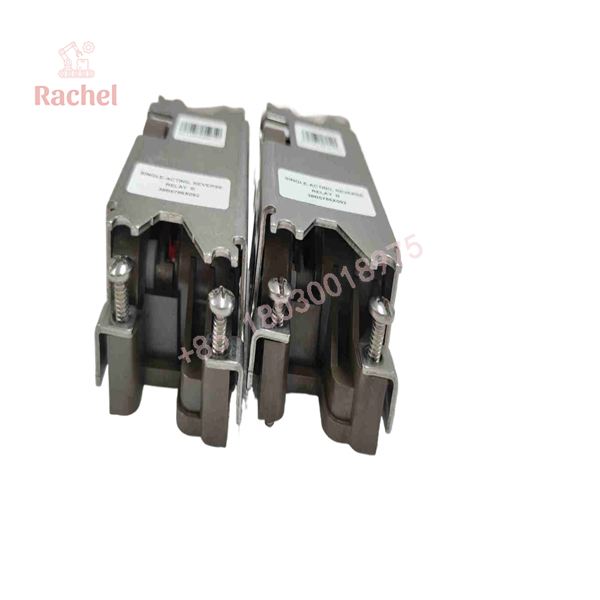
38B5786X092
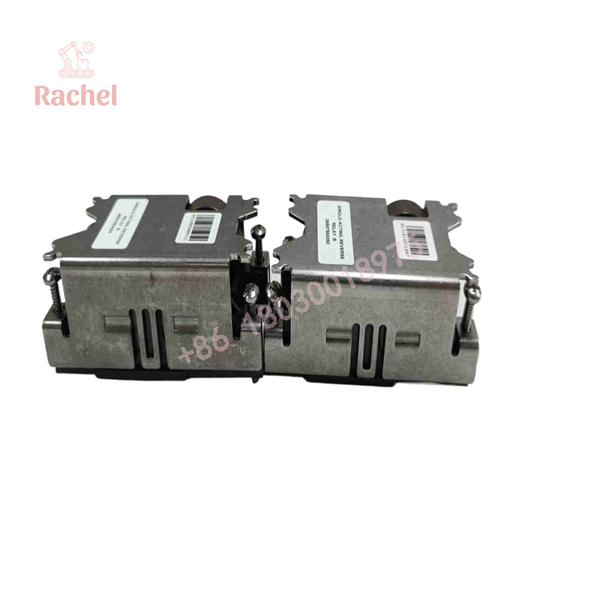
38B5786X092
6. Transparency SOP: QA & Testing
Generic verification framework for surplus/refurbished pneumatic relay assemblies like this:
- Label and part number verification — confirm the relay type designation (A/B/C) and bleed classification match the physical label on the unit before shipment, since these details are easy to mis-stock
- Visual inspection — check for cracked housings, degraded O-rings, and corrosion on pneumatic ports
- Bench pressure test — verify the relay responds correctly to input signal changes and produces the expected output pressure direction (critical given the direction-sensitive nature of Relay B)
- Documentation match — confirm compatibility notation (DVC6200/DVC6205) is included with shipment
(General framework — replace with your actual documented QA process where it differs.)
7. The Veteran’s Tech Trap Guide
⚠️ Relay type is not interchangeable, ever. Relay A (double-acting), Relay B (single-acting reverse), and Relay C (single-acting direct) are not drop-in substitutes for each other, even though they physically mount the same way. Installing the wrong type changes your valve’s response direction and its zero-power failure position — this is a safety-relevant mistake, not just a performance one.
⚠️ Standard bleed vs. low bleed matters for air consumption and response time, and the label is often the only way to tell them apart at a glance. Confirm before ordering, especially in installations with limited instrument air capacity.
PRO TIP: Zero Power Condition (ZPC) — whether the valve fails open or closed when power is lost — is determined by the combination of relay type and actuator spring arrangement, not by the relay alone. Verify the actual failsafe behavior on the bench before commissioning, don’t assume it from the relay label alone.
⚠️ Housing compatibility (A vs. B) differs by actuator type, with Housing B specifically used for GX actuators. Don’t assume housing interchangeability across actuator families.
8. Dynamic FAQ
Q: Is this relay compatible with both DVC6200 and DVC6205?
Yes — per Emerson/Fisher documentation, this part number is used with both DVC6200 and DVC6205 digital valve controllers.
Q: What’s the difference between Relay B and Relay A or C?
Relay B is single-acting reverse — output pressure decreases as input signal decreases. Relay A is double-acting, and Relay C is single-acting direct (opposite response direction from Relay B). They are not interchangeable.
Q: Is this the low-bleed version?
No — 38B5786X092 is the standard-bleed variant. A separate part number exists for the low-bleed version; confirm which your application requires.
Q: What warranty applies to used/surplus stock of this part?
Varies by seller — some resellers list multi-year warranties on repaired stock; confirm the specific term at time of purchase rather than assuming a standard.
Q: Is this part still available new from Emerson, or only as surplus?
Some listings note this part as discontinued by the manufacturer, with current availability primarily through surplus, repair, and OEM-parts channels — confirm current status with your supplier.
Q: Does installing this relay require recalibration of the DVC6200?
Per Fisher’s instruction manual, a relay change generally prompts a relay adjustment step during calibration (particularly noted for double-acting relays) — follow the DVC6200 calibration procedure for your specific relay type after installation.

 Start Chat


