





Description
Product Introduction
The Force Computers PowerCore 6604E is a 6U VMEbus Single Board Computer (SBC) built on the PowerPC 604e RISC processor architecture. Widely deployed across defense, aerospace simulation, telecommunications, and heavy industrial automation, the 6604E delivers real-time computational throughput for legacy VMEbus racks.
What made the PowerCore 6604E an industry staple was its balanced integration of high-speed processor execution, low-latency memory access, and dual PCI Mezzanine Card (PMC) expansion capabilities. It provides a seamless bridge between traditional VMEbus backplane systems and high-throughput PCI-based I/O expansion, enabling field upgrades without replacing whole rack backplanes.
Key Technical Specifications
| Parameter | Value / Specification |
| Part Number | PowerCore 6604E |
| Processor | PowerPC 604e RISC CPU |
| Form Factor | 6U VMEbus (Single-slot width) |
| Bus Interface | VME64 (IEEE 1014 / ANSI/VITA 1-1994) |
| System Memory | Onboard ECC DRAM (Configurable sizes up to 256MB) |
| Flash Memory | Onboard Boot Flash / NVRAM |
| Expansion Slots | Dual PMC (PCI Mezzanine Card) Slots |
| Front Panel I/O | 10/100 Ethernet (RJ45), RS-232/422 Serial Ports, Abort/Reset |
| Operating Systems | VxWorks, LynxOS, PSOS+, Real-Time Linux |
Application Scenarios & The “Trench” Experience
Picture this: It’s 3:00 AM at a power plant or radar tracking site, and an old VME rack drops off the control network. The main processor card has failed due to capacitor degradation after 15 years of non-stop operation. Re-engineering the control system to modern VPX or x86 architecture requires months of recertification, software porting, and millions in capital expenditure. Dropping in a tested surplus PowerCore 6604E board, setting the onboard jumper block, and flashing the existing VxWorks image gets the system back online by morning.
- Aerospace & Defense Simulation: – Flight Training Motion Control – Executes complex kinematic calculations in real-time over VMEbus backplanes.
- Power Generation & Substation Automation: – Grid Monitoring & Data Acquisition – Process multi-channel sensor telemetry with low latency and high deterministic timing.
- Radar & Signal Processing Systems: – Target Acquisition Processing – Handles high-bandwidth data passing via installed PMC digital signal processing modules.
Transparency SOP: Quality Assurance & Testing
We don’t just ship boxes; we test them on actual VMEbus backplanes. Every PowerCore 6604E card passes a rigorous 5-step test protocol before shipment:
- Inbound Physical Inspection: Inspection of overall board health, solder joint condition, backplane P1/P2 connector pins, and thermal heatsink attachment.
- Cold-Resistance & Power Rail Checks: Resistance testing on board power inputs to ensure no short circuits exist before energizing.
- Live Rig Power-On & POST: Card installation into a powered 6U VME chassis to monitor Power-On Self-Test (POST) output via serial console.
- VMEbus Handshake & Memory Stress: Running full diagnostic memory passes and backplane arbitration tests to verify DMA transfers and interrupt handling.
- Anti-Static (ESD) Packaging: Sealed in static-shielding bags with custom foam encapsulation to safeguard sensitive silicon during transit.
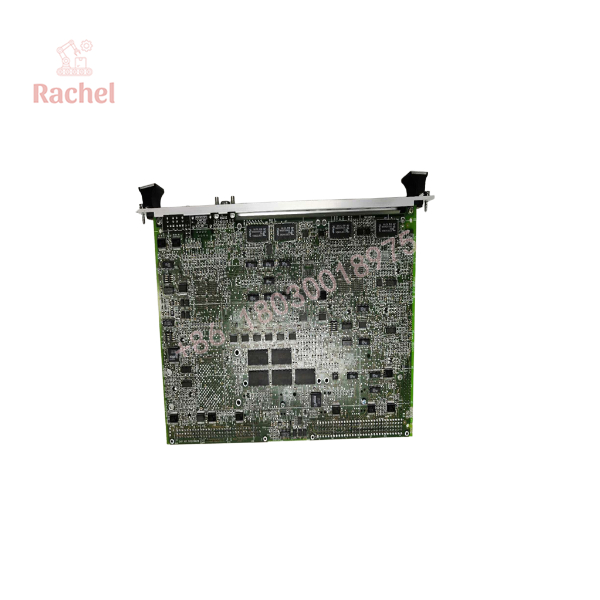
PowerCore 6604E
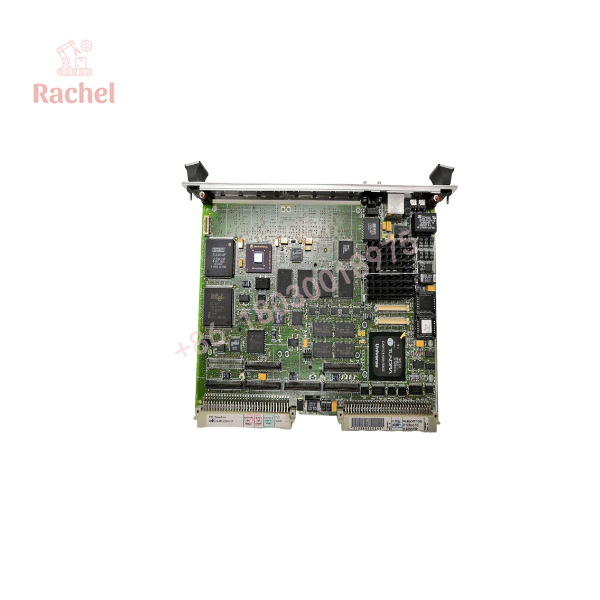
PowerCore 6604E
The Veteran’s Tech Trap Guide (Crucial Value-Add)
- ⚠️ Match Board Jumper Configuration Before Installing! The PowerCore 6604E relies heavily on onboard DIP switches and jumpers to set boot source, VMEbus system controller mode (Slot 1 vs. Expansion), and serial port signaling. If you drop a replacement card in without copying the exact jumper positions from the failed unit, your VMEbus may fail to arbitrate or boot.
- ❗ Watch Out for PMC Standoff Alignment: When transferring existing PMC daughtercards to the replacement 6604E, verify mounting standoff heights. Flexing the board while tightening PMC screws can stress surface-mount PCI connector solder joints, leading to intermittent bus faults under vibration.
- ⚠️ Back Up NVRAM Settings Immediately: The onboard NVRAM stores critical boot parameters and network configuration. Old NVRAM batteries can lose charge over time, causing lost boot paths after a power cycle. Take a screen dump of your terminal console settings before commissioning.
Frequently Asked Questions (FAQ)
Q: Is the PowerCore 6604E a drop-in replacement for earlier 603/604 boards?
A: In most cases, yes, provided your application software and OS BSP (Board Support Package) support the PowerPC 604e execution pipeline. Check your VxWorks/LynxOS image build parameters before swapping.
Q: Does the 6604E support hot-swapping in a live VME backplane?
A: No. Standard VMEbus connectors do not support live insertion. Removing or inserting the card while 5V/12V power is applied to the backplane can destroy the VME interface chips and ruin adjacent cards.
Q: Can I run standard Linux on the PowerCore 6604E?
A: Yes, provided you use a PowerPC 32-bit compilation targeted for PPC 60X processors with appropriate serial/Ethernet drivers, though most industrial users deploy VxWorks or LynxOS.
Q: What is the purpose of the dual PMC slots?
A: PMC slots allow you to add custom high-speed interfaces—such as MIL-STD-1553, ARINC 429, extra Ethernet ports, or fieldbus modules—directly onto the SBC without taking up an extra VME slot.
Q: Why purchase tested surplus over upgrading the system platform?
A: Complete system redesigns from VMEbus to modern architectures incur massive software re-engineering, hardware re-certification, and downtime costs. Sourcing a fully tested replacement 6604E extends current system lifecycle at a fraction of the cost.

 Start Chat


