





Description
Product Introduction
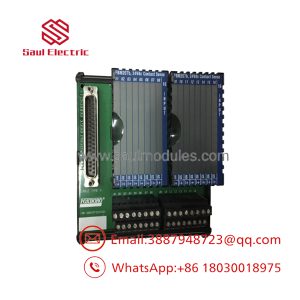
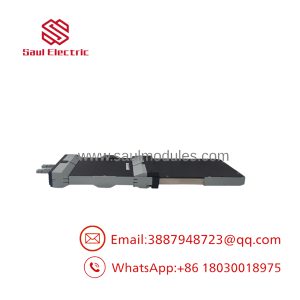
The Foxboro FBM203 (Part Number P0914SV) is an 8-channel high-accuracy RTD input Fieldbus Module engineered for the Foxboro I/A Series and EcoStruxure DCS platforms. Unlike multi-purpose temperature modules that compromise on excitation circuitry to accommodate thermocouples, the FBM203 is dedicated strictly to resistance temperature devices, delivering maximum precision for narrow-span thermal monitoring.
Built to handle critical process temperature loops, the module provides precision current excitation for 2-, 3-, and 4-wire RTD configurations. Onboard 15-bit delta-sigma A/D converters, automated lead-wire resistance cancellation, and heavy-duty channel isolation ensure immune, drift-free temperature measurements in electrically challenging industrial environments.
Key Technical Specifications
| Parameter | Value |
| Manufacturer | Foxboro (Invensys / Schneider Electric) |
| Part Number | FBM203 / P0914SV |
| Series | Foxboro 200 Series Subsystem |
| Input Channels | 8 isolated RTD input channels |
| Supported RTD Types | Platinum (100Ω, 200Ω, 500Ω, 1000Ω), Nickel (120Ω), Copper (10Ω) |
| Wiring Configurations | 2-wire, 3-wire, or 4-wire resistance hookups |
| Resolution | 15-bit A/D conversion |
| Update Rate | 25ms per channel group |
| Galvanic Isolation | Channel-to-bus galvanic isolation |
| Power Consumption | 3W maximum from baseplate power rails |
Application Scenarios & The “Trench” Experience
The Trench Story
It is 01:15 AM at a pharmaceutical batch synthesis facility. A high-value bioreactor jacket temperature loop starts reading erratic 15°C spikes, triggering false cooling commands that threaten to ruin a $200,000 active ingredient run. The field RTD element checks out fine with a multimeter, but channel 4 on an old FBM203 card in the rack room is failing under thermal load due to a drifting internal excitation current source. Swapping the FBM203 card with a bench-tested replacement instantly restores stable RTD excitation and saves the active production batch.
Target Application Scenarios
- Pharmaceutical & Fine Chemical Batching: Monitors tight-tolerance 3-wire Pt100 RTD sensors on jacketed reactors and autoclaves.
- Power Generation Facilities: Interfaces 3-wire or 4-wire RTD elements buried inside motor bearings, turbine casings, and generator stators.
- Food & Beverage Processing: Tracks pasteurization temperatures using high-accuracy 4-wire sanitary Pt100 sensors.
Field Case Study
A LNG processing terminal in Texas experienced open-circuit fault alarms across four compressor bearing temperature channels tied to a Foxboro 200 Series DIN-rail baseplate. Diagnostics confirmed a degraded analog front-end multiplexer on the installed FBM203 card. We overnighted a fully tested P0914SV module to the site. The instrument crew bypassed the bearing trip blocks, swapped the module on the live rack, and confirmed accurate resistance telemetry across all 8 channels in under 20 minutes.
Transparency SOP: Quality Assurance & Testing
We don’t just ship boxes; we test them on actual Foxboro 200 Series racks. Every / P0914SV module undergoes an aggressive 5-point workbench validation prior to dispatch:
- Inbound Visual & Pin Inspection: High-magnification check for PCB discoloration, heat stress around excitation circuit regulators, edge connector wear, and housing latch integrity.
- Cold Resistance & Bus Checks: Cold-resistance profiling on internal power rails and sensor input terminals to eliminate shorted components.
- Live Baseplate Bus Handshake: Module is mounted on a live Foxboro 200 Series baseplate connected to a Control Processor to verify bus communications, module ID, and LED diagnostics.
- 8-Channel RTD Resistance Simulation: Precision decade resistance boxes simulate 2-wire, 3-wire, and 4-wire Pt100 resistance curves (0°C, 50°C, 100°C, and 200°C equivalent) across every channel to verify A/D conversion linearity and lead-wire compensation.
- Anti-Static ESD Packaging: Cleared modules undergo contact cleaning, solvent drying, and are sealed in anti-static ESD shielding bags prior to foam packing.
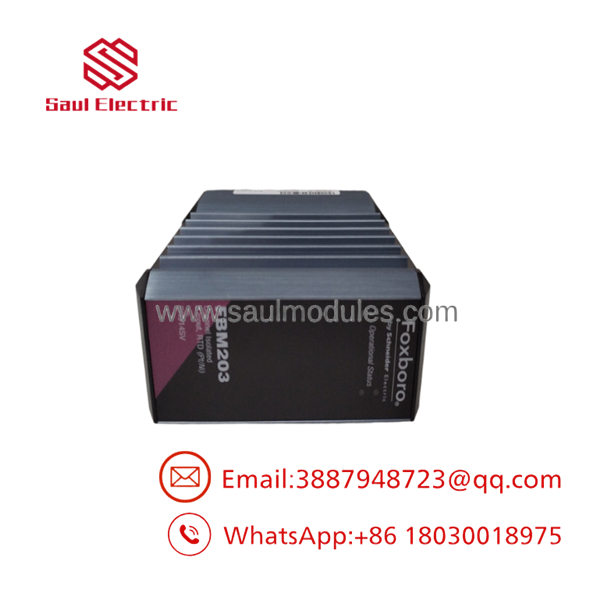
FBM203
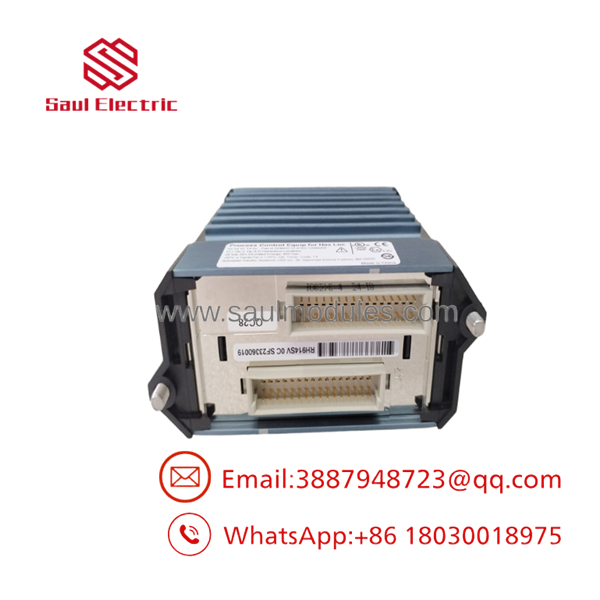
FBM203
The Veteran’s Tech Trap Guide
- ⚠️ Do Not Mix Up FBM202 (TC/RTD Combo) and (Dedicated RTD)!
They look identical from the front, but the is optimized exclusively for resistance elements. Plugging a thermocouple directly into an will not work, as the module expects an active resistance loop rather than a self-generating millivolt signal.
- ❗ Verify 3-Wire Lead-Wire Resistance Balance.
When using 3-wire RTDs, the cancels lead-wire resistance assuming all three conductors have identical wire gauge and length. If one wire has a loose terminal screw or corroded splice, it introduces measurement offsets across that specific channel.
- ⚠️ Confirm Software Block Configuration for RTD Type.
The supports multiple RTD curves (Pt100, Pt1000, Ni120, Cu10). If your field sensor is a Pt100 but the Foxboro DCS block is configured for Pt1000, your readings will off-scale immediately. Always verify software parameters before swapping hardware.
- ❗ Bypass Control Loops Before Hot-Swapping.
While 200 Series baseplates support live module replacement, pulling an will drive all 8 connected temperature blocks to “BAD” status, which can trip downstream interlocks if control loops aren’t bypassed first.
Frequently Asked Questions (FAQ)
Q: Can I hot-swap the Foxboro module while the baseplate is energized?
A: Yes, Foxboro 200 Series baseplates fully support Hot Swap (Live Insertion and Removal). However, ensure all 8 connected temperature control loops are placed in Manual or bypassed in the software prior to extraction.
Q: What is the exact difference between part numbers and P0914SV?
A: “” is the functional model designation used in system documentation, while “P0914SV” is the exact hardware part number stamped on the module casing and internal PCB assembly. They refer to the exact same physical product.
Q: Does the support 2-wire RTD connections?
A: Yes, the supports 2-wire, 3-wire, and 4-wire RTDs. However, 3-wire and 4-wire hookups are strongly recommended for longer field cable runs to automatically compensate for lead-wire resistance drift.
Q: What warranty covers these pre-tested modules?
A: Every / sold carries a full 12-Month Functional Warranty. If the card experiences hardware failure under normal operating parameters within 365 days, we provide an immediate unit replacement or full credit.
Q: Why buy surplus or pre-tested stock instead of ordering directly from the OEM?
A: OEM lead times for mature DCS component replacements can stretch into weeks or months, and factory pricing for older platform hardware is often extremely high. Pre-tested surplus stock allows you to restore critical process lines immediately at a fraction of the cost.

 Start Chat


