





Description
Product Introduction & Engineering Value
The FBM227 combines four individually isolated 0-10 V DC analog inputs, two 0-10 V DC analog outputs, four digital inputs, and four digital outputs in a single module. The analog inputs can be configured for straight voltage measurement or slidewire position sensing. Digital channels support contact sense or voltage monitoring and are isolated in pairs.
What sets the module apart is onboard support for DPIDA (Advanced PID) and MDACT (tri-state discrete raise/off/lower) control algorithms. This allows fast local execution for positioner loops or discrete control without relying solely on the control processor scan. The module mounts on a standard 200 Series baseplate and communicates over the 2 Mbps Module Fieldbus.
Technical Specifications
Analog Inputs: 4 independent channels, –0.2 to 10.2 V DC, 10 MΩ impedance, ±0.025% of span accuracy
Analog Input Modes: DC voltage measuring or slidewire (position) sensing with 10 V excitation
Analog Outputs: 2 independent channels, –0.2 to 10.2 V DC, 2 mA max, ±0.05% of span accuracy, 12-bit resolution
Digital Inputs: 4 channels, isolated in pairs of two, contact sense or DC voltage monitor (up to 130 V DC)
Digital Input Filter: Configurable 4, 8, 16, or 32 ms
Digital Outputs: 4 channels, pair-isolated; external source (up to 60 V DC) or internal 11 V DC 3-wire switching
Local Control Support: DPIDA (Advanced PID) and MDACT (tri-state discrete) algorithms
Isolation: Individual isolation on analog channels; pair isolation on digital channels
Power Requirements: 24 V DC +5% / –10% (redundant)
Operating Temperature: –20 to +70 °C (–4 to +158 °F)
Field Application & The “Trench” Experience
A Gulf Coast chemical plant needed tighter position control on several critical control valves that were still driven by 0-10 V positioners. Existing discrete status and interlock signals also needed to stay on the same module. An FBM227 was installed, the analog outputs wired to the positioners, and the DPIDA algorithm enabled for local PID execution. Digital inputs monitored limit switches and the discrete outputs drove solenoid interlocks. Response time improved noticeably because the control loop no longer waited for the full FCP scan, while all discrete points remained in the same module.
Typical niche applications:
- Local PID position control of 0-10 V valve positioners on a batch reactor with accompanying discrete interlocks
- Slidewire feedback and raise/off/lower discrete control of damper actuators on a fired heater
- Mixed voltage monitoring and discrete switching for motor control centers that still use 0-10 V analog references
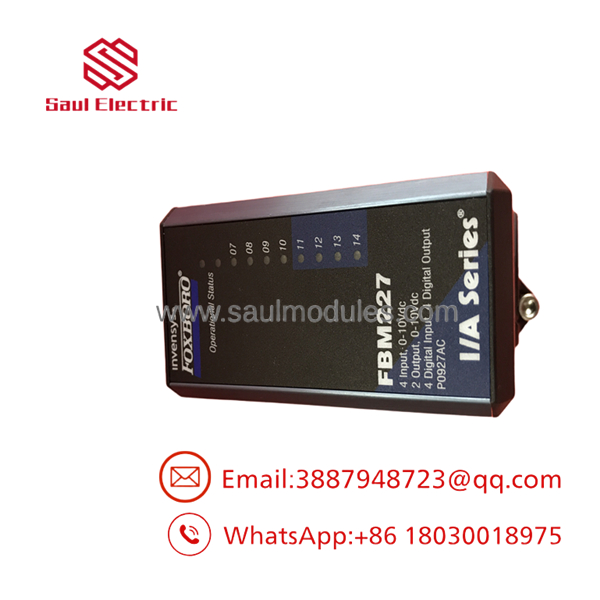
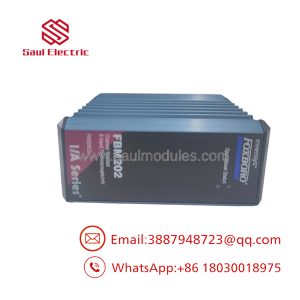
FBM227
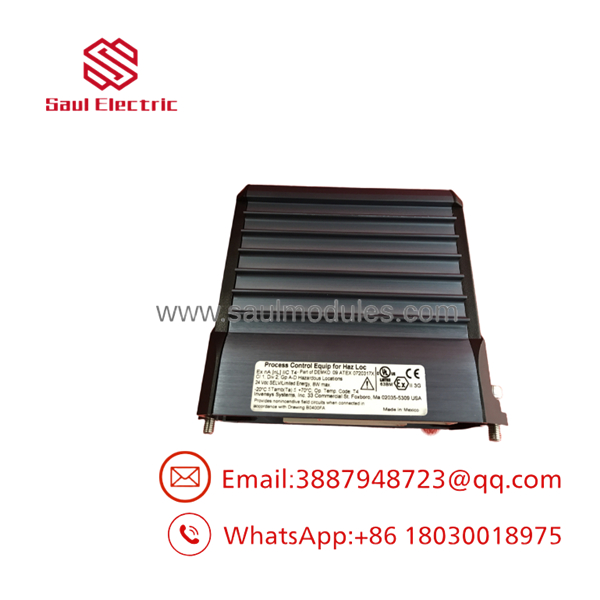
FBM227
Transparency SOP: QA & Testing
Each unit is powered on a dual 24 V supply and verified for Fieldbus communication. All four analog input channels are checked across the 0-10 V range for accuracy and isolation. Both analog outputs are driven through their full span and verified for linearity and settling time. Digital inputs are exercised with contact closure and voltage sources; digital outputs are tested in both external-source and internal-source modes. When the application program supports it, DPIDA and MDACT execution are confirmed. The module then undergoes an elevated-temperature soak while all channels remain active.
The Veteran’s Tech Trap Guide
⚠️ Analog and digital isolation schemes are different. Analog channels are individually isolated; digital channels are isolated only in pairs. Mixing high-voltage digital signals across a pair without checking the Termination Assembly can compromise isolation.
PRO TIP: When using the slidewire (position-sensing) mode, confirm the total resistance of the slidewire is within the 1 kΩ to 100 kΩ range. Outside that window the excitation current and accuracy specifications no longer hold.
⚠️ Local control algorithms require the correct application program. Simply installing the module does not enable DPIDA or MDACT. The proper application program must be loaded and the blocks configured; otherwise the module operates only as conventional I/O.
Dynamic FAQ
Q: What makes the FBM227 different from a standard analog or discrete module? A: It combines 0-10 V analog I/O and discrete I/O in one card and supports local execution of Advanced PID (DPIDA) or tri-state discrete (MDACT) algorithms.
Q: Can the analog inputs be used for both voltage measurement and slidewire feedback? A: Yes. Each of the four analog input channels can be configured for either DC voltage measuring or slidewire position sensing.
Q: What voltage levels do the digital inputs accept? A: The digital inputs support contact sense or DC voltage monitoring up to 130 V DC, depending on the Termination Assembly and configuration.
Q: Is field calibration required? A: No. The module leaves the factory calibrated. No field adjustment of the analog channels is required or possible.
Q: Are New Surplus FBM227 units original Foxboro product? A: Yes. Units are original OEM material that have passed full analog accuracy, digital I/O, isolation, and local-control function testing.
Q: What warranty is provided? A: 12-month warranty against defects in materials and workmanship from the date of shipment for both New Surplus and fully tested refurbished units.

 Start Chat


