





Description
Product Introduction
The Foxboro FBM230 (Part Number P0926GU) is a high-performance 4-port Ethernet communication Fieldbus Module engineered for Foxboro I/A Series and EcoStruxure DCS platforms. While serial modules (like the FBM224) handle legacy point-to-point links, the FBM230 serves as a high-speed subsystem gateway, bringing high-density Ethernet telemetry from third-party PLCs, safety systems (SIS), power distribution centers, and plant historian skids directly into the DCS control database.
Operating over standard 10/100 Mbps Ethernet (RJ-45 via matching Termination Assemblies), the FBM230 supports industrial protocols such as Modbus TCP/IP (Master and Slave) as well as configurable custom Ethernet drivers. Onboard co-processors execute network stack management and cyclic data polling independently, ensuring that high-volume Ethernet traffic never bogs down the host Control Processor (CP).
Key Technical Specifications
| Parameter | Value |
| Manufacturer | Foxboro (Invensys / Schneider Electric) |
| Part Number | FBM230 / P0926GU (RoHS Equivalent: RH926GU) |
| Series | Foxboro 200 Series Subsystem |
| Ethernet Ports | 4 independently addressable Ethernet channels |
| Data Rates | 10/100 Mbps Auto-Negotiating |
| Supported Protocols | Modbus TCP/IP Master/Slave, Allen-Bradley EtherNet/IP (via specific driver), Custom TCP/UDP |
| Isolation Voltage | 1500V AC channel-to-bus and port-to-port galvanic isolation |
| Power Dissipation | 5.0W maximum from baseplate power rails |
| Mounting | Foxboro 200 Series DIN-rail baseplate (P0926KE / RH916AQ or equivalent) |
| Operating Temp Range | -20°C to +70°C (-4°F to +158°F) |
Application Scenarios & The “Trench” Experience
The Trench Story
It is 03:15 AM at a combined-cycle power plant. The main operator station displays an alarming red “COMM FAIL – TURBINE SKID” banner across the DCS graphics. The entire Ethernet link to the third-party steam turbine digital governor went offline. Diagnostics indicate that local power supply noise damaged the Ethernet PHY chip on Port 1 of the installed communication module, dropping the Modbus TCP handshake. The lead C&I tech retrieves a bench-verified FBM230 (P0926GU) replacement from store reserve. Swapping the card on the live rack and reconnecting the Ethernet TA restores the Modbus TCP socket connection in under 8 minutes, clearing the alarm and stabilizing the turbine generation load.
Target Application Scenarios
- PLC Package Integration: Connects large third-party PLC networks (Rockwell/Allen-Bradley, Siemens, Modicon) running Modbus TCP directly to Foxboro Control Processors.
- Electrical Substation & Power Monitoring: Ingests high-density power meter, protective relay, and switchgear metrics over industrial Ethernet links.
- Safety Instrumented System (SIS) Bridges: Interfaces independent burner management (BMS) or fire and gas (F&G) safety panels into the DCS alarm hierarchy without hardwiring hundreds of individual I/O channels.
Field Case Study
A chemical plant in Louisiana experienced severe packet dropouts on an Ethernet link connecting a Foxboro 200 Series rack to a tank farm gauging skid. Network diagnostics pointed to a failing physical transceiver on the installed FBM230 module. We dispatched a bench-tested P0926GU replacement via overnight courier. The site engineer put the Ethernet Equipment Control Block (ECB) into manual bypass, hot-swapped the card on the live baseplate, and re-established error-free 100 Mbps Modbus TCP polling without interrupting plant operations.
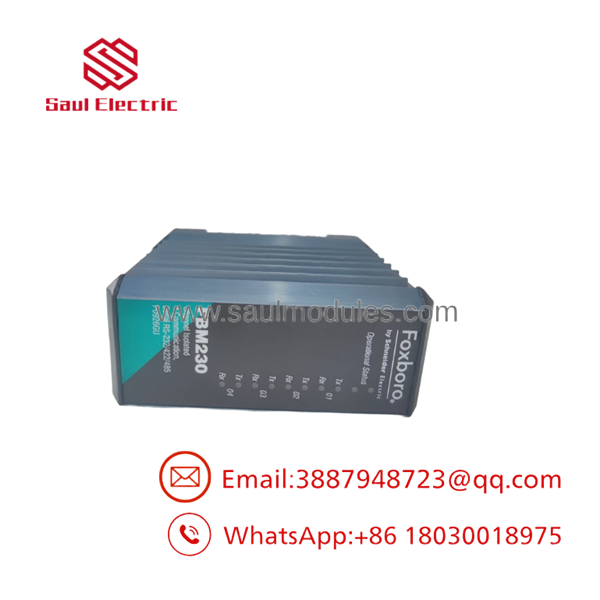
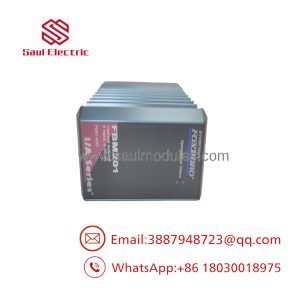
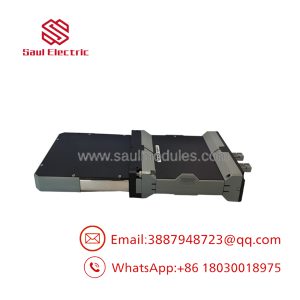
FBM230 P0926GU
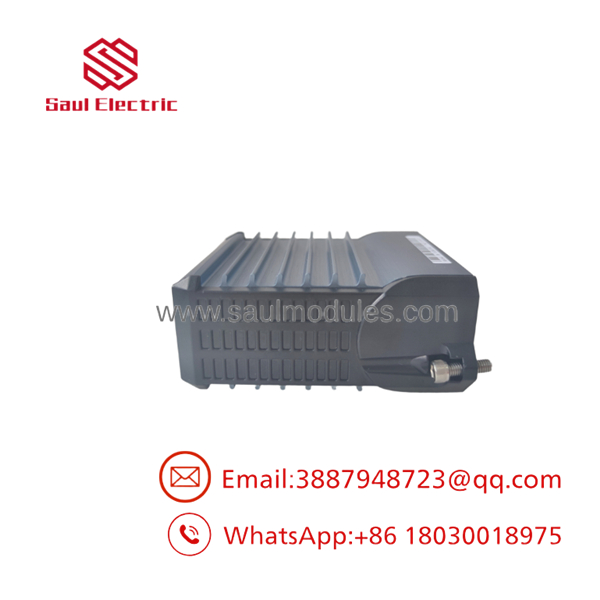
FBM230 P0926GU
Transparency SOP: Quality Assurance & Testing
We don’t just ship boxes; we test them on actual Foxboro 200 Series racks. Every / P0926GU module undergoes a strict 5-stage workbench validation process prior to dispatch:
- Inbound Visual & Mechanical Inspection: Detailed inspection under high magnification to check PCB traces, edge-connector gold plating, housing latch mechanisms, and inspect for thermal degradation around Ethernet PHY transformers.
- Cold Power Rail Diagnostics: Resistance checks across internal bus rails, DC-DC converter stages, and Ethernet transceiver circuitry to rule out shorted components.
- Live Baseplate Bus Handshake: Module is slotted into a live Foxboro 200 Series baseplate connected to a Control Processor to verify bus address recognition, module handshake, and proper LED status routines.
- 4-Port Modbus TCP Loopback & Traffic Test: Dedicated Ethernet simulators and Modbus TCP master/slave scripts connect to all 4 ports simultaneously. We run sustained multi-socket polling tests, verifying zero packet loss, stable socket retention, and correct data register updates in Foxboro I/A system software.
- Anti-Static ESD Packaging: Cleared modules receive solvent contact cleaning, thorough drying, and are sealed in heavy-duty anti-static ESD shielding bags prior to custom foam packaging.
The Veteran’s Tech Trap Guide
- ⚠️ Do Not Confuse (Ethernet) with FBM224 (Serial)!
While both sit in standard 200 Series slots, the uses Ethernet (TCP/IP) protocol architectures via RJ-45 Termination Assemblies, whereas the FBM224 uses RS-232/422/485 serial standards. Inserting an where a serial card is configured will fail system configuration checks.
- ❗ Verify IP Addressing & Subnet Mask Configuration.
Each Ethernet port on the can be configured with distinct IP addresses depending on your network topology. Always double-check system database IP assignments before commissioning a replacement card to prevent duplicate IP conflicts on plant control networks.
- ⚠️ Ensure Correct Termination Assembly (TA) Selection.
The relies on specific Foxboro Ethernet Termination Assemblies (such as P0926HJ or equivalent RJ-45 TAs). Using mismatched or improperly grounded field patch cables can lead to ground loop noise and port communication dropouts.
- ❗ Bypass ECB Driver Blocks Before Hot-Swapping.
While Foxboro 200 Series baseplates fully support Live Insertion and Removal (Hot Swap), pulling an card instantly drops all active TCP/IP sockets across all 4 ports, setting all linked database tags to “BAD” quality status. Always disable or bypass associated Equipment Control Block (ECB) drivers prior to card extraction.
Frequently Asked Questions (FAQ)
Q: Can I hot-swap the Foxboro module while the baseplate is powered?
A: Yes, Foxboro 200 Series baseplates support Hot Swap (Live Insertion and Removal). However, pulling the module terminates all TCP/IP Ethernet connections on all 4 ports immediately. Place all affected ECB device driver blocks into manual bypass prior to extracting the module.
Q: What is the exact difference between part numbers , P0926GU, and RH926GU?
A: “” is the functional model designation used in DCS engineering documentation, “” is the standard Foxboro hardware part number, and “RH926GU” is Schneider Electric’s RoHS-compliant (lead-free) hardware equivalent. and RH926GU are 100% functionally and mechanically interchangeable.
Q: Can each of the 4 Ethernet ports operate on separate network subnets?
A: Yes. Each port on the is an independently configurable Ethernet interface, allowing you to bridge multiple segregated plant subnets or PLC networks into a single DCS module footprint.
Q: What warranty covers these pre-tested modules?
A: Every ( / RH926GU) module sold includes a full 12-Month Functional Warranty. If the card experiences hardware failure under normal operating parameters within 365 days, we provide an immediate unit replacement or full credit.
Q: Why buy pre-tested surplus stock instead of ordering directly from Schneider Electric?
A: Factory lead times for specialized Foxboro 200 Series Ethernet communication modules can stretch into weeks or months, and direct OEM pricing for mature platform hardware is high. Pre-tested surplus stock allows you to restore critical Ethernet subsystem links and PLC gateways immediately at a fraction of the cost.

 Start Chat


