





Description
Product Introduction & Engineering Value
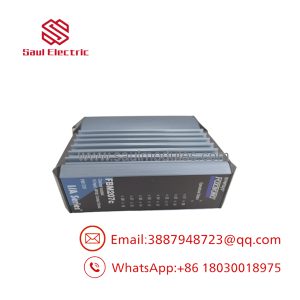
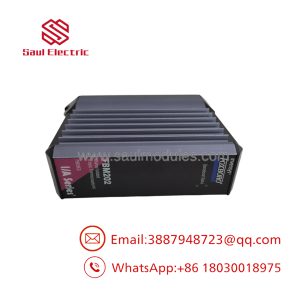
Integrating third-party serial devices into a Foxboro system used to mean custom gateways or limited point counts. The FBM230 solves that by providing four independent serial ports on one module. Each port can be set in software for RS-232, RS-422, or RS-485, so a single card can talk to a mix of point-to-point and multi-drop devices.
Protocol drivers (most commonly Modbus RTU or ASCII) are downloaded from the available library. Device data is mapped into standard DCI blocks and becomes part of the control database. The module mounts on a standard 200 Series baseplate and communicates with the FCP over the 2 Mbps Module Fieldbus. It is the single (non-redundant) version; the FBM231 provides the redundant counterpart.
Technical Specifications
| Parameter | Value |
|---|---|
| Ports | 4 independent serial ports |
| Interface Standards | Software-selectable RS-232, RS-422, or RS-485 per port |
| Baud Rates | 300, 600, 1200, 2400, 4800, 9600, 19200, 38400, 57600, 115200 |
| Max Devices | Up to 64 (16 per RS-485 port) or 4 direct-connect RS-232/RS-422 |
| DCI Connections | Up to 2000 |
| Data Types | 2-byte/4-byte integers, IEEE floating point, binary |
| Power Supply | 24 V DC +5% / –10% (redundant) |
| Power Consumption | 7 W maximum |
| Operating Temperature | –20 to +70 °C (–4 to +158 °F) typical (check revision) |
| Form Factor | Standard 200 Series module |
Field Application & The “Trench” Experience
A Midwest pharmaceutical plant needed to bring data from twelve existing Modbus RTU weigh scales and four RS-232 barcode readers into the Foxboro system without adding external gateways. One FBM230 was installed. Two ports were set to RS-485 for the scales (multi-drop) and two ports to RS-232 for the barcode readers. After loading the Modbus RTU driver and mapping the registers into DCI blocks, all device data appeared in the control database within a single shift. No intermediate PLC or custom code was required.
Typical niche applications:
- Multi-drop Modbus RTU integration of weigh scales, flow computers, or analytical instruments on a batch manufacturing line
- Point-to-point RS-232 connection of barcode scanners, printers, or legacy analyzers into the DCS
- Mixed RS-485 and RS-232 device networks on a packaging or material-handling system where a single module must serve both interface types
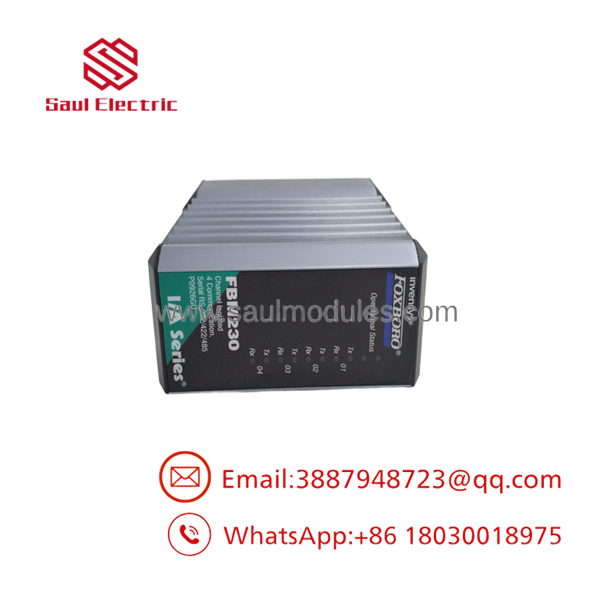
FBM230
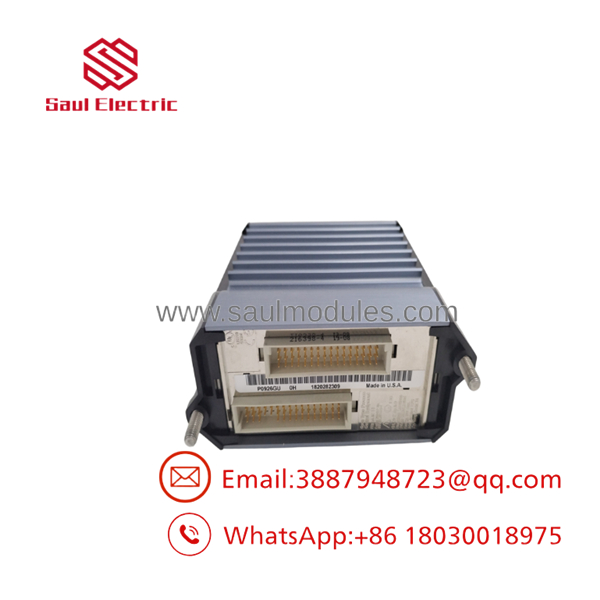
FBM230
Transparency SOP: QA & Testing
- Visual inspection of module housing, connectors, and labeling.
- Power-up on dual 24 V supplies with Fieldbus communication verification.
- Port configuration test: each of the four ports exercised in RS-232, RS-422, and RS-485 modes.
- Communication test with known serial devices or a protocol analyzer at multiple baud rates.
- Driver load and DCI mapping verification using a standard protocol (typically Modbus RTU).
- Extended burn-in while monitoring continuous data exchange and port stability.
The Veteran’s Tech Trap Guide
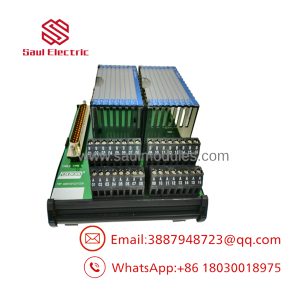
⚠️ Port configuration is software only — but wiring is not. Setting a port to RS-485 in software while the Termination Assembly and field cable are wired for RS-232 will produce no communication. Always match the physical wiring and TA to the software setting.
PRO TIP: On RS-485 multi-drop segments, keep the total device count and cable length realistic for the selected baud rate. Pushing 16 devices at 115200 baud on a long run is a common cause of intermittent CRC errors.
⚠️ Driver version and device register maps must match. An outdated or incorrect protocol driver will connect but return garbage data or fail to map points. Confirm the driver revision against the field device firmware before commissioning.
Dynamic FAQ
Q: What protocols does the FBM230 support? A: Protocol support is provided by downloadable software drivers. The most common are Modbus RTU and Modbus ASCII. Other drivers may be available from the library depending on the system software version.
Q: How many devices can one FBM230 handle? A: Up to 64 devices total when using RS-485 (16 per port) or up to 4 direct-connect devices when using RS-232 or RS-422. Practical limits depend on scan rate and data volume.
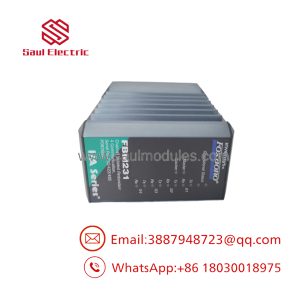
Q: Is the FBM230 redundant? A: No. The FBM230 is the single (non-redundant) version. The FBM231 provides the redundant serial FDSI solution.
Q: Can each port be set to a different interface standard? A: Yes. Each of the four ports is independently configurable for RS-232, RS-422, or RS-485 in software.
Q: Are New Surplus units original Foxboro product? A: Yes. Units are original OEM material that have passed full serial-port, driver, and Fieldbus communication testing.
Q: What warranty is provided? A: 12-month warranty against defects in materials and workmanship from the date of shipment for both New Surplus and fully tested refurbished units.

 Start Chat


