





Description
Product Introduction
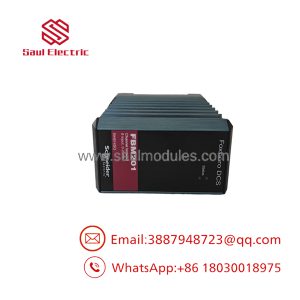
The Foxboro P0926MX is a specialized passive fiber optic Splitter/Combiner Kit engineered specifically for Foxboro I/A Series and Foxboro Evo Distributed Control Systems. Installed within control cabinets housing fault-tolerant Fieldbus Processors (such as FCP270 pairs), this assembly manages the physical splitting and combining of optical signals across redundant controller links.
Unlike active electronic repeaters, the P0926MX relies on pure passive optical prism technology, requiring no external DC power or firmware. By splitting light signals with minimal attenuation, it ensures that both primary and standby control processors receive identical, zero-latency data streams. This tight hardware-level synchronization prevents dropped packets and maintains flawless control logic tracking during seamless controller failovers.
Key Technical Specifications
| Parameter | Value |
| Manufacturer | Foxboro / Schneider Electric |
| Part Number | P0926MX |
| System Compatibility | Foxboro I/A Series & Foxboro Evo (FCP270 Redundant Pairs) |
| Technology Type | Passive Optical Prism (Non-Powered) |
| Optical Media / Wavelength | Multi-mode Fiber (850 nm / 1300 nm typical) |
| Power Requirements | None (100% Passive Optical Pass-Through) |
| Operating Temperature | -20°C to +70°C (-4°F to +158°F) |
| Storage Temperature | -40°C to +85°C (-40°F to +185°F) |
| Relative Humidity | 5% to 95% non-condensing |
| Weight | 0.46 kg (1.01 lbs) |
| Enclosure Shielding | Industrial-Grade High EMI/RFI Immunity Housing |
Application Scenarios & The “Trench” Experience
Picture this: It is 3:45 AM during an intense summer storm at an integrated ethylene plant. High-level electrical noise from a lightning strike nearby creates severe ground potential shifts across the main cabinet line. If your redundant processor synchronization relies on copper or improperly isolated links, the secondary processor misses a heart-beat frame, trips out, and leaves your primary controller running solo with zero backup.
- Ethylene & Petrochemical Refining – Redundant FCP270 Processor Sync – Splitting optical data streams cleanly so primary and backup controllers stay fully synchronized.
- Offshore Oil Platforms – High EMI Cabinet Environments – Providing 100% immune optical signal distribution around high-voltage drive cabinets.
- Nuclear & Thermal Power Stations – Turbine Safety Interlocks – Ensuring zero-latency optical pass-through so failover switching happens instantly without logic delays.
- Pharmaceutical Batch Processing – Critical Bioreactor Controls – Preventing false redundant-pair failovers caused by signal attenuation or data packet jitter.
Field Case Study: Emergency Fiber Swap Prevents Single-Point Controller Failure
A refinery in Louisiana encountered recurring “Standby Processor Offline” diagnostic alerts on an aging I/A Series rack driving their hydrotreater unit. The root cause was severe optical loss through a damaged legacy fiber splitter kit, which was degrading the sync link between the FCP270 pair. Running a critical unit without redundant backup posed an unacceptable risk of a catastrophic plant trip.
We pulled a factory-inspected P0926MX optical kit from inventory and express-couriered it straight to the job site. The site instrument technician replaced the compromised optical block, cleaned the LC/ST fiber connectors, and re-seated the jumpers. Optical attenuation dropped back to factory limits immediately, restoring full dual-redundant health within two hours and averting an unscheduled shutdown.
Transparency SOP: Quality Assurance & Testing
Fiber optics leave no room for error. We treat passive optical hardware with the same rigorous testing standards as complex processor cards before granting a QC pass tag:
- Visual & Microscopic Inspection: Inspect internal prism pathways, external casing alignment, and examine optical ferrule faces under a 400x fiber scope for micro-scratches or oil contamination.
- Optical Attenuation & Loss Testing: Measure insertion loss across all splitter/combiner channels using a calibrated Optical Loss Test Set (OLTS) to verify light transmission matches original OEM specifications.
- Signal Symmetry Check: Confirm that light split ratios between primary and secondary output ports are evenly balanced within tight dB tolerances.
- Mechanical Housing & Latch Checks: Verify fiber mounting points, strain relief boots, and panel brackets to ensure secure installation in active control racks.
- Cleanroom Dust Protection & ESD Packaging: Clean all optical interfaces with lint-free isopropyl swabs, cap all optical ports with protective dust plugs, wrap in anti-static shielding bags, and custom-foam package for shipment.
“We don’t just ship boxes; we test them on actual Foxboro racks.”
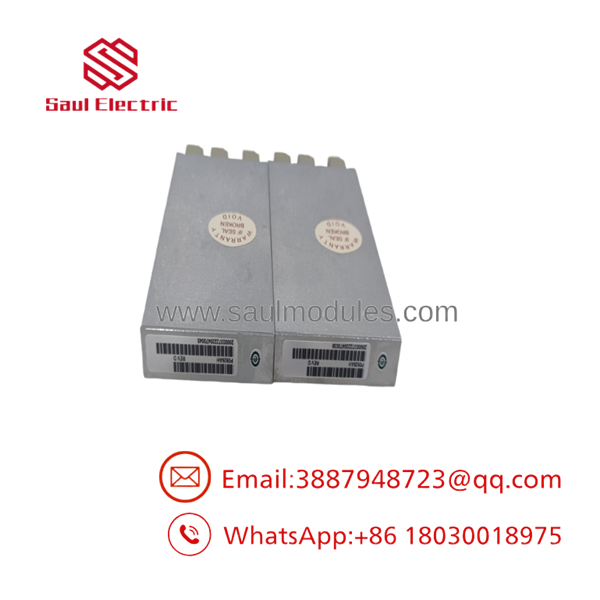
P0926MX
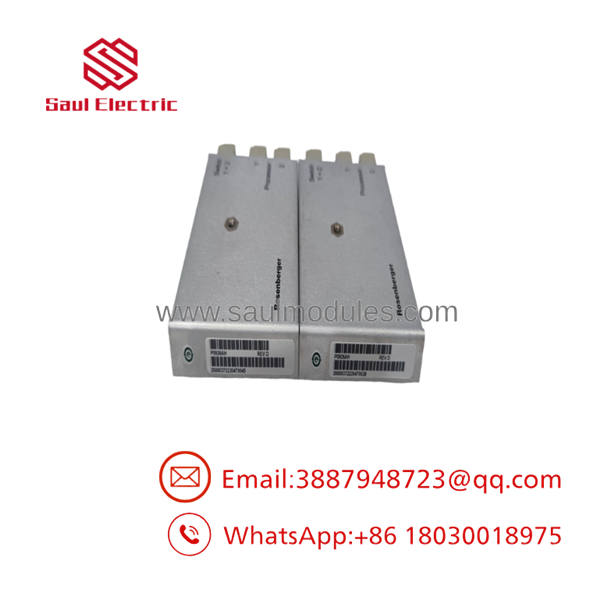
P0926MX
The Veteran’s Tech Trap Guide
- ⚠️ Clean Every Fiber Connector Before Insertion: The single biggest cause of “dead” P0926MX modules is microscopic contamination. A single speck of dust or fingerprint oil on an optical connector ferrule will cause massive light attenuation (high dB loss). Always use a dry optical cleaner cassette or lint-free click-cleaner pen before seating jumpers into the kit.
- ❗ Respect Minimum Fiber Bend Radii: Fiber optic jumper cables routing into and out of the P0926MX splitter must never be pinched or bent sharply. Violating the cable’s minimum bend radius creates micro-bends that bleed light out of the core, causing intermittent synchronization drops between your FCP270 pair.
- ⚠️ Cap Unused Optical Ports Immediately: If a port on the is exposed to ambient air inside a control cabinet, dust will settle on the internal optical surfaces. Keep protective rubber dust caps firmly installed on every open port until the moment you plug in a live fiber patch cable.
- ❗ Never Force Optical Connectors: Optical connectors (ST, LC, SC) align smoothly via keyways. If a fiber jumper resists connection, do not force it. You risk cracking the internal glass prism or damaging the precision alignment sleeve inside the housing.
Frequently Asked Questions (FAQ)
Q: What is the main function of the Foxboro ?
The is a passive optical splitter/combiner assembly that duplicates and routes fiber optic communication signals between redundant Foxboro controllers (such as FCP270 pairs), keeping both processors perfectly synchronized in real time.
Q: Does the require external power or software configuration?
No. The operates 100% passively using high-precision optical prisms. It has no electrical power connections, logic chips, or firmware, making it a completely plug-and-play optical interface.
Q: What causes a optical module to fail?
Because it has no active electronic components, physical failure is rare. Failures almost always stem from dirty/contaminated optical ports, scratched glass surfaces from forced connections, or severe physical damage to the enclosure during cabinet maintenance.
Q: Can I use the with single-mode fiber?
No. The is engineered and optically tuned for multi-mode fiber networks (typically 850 nm / 1300 nm wavelengths) commonly deployed for short-range intra-cabinet processor links in Foxboro DCS architectures.
Q: What warranty coverage do you provide on surplus Foxboro hardware?
All our new surplus and reconditioned Foxboro units include a full 12-month operational warranty. If an assembly experiences a performance fault or fails optical specifications under normal operating conditions within one year, we replace it or issue a full refund.

 Start Chat


