





Description
Product Introduction & Engineering Value
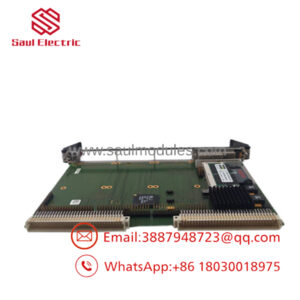
When a substation RTU loses its main processor, every downstream I/O module is affected. The GE D20ME-VME serves as the master controller within the D20/D200 platform, coordinating communications, data acquisition, and control across distributed I/O modules.
Designed for VME-based chassis installations, the D20ME-VME supports multi-processor systems, Ethernet expansion, and external shared memory. It remains a common replacement component in utility substations where long service life and compatibility with existing D20 infrastructure are essential.
Technical Specifications
| Parameter | Specification |
|---|---|
| Manufacturer | GE Grid Solutions |
| Product Model | D20ME-VME |
| Product Family | Multilin D20/D200 |
| Module Type | VME Main Processor |
| Bus Architecture | VME Bus |
| Primary Function | RTU Main Processor and Data Concentrator |
| Serial Interfaces | 7 RS-232 ports (standard D20ME-VME) |
| HDLC Ports | 2 D.20 HDLC communication ports |
| Operating System | Real-time multitasking OS |
| Memory Support | On-board Flash, SRAM, NVRAM plus external VME global memory |
| Expansion Support | Ethernet/Memory Expansion (EME) and VME peripherals |
| Typical Part Number | 526-2005 (D20ME-VME) |
Field Application & The “Trench” Experience
Following a protection system upgrade at a 230 kV transmission substation, operators discovered intermittent communication failures between the SCADA master station and several remote I/O modules. Troubleshooting isolated the issue to the aging D20ME-VME processor. After installing a replacement processor, restoring the system database, and verifying HDLC communications, engineers returned every remote point to service without replacing the existing I/O hardware. The ability to retain the original VME architecture significantly reduced outage time and avoided a complete RTU migration.
Typical applications include:
- Transmission Substation SCADA Master Control
- Utility Distribution Automation RTUs
- Power Generation Switchyard Monitoring and Control
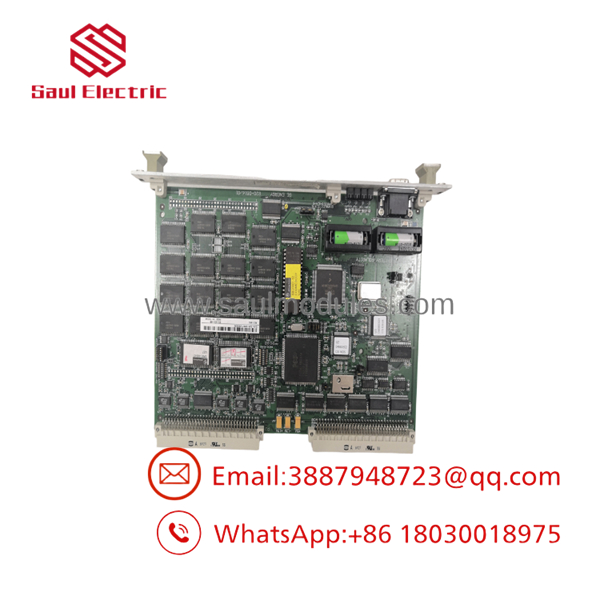
D20ME-VME
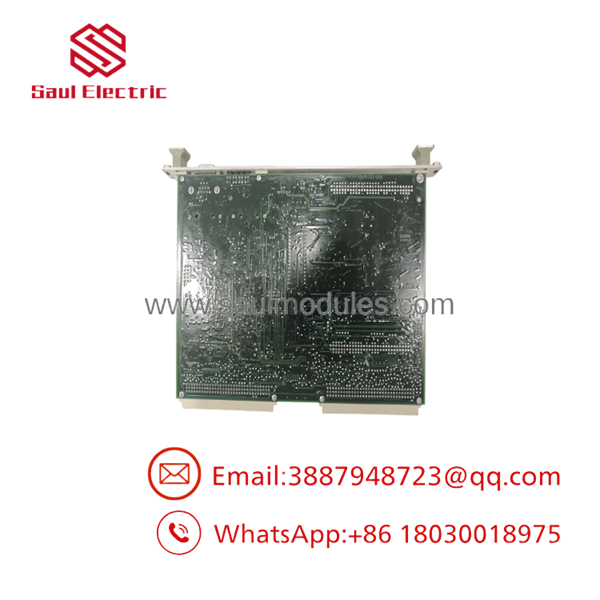
D20ME-VME
Transparency SOP: QA & Testing
Before shipment, every processor follows a documented inspection process:
- Verify the complete part number and hardware revision.
- Inspect the VME connector, PCB, and onboard components for physical damage.
- Confirm processor startup and diagnostic LED operation.
- Test Flash, SRAM, and NVRAM functionality.
- Verify serial communication ports and HDLC interfaces.
- Inspect watchdog circuitry and reset functions.
- Package the module in anti-static materials with protective cushioning for transport.
The Veteran’s Tech Trap Guide
⚠️ Don’t Confuith
The non-VME processor (526-2004) is intended for single-processor D20 systems. The is designed specifically for VME chassis installations supporting shared memory and VME expansion. Installing the wrong version can prevent system startup.
⚠️ Verify Firmware Compatibility
Although modules support both D20 Base and CCU Base firmware, the installed firmware and database must match the existing system configuration before commissioning.
PRO TIP: Before removing the original processor, create a complete backup of the RTU database, communication parameters, and configuration files. Recovering a legacy D20 system without these files can be considerably more time-consuming than replacing the hardware itself.
Dynamic FAQ
Q1. What is the primary role o GE ?
It functions as the main processor of the D20/D200 RTU, serving as the central controller and data concentrator for all connected peripheral I/O modules.
Q2. What is the difference between and ?
The is designed for VME chassis applications requiring external memory and VME-based peripherals, while the stanD20ME is intended for non-VME, single-processor systems.
Q3. the support Ethernet?
Yes. The processor supports Ethernet capability through compatible Ethernet/Memory Expansion (EME) modules installed in the VME chassis.
Q4. Can this processor communicate with legacy D20 I/O modules?
Yes. It is designed to operate as the master controller for D20 peripheral modules through the D.20 communication architecture.
Q5. How are refurbished or New Surplus units tested?
Each unit undergoes identification verification, visual inspection, processor startup testing, communication port verification, memory diagnostics, and connector inspection before shipment.
Q6. Is warranty support available?
Yes. Both New Surplus and professionally refhed modules are available with warranty coverage. Specific warranty terms depend on product condition and inventory availability.

 Start Chat


