





Description
Product Introduction & Engineering Value
The DS200LRPAG2AGF sits in the communications and I/O-processing portion of the Mark V architecture. It is not simply a network interface in the modern Ethernet-switch sense; its role is tied to the Mark V’s dedicated LAN-based control and I/O architecture.
For replacement work, the complete suffix is critical. G2AGF identifies a specific board configuration/revision, so a generic DS200LRPA listing should not be accepted as an automatic substitute.
Technical Specifications
| Parameter | Specification |
|---|---|
| Manufacturer | General Electric |
| Part Number | DS200LRPAG2AGF |
| Series | Mark V DS200 |
| Functional Acronym | LRPA |
| Product Type | LAN I/O Processor Board |
| Board Group | G2 |
| Configuration | A |
| Artwork Revision | F |
| System Family | GE Speedtronic Mark V |
| Application | LAN/I/O processing |
| PCB Format | DS200 control-board assembly |
| Service Category | Legacy turbine-control electronics |
Configuration note
The DS200LRPAG2AGF designation should be recorded exactly as it appears on the PCB. GE DS200 boards use multiple hardware and artwork revisions, and visual similarity between two boards is not sufficient evidence of interchangeability.
Because detailed public documentation for this exact configuration is limited, I would not publish unverified voltage, processor, memory, connector-count, or communication-speed figures as fixed specifications.
Field Application & the “Trench” Experience
A Mark V cabinet develops an intermittent I/O communication problem. Individual field devices test normally, yet the controller occasionally loses expected data.
The maintenance team initially suspects the field I/O. After checking the terminal-side wiring and associated control boards, they isolate the LAN/I/O processing path and identify the installed board as DS200LRPAG2AGF.
The spare-parts coordinator finds another DS200LRPA board in inventory. It looks nearly identical. It is not released for installation because the full G2AGF identification does not match. That decision prevents a common legacy-control mistake: treating a similar PCB as a drop-in replacement without checking the hardware configuration.
Specific application scenarios:
- Mark V LAN-based I/O processing
- Gas-turbine control-system communications
- Legacy turbine I/O cabinet maintenance
- Mark V control-system refurbishment
- Intermittent LAN/I/O diagnostic troubleshooting
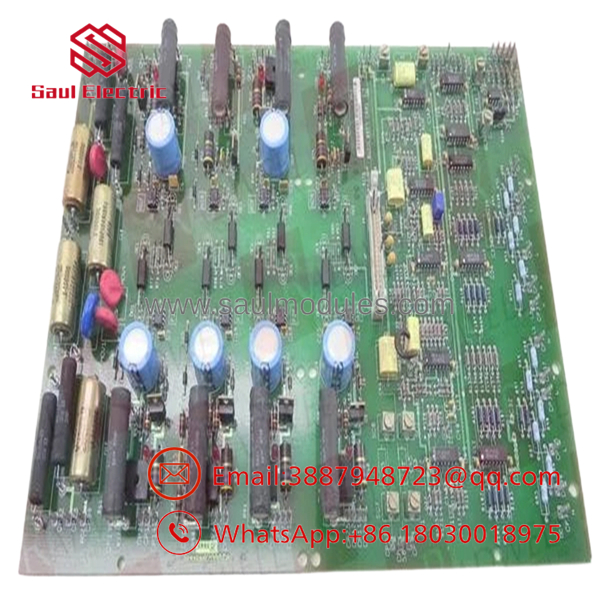
DS200LRPAG2AGF
Transparency SOP: QA & Testing
For DS200LRPAG2AGF, the QA process should emphasize configuration verification and communications testing.
1. Identification
Confirm the complete DS200LRPAG2AGF part number and visible revision markings.
2. PCB inspection
Inspect connectors, integrated circuits, memory devices, oscillator components, solder joints, traces, and signs of thermal or mechanical damage.
3. Configuration comparison
Compare the replacement against the customer’s installed board, including hardware revision and artwork revision.
4. Interface inspection
Check all communication and backplane connections for oxidation, damaged contacts, cracked housings, or mechanical wear.
5. Functional test
Where the appropriate Mark V test environment is available, verify LAN/I/O processing, board diagnostics, and communication behavior.
6. System-level test
After installation, verify expected I/O communication and Mark V diagnostic status before returning the equipment to service.
7. QA documentation
Record actual-unit photographs, part number, revision, test results, condition, and warranty.
For New Surplus, request written confirmation that the board has never been installed or energized. For Refurbished, ask exactly what communication and diagnostic tests were performed.
The Veteran’s Tech Trap Guide
⚠️ Trap #1 — Don’t buy on “DS200LRPA” alone.
The complete G2AGF configuration matters. Similar LRPA boards may not have identical hardware or artwork revisions.
⚠️ Trap #2 — A communication fault isn’t automatically an LRPA failure.
Check the associated LAN path, connectors, cables, terminal/I/O hardware, and control-board diagnostics before replacing the processor board.
⚠️ Trap #3 — Don’t erase the diagnostic trail.
Capture Mark V diagnostic information before removing the original board. An intermittent communication failure can disappear temporarily after a board reseat, leaving little evidence for the next technician.
PRO TIP: Photograph the original PCB before removal and keep the image with the replacement-parts record. For obsolete DS200 hardware, that photograph can be more useful than a generic catalog description.
Dynamic FAQ
Q: What is the GE DS200LRPAG2AGF?
A: It is a GE Mark V DS200 LAN I/O Processor Board, associated with the LRPA functional designation.
Q: Is DS200LRPAG2AGF a network switch?
A: No. It should not be described as a modern Ethernet switch. It is part of the dedicated LAN/I/O processing architecture used by the legacy Mark V control system.
Q: Can another DS200LRPA board replace it?
A: Not without verification. Compare the complete part number, hardware configuration, artwork revision, system application, and applicable GE documentation.
Q: What should be checked before replacing the board?
A: Capture Mark V diagnostics, inspect the communication path, verify connectors and associated I/O hardware, record the installed board configuration, and confirm the replacement’s complete part number.
Q: How do I verify New Surplus authenticity?
A: Request actual-unit photographs showing the full part-number label, confirmation that the PCB has never been installed or energized, and any available original packaging or traceability information.
Q: What should I require for Refurbished stock and warranty?
A: Ask for the refurbishment scope, communication/diagnostic test results, actual-unit photographs, serial and part-number traceability, and written warranty/DOA terms. A generic “tested OK” statement is insufficient for a Mark V communications/I/O processor board.

 Start Chat


