





Description
Product Introduction & Engineering Value
The DS3800HSCG1E1F belongs to the earlier GE Speedtronic control generation used on turbine installations that remain operational decades after their original commissioning. Maintaining these systems requires accurate board-level identification because many DS3800 assemblies have similar physical construction.
For a replacement, the HSCG + G1E1F designation matters. Do not assume that another HSCG board, or even another DS3800 board with a similar connector layout, will provide the same electrical function.
Technical Specifications
| Parameter | Specification |
|---|---|
| Manufacturer | General Electric |
| Part Number | DS3800HSCG1E1F |
| Series | Mark IV Speedtronic |
| Board Family | DS3800 |
| Functional Acronym | HSCG |
| Product Type | Control / Interface Board |
| Configuration | G1 |
| Revision Designation | E1F |
| System Generation | Mark IV |
| Application | GE turbine-control systems |
| PCB Type | DS3800 legacy control PCB |
| Service Category | Legacy/obsolete spare |
Technical-data boundary
Public documentation for the exact DS3800HSCG1E1F is limited. Accordingly, exact I/O counts, voltage levels, current ratings, processor details, communication protocols, and environmental specifications should not be published without an authoritative GE drawing or manual.
For procurement, use the physical PCB, cabinet slot, connector arrangement, and Mark IV system documentation to establish compatibility.
Field Application & the “Trench” Experience
A plant still operating a Mark IV-controlled turbine needs to replace a board during a scheduled maintenance outage. The replacement appears straightforward until the technician compares the existing PCB against the spare.
Both boards have the same general DS3800 form factor. One is marked DS3800HSCG1E1F; the other carries a different revision. The second board is held back until engineering verifies the electrical documentation.
That’s the right approach with legacy Speedtronic hardware. The board that fits mechanically is not necessarily the board that belongs electrically.
Specific application scenarios:
- Mark IV turbine-control cabinet maintenance
- Legacy turbine control/interface circuitry
- DS3800 board-level replacement
- Turbine control-system obsolescence management
- Long-term maintenance of installed Mark IV systems
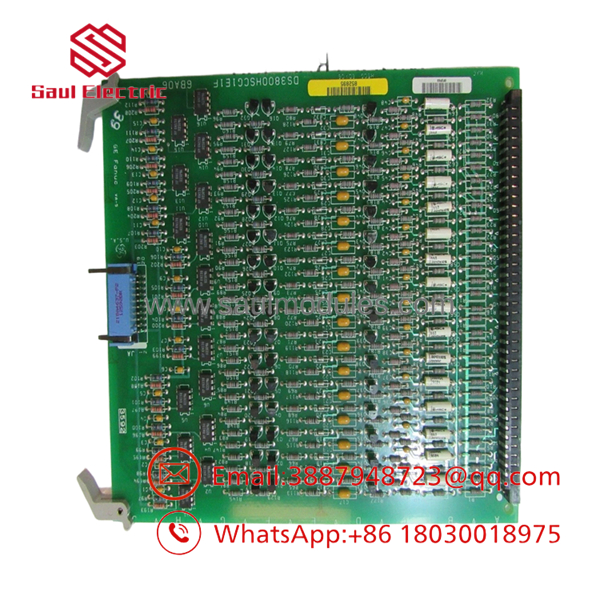
DS3800HSCG1E1F
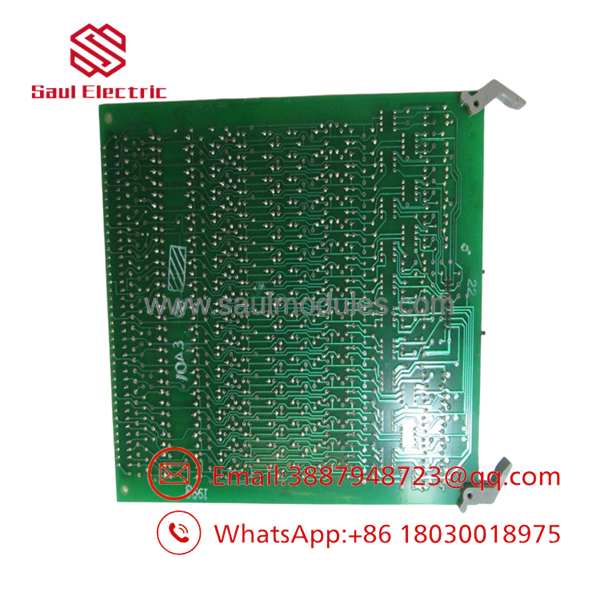
DS3800HSCG1E1F
Transparency SOP: QA & Testing
For DS3800HSCG1E1F, use a controlled inspection and test sequence:
- Verify identification — Confirm
DS3800HSCG1E1Fon the actual PCB. - Record revisions — Photograph all visible board markings and revision labels.
- Inspect components — Check ICs, capacitors, resistors, diodes, connectors, and solder joints.
- Inspect PCB traces — Look for corrosion, thermal damage, lifted pads, and previous repair work.
- Check connectors — Verify contact condition and mechanical integrity.
- Perform electrical checks — Carry out appropriate continuity and isolation testing.
- Run functional testing — Use a compatible Mark IV test setup where available.
- Verify integration — Confirm expected operation with the associated cabinet circuitry.
- Document QA — Retain photographs, test results, condition report, and warranty information.
For New Surplus, request confirmation that the board has never been installed or energized. For Refurbished, request the repair history and functional-test documentation.
The Veteran’s Tech Trap Guide
⚠️ Trap #1 — Don’t stop at the DS3800 prefix.
The DS3800 family covers a large number of different boards. The complete HSCG1E1F designation is required for proper identification.
⚠️ Trap #2 — Similar boards are not automatic substitutes.
Even when connector positions and mechanical dimensions appear similar, the circuitry and intended cabinet function may differ.
⚠️ Trap #3 — Storage history matters.
A supposedly unused board that has spent decades in uncontrolled storage may have oxidation, capacitor degradation, or contamination.
PRO TIP: For a legacy HSCG board, ask the supplier for actual-unit front and rear PCB photographs, plus close-ups of the part-number and revision markings. Stock photos are not sufficient evidence.
Dynamic FAQ
Q: What is the GE DS3800HSCG1E1F?
A: It is a GE DS3800-series Mark IV Speedtronic control/interface board identified by the HSCG functional designation.
Q: Which GE system is the DS3800HSCG1E1F associated with?
A: The DS3800 family is associated with the Mark IV Speedtronic turbine-control generation.
Q: Can I replace it with another DS3800HSCG board?
A: Not without engineering verification. Compare the complete part number, revision, cabinet position, wiring, and applicable Mark IV documentation.
Q: What should I document before removing the original board?
A: Record the complete part number and revision, photograph both sides of the PCB, document connector locations and wiring, and capture relevant Mark IV diagnostic information.
Q: How do I verify New Surplus authenticity?
A: Request actual-unit photographs showing the complete identification, confirmation of unused status, and any available original packaging or traceability documentation.
Q: What should a Refurbished unit include?
A: At minimum, request the refurbishment scope, component/connector inspection, functional-test details, actual-unit photographs, part-number traceability, and written warranty/DOA terms. For obsolete Mark IV hardware, “tested” should always be accompanied by an explanation of what was actually tested.

 Start Chat


