





Description
Product Introduction
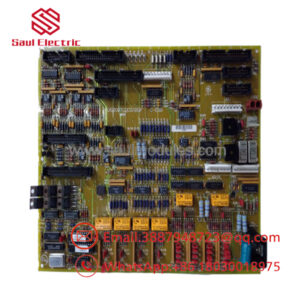
The GE DS3800HSHA1D1D (HSHA) is a legacy Slave Highway Interface Board engineered for GE Speedtronic Mark IV turbine control systems and high-capacity DC2000 drive cabinets. Positioned inside the main rack assembly, this board functions as a dedicated slave node controller along the system highway network, directing real-time data frame transfers between local I/O sub-assemblies and master controller cards.
By managing packet addressing, cycle timing, and bus arbitration locally, the HSHA offloads data transport tasks from core microprocessors. Built with onboard bus transceivers and high-speed address registers, it maintains low-latency data handshakes across the rack backplane—preventing communication bottlenecks in high-density process environments.
Key Technical Specifications
| Parameter | Specification |
| Manufacturer | General Electric (GE) |
| Part Number | DS3800HSHA1D1D |
| Functional Acronym | HSHA |
| System Compatibility | GE Speedtronic Mark IV / DC2000 Drive Cabinets |
| Primary Function | System Highway Bus Slave Communications |
| Architecture | Onboard bus arbitration, address decoding, & socketed PROM memory |
| Interconnects | Gold-plated card-edge connector fingers & top-edge pin headers |
| Configuration | Onboard DIP switches & hardware jumper arrays (JP headers) |
| Mounting | Slide-in card-cage assembly with retention levers |
| Operating Temperature | 0°C to 60°C (32°F to 140°F) |
Application Scenarios & The “Trench” Experience
Picture this: It’s 2:15 AM on a muggy August night. A combined-cycle plant’s steam turbine trips offline on a “System Highway Comms Failure” alarm. Operators attempt a reboot, but the controller drops the drop node immediately, throwing a bus collision fault. You unrack the comms section and isolate the issue to an old DS3800HSHA card—a failed address line driver latched low, corrupting the entire slave highway communication loop. When a slave highway card fails, the master rack loses its peripheral connection instantly.
- Legacy Utility Power Plants – Speedtronic Mark IV Gas and Steam Turbine Cabinets – Handles slave node communication routines between remote I/O drops and master processing racks.
- Heavy Manufacturing Steel & Rubber Mills – GE DC2000 Drive Systems – Coordinates speed reference updates and motor feedback across networked drive sections.
- Chemical Processing Facilities – Industrial Process Racks – Manages telemetry pass-through across serial highway links subject to high electrical noise.
Field Case Study: A plastic extrusion plant faced recurring highway bus timeouts that randomly halted the main line. Our team dispatched a bench-tested DS3800HSHA1D1D surplus card. After swapping the socketed EPROMs from the original board and setting the node address DIP switches to match, the system re-established highway sync at 100% throughput, preventing thousands in lost material scrap.
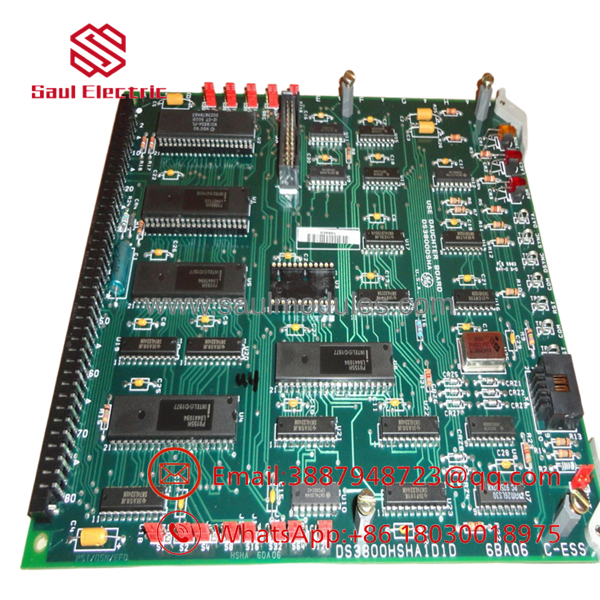
DS3800HSHA1D1D
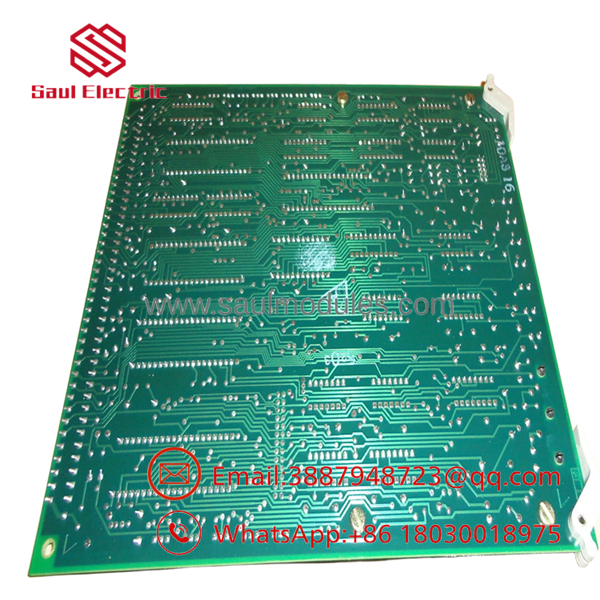
DS3800HSHA1D1D
Transparency SOP: Quality Assurance & Testing
We understand that shipping an unverified communication card to a critical plant site causes head-aches and costly callbacks. Every DS3800HSHA1D1D follows our strict 5-step bench test before leaving the lab:
- Inbound Micro-Inspection: High-magnification check for trace oxidation, cold solder joints, cracked IC sockets, and gold edge-connector wear.
- Power Rail Isolation Test: Megger and continuity checks between internal DC supply lines (+5V, ±15V) and signal ground to rule out shorted capacitors.
- Live Test-Rig Installation: Board is seated into a powered GE Mark IV test rack to verify initial boot-up sequences, clock signals, and logic power distribution.
- Highway Data Throughput Stress Test: High-frequency data packets are transmitted across all transceiver channels while monitoring bus arbitration timing and signal eye diagrams on an oscilloscope over 12 hours.
- ESD Packaging & Protection: Cleaned, fitted with protective edge covers, vacuum-sealed in an ESD shielding bag, and packed in custom impact-resistant foam.
The Veteran’s Tech Trap Guide (Crucial Value-Add)
⚠️ 1. Transfer Socketed PROMs First: The DS3800HSHA1D1D uses socketed firmware PROMs containing your specific panel’s node configuration and system software routines. Installing a replacement board without moving your original EPROM chips over will result in bus handshake failures on boot.
❗ 2. Set Node Address DIP Switches / Jumpers: The HSHA card relies on onboard hardware DIP switches or jumper arrays to set its physical slave address on the system highway. Take a clear photograph of your original card’s switches and match them exactly on the replacement card before powering up.
⚠️ 3. Clean Edge Fingers Safely: Decades in an industrial cabinet leave an oxide film on gold edge connectors. Never use sanders or wire brushes—they strip the thin gold plating down to raw copper. Use a lint-free swab saturated with high-purity isopropyl alcohol or a dedicated rubber contact cleaner pad.
❗ 4. Power Down Before Removing: Never hot-swap the HSHA card. Pulling or inserting this board while the rack backplane is powered will disrupt the system highway loop, cause voltage spikes across bus lines, and potentially trip other online processor cards.
Frequently Asked Questions (FAQ for Conversion)
Q: Is the GE DS3800HSHA1D1D hot-swappable?
A: No. Hot-swapping the HSHA board will interrupt live slave highway communication traffic, causing backplane voltage sags and immediate system trips. Always lock out panel power before replacing the module.
Q: What do the revision suffixes (1D1D) indicate?
A: The “1D1D” designation specifies factory artwork and component updates implemented by GE. A is backward-compatible with earlier HSHA revisions (such as 1A or 1B), provided firmware PROMs and hardware address jumpers are matched.
Q: Do I need special software tools to configure this board upon installation?
A: No software download to the board itself is required if you move your original socketed PROMs over. Once the chips are seated and the hardware address switches match, the master controller will auto-detect the board during the power-up sequence.
Q: Are these units brand new OEM from General Electric?
A: GE discontinued the DS3800 series years ago. Our stock consists of New Surplus (unused OEM factory spares) and Refurbished / Bench-Tested cards reclaimed from clean decommissioned facilities worldwide.
Q: What warranty coverage do you provide on legacy Speedtronic cards?
A: Every comes backed by our full 12-month operational warranty. If any communication or component fault occurs under normal operating conditions within one year, we will provide an advance replacement or issue a full credit.

 Start Chat


