





Description
Product Introduction
The GE DS3800NBIC1J1G is a Network Bus Interface Card (NBIC) designed specifically for GE Speedtronic Mark IV turbine control systems and heavy industrial drive cabinets. Operating as a critical communication gateway, the NBIC module handles data translation, signal buffering, and bus arbitration between individual processor racks and external supervisory networks.
Built to maintain reliable high-speed data flow in severe electromagnetic environments, the DS3800NBIC1J1G routes real-time telemetry, alarm states, and governing commands across the Mark IV system architecture. It features integrated bus transceivers, discrete resistor network arrays, and configurable hardware jumpers that establish node addressing and bus timing parameters.
Key Technical Specifications
| Parameter | Specification / Value |
| Manufacturer | General Electric (GE) |
| System Architecture | Speedtronic Mark IV Turbine Control & System Drives |
| Board Functional Acronym | NBIC (Network Bus Interface Card) |
| Primary Function | Rack-to-network bus arbitration, signal buffering, and data translation |
| Bus Interface | High-speed parallel/serial backplane bus transceivers |
| Connector Type | Gold-plated card-edge connector and front-edge screw terminals/headers |
| Hardware Configuration | Onboard BERG jumpers for node addressing, bus clocking, and termination |
| Signal Conditioning | Integrated resistor/capacitor networks for EMI/RFI noise suppression |
| Board Generation / Prefix | DS3800 Series (Classic full-frame modular PCB layout) |
| Operating Temperature | -30°C to +65°C Industrial Extended Range |
Application Scenarios & The “Trench” Experience
The Trench Story
It’s 3:00 AM at a combined-cycle power plant. A Frame 7 gas turbine experiences a sudden “Rack Bus Interface Timeout” alarm, preventing the remote HMI from issuing speed setpoint adjustments during a critical grid demand change. Instrument technicians trace the communication drop to the NBIC card in Control Rack 2. Thermal stress over two decades caused a trace buffer IC to fail, locking up the bus handshake line. Replacing the failed card with a pre-tested DS3800NBIC1J1G module—and matching the site’s original BERG jumper address configuration—instantly restores real-time network communication, clearing the fault without forcing an offline turbine trip.
Industrial Applications
- Gas & Steam Turbine Control: Managing bus communications across Triple Modular Redundant (TMR) or single-core Mark IV turbine control panels.
- Static Excitation Cubicles: Routing high-speed reference signals between exciter regulators and operator control stations.
- Heavy Duty Industrial VFDs: Coordinating drive control parameters across networked motor drive cabinets in steel or paper mills.
- Balance of Plant (BOP) Interfaces: Bridging Mark IV turbine governing data to plant-wide Distributed Control Systems (DCS).
Transparency SOP: Quality Assurance & Testing
Every legacy module undergoes a strict reconditioning and dynamic validation protocol prior to dispatch:
- Inbound Physical Inspection: Inspection under magnification for burnt traces, heat-stressed capacitors, damaged jumper header pins, and edge-connector wear.
- Ultrasonic ESD Cleaning: Deep solvent wash to eliminate airborne oil residue, carbon film, and industrial grime built up over years of operation.
- High-Frequency Bus Waveform Testing: Injecting test data frames across communication channels to inspect signal rise times, peak voltages, and waveform symmetry using a digital oscilloscope.
- Live Mark IV Rack Execution: Installing the card into an active Mark IV test rack to verify real-time bus arbitration and error-free network handshaking.
- Thermal Chamber Stressing: Testing under temperature cycles to ensure zero component drift or timing dropouts at elevated panel temperatures.
- Jumper Audit & ESD Packaging: Documenting all physical BERG jumper configurations before vacuum-sealing the board in anti-static shielding.
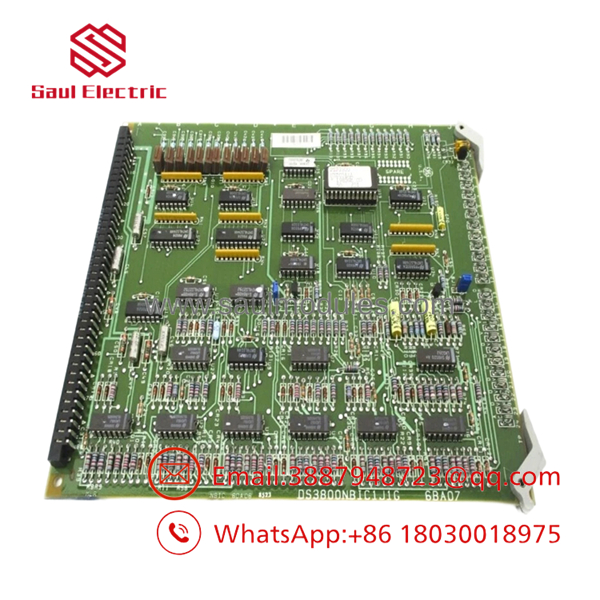
DS3800NBIC1J1G
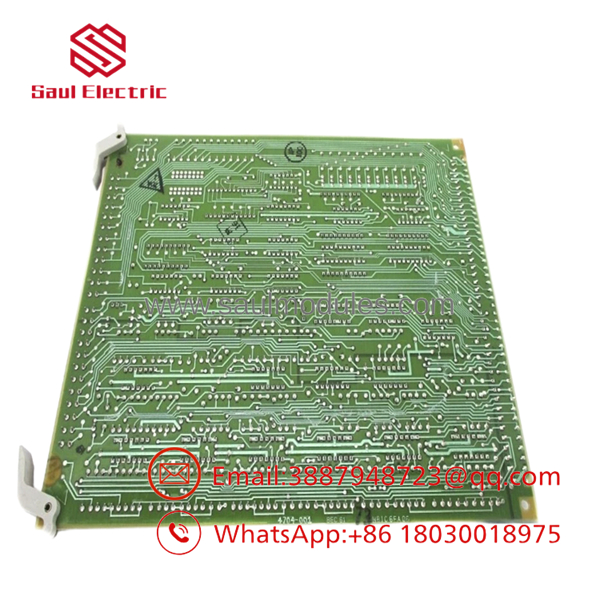
DS3800NBIC1J1G
The Veteran’s Tech Trap Guide (Crucial Value-Add)
⚠️ 1. Node Address & Bus Termination BERG Jumpers
The DS3800NBIC1J1G relies on physical BERG jumpers to assign its hardware node address and apply bus line termination resistors. Installing a replacement board without replicating the exact jumper positions from the failed card will cause address collisions or line reflections, knocking the entire rack offline.
Fix: Photograph the original card’s jumper headers before removal, and duplicate every jumper block position on the replacement card line-for-line.
❗ 2. Card-Edge Connector Maintenance
Because this module handles high-frequency digital signal traffic across card-edge contacts, oxidation on the backplane gold tabs can create intermittent dropouts that mimic a hardware failure.
Fix: Clean the card-edge contacts gently with an isopropyl alcohol swab or a clean pencil eraser before seating the card. Avoid abrasive pads like Scotch-Brite, which strip the gold plating.
⚠️ 3. Revision Suffix Parity (1J1G)
The suffix 1J1G indicates late-generation artwork revisions, including upgraded bus driver ICs and enhanced noise immunity components compared to earlier 1A or 1B revisions. Mixing revision generations on high-speed communication loops can occasionally lead to subtle bus timing discrepancies.
Fix: Cross-reference the full part number against your panel schematic or physical card markings to ensure circuit component parity.
Frequently Asked Questions (FAQ)
Q: Can I hot-swap the DS3800NBIC1J1G board while the Mark IV rack is energized?
A: No. Pulling a network bus interface board live disrupts backplane data lines, which can corrupt active memory in adjacent processor cards, trigger false trip signals, or lock up the control bus. Always isolate power before removing or inserting cards.
Q: Does this card require firmware flashing or software downloading after replacement?
A: No. The DS3800NBIC1J1G is a hardware-level bus interface card. It operates using discrete logic transceivers, buffer ICs, and physical jumper configurations—no software or firmware installation is needed.
Q: What is the main cause of failure on this interface module?
A: Long-term continuous heat exposure in control enclosures degrades onboard electrolytic filtering capacitors and thermal-fatigues solder joints on high-use bus driver ICs, leading to intermittent signal dropouts.
Q: Why does the system display a “Bus Timeout” immediately after installing a new board?
A: This is usually due to mismatched BERG jumper settings (incorrect node address/bus timing) or an improperly seated card-edge connector in the rack cage. Double-check all jumpers against your original board and ensure the card is locked firmly into its guide rails.
Q: What warranty is provided with your surplus and refurbished units?
A: All DS3800NBIC1J1G cards are backed by a full 12-month replacement warranty. If a board fails under normal operating conditions within one year, it is replaced directly from stock.


 Start Chat


