





Description
Product Introduction
The GE DS3800NPSE1C1E is a Power Supply Extension and Sensor Interface Board (NPSE) engineered for General Electric Speedtronic Mark IV turbine control enclosures and industrial drive cabinets. Functioning as an internal power regulator and safety monitoring bridge, this card ensures that clean, surge-protected DC power is conditioned and distributed across the card-cage backplane to feed delicate processing modules like the microprocessor (HMPJ) and memory cards.
Rather than running raw power directly to microprocessors, the NPSE board filters incoming DC rails, monitors line levels for voltage droop or overvoltage transients, and asserts a hardware interrupt signal if rail voltages drift outside operational tolerances. This fault detection mechanism triggers an orderly shutdown or failover sequence before logic corruption can cause uncontrolled turbine speed or temperature excursions.
Key Technical Specifications
| Parameter | Specification / Value |
| Manufacturer | General Electric (GE) |
| System Architecture | Speedtronic Mark IV Turbine Control & System Drives |
| Board Functional Acronym | NPSE (Power Supply Extension / Power Sensor Board) |
| Primary Function | Power rail distribution, DC bus sense monitoring, and fault interrupt signal generation |
| Monitored Rails | +5VDC (Logic), ±15VDC (Analog Signal Processing), +24VDC (Field Transducers/Relays) |
| Protection Features | Precision window comparators for overvoltage (OVP) and undervoltage (UVP) detection |
| Backplane Connection | Dual multi-pin gold card-edge connectors for Mark IV rack cage insertion |
| Hardware Configuration | Physical BERG jumpers for trip threshold trim and power rail routing selection |
| Diagnostic Elements | Onboard LED indicators for rail power availability and power-good status |
| Operating Temperature | -30°C to +65°C Industrial Extended Range |
Application Scenarios & The “Trench” Experience
The Trench Story
It’s 4:00 AM at an offshore oil platform. A Frame 5 gas compressor turbine suffers sporadic, non-repeatable “Voter Trip / Logic Reset” alarms during generator loading. The site maintenance engineer verifies that the main 24VDC battery charger is functioning cleanly, but the Mark IV control rack intermittently drops communication. Troubleshooting reveals that aging filter capacitors on the original NPSE card were allowing high-frequency ripple on the +5VDC backplane logic rail. Swapping in a pre-tested DS3800NPSE1C1E replacement board and configuring the site’s physical BERG jumpers stabilizes the DC logic bus, eliminating the ghost resets and allowing the platform to return to full production.
Industrial Applications
- Mark IV Turbine Control Racks: Distributing conditioned DC power to triple-modular redundant (TMR) cores (R, S, and T) on heavy-duty gas and steam turbines.
- Generator Control Systems: Regulating power bus voltage sense loops within GE generator excitation control panels.
- Industrial VFD Control Enclosures: Safeguarding digital control boards from DC bus transients caused by heavy motor drive switching.
Transparency SOP: Quality Assurance & Testing
Every legacy power interface module undergoes a strict, multi-stage reconditioning and dynamic load validation protocol before dispatch:
- Inbound Physical Inspection: Detailed optical audit under magnification for thermal stress discoloration, trace lifting, dry solder joints, degraded electrolytic capacitors, and gold card-edge wear.
- Ultrasonic ESD Cleaning: Deep solvent wash to eliminate airborne oil haze, conductive carbon dust, and industrial chemical residues accumulated over decades of cabinet operation.
- Full DC Rail Load Testing: Subjecting all regulated bus paths to maximum rated current loads to measure voltage regulation, thermal dissipation, and ripple content using an oscilloscope.
- Power-Good & Trip Comparator Audit: Injecting overvoltage and undervoltage conditions on test rails to confirm exact trip thresholds and verify hardware interrupt timing.
- Live Mark IV Rack Execution: Installing the card into an active Speedtronic Mark IV test rack cage to confirm backplane communications handshaking and diagnostic status LEDs under load.
- Jumper Audit & ESD Packaging: Documenting all physical BERG jumper settings before vacuum-sealing the board in static-shielding ESD packaging.
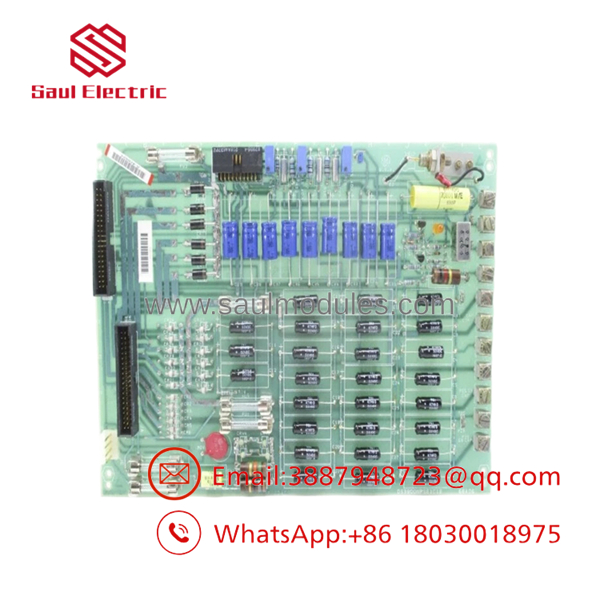
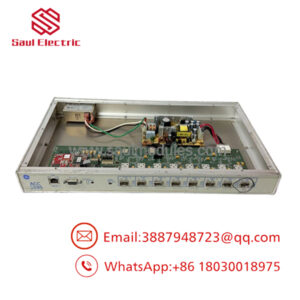
DS3800NPSE1C1E
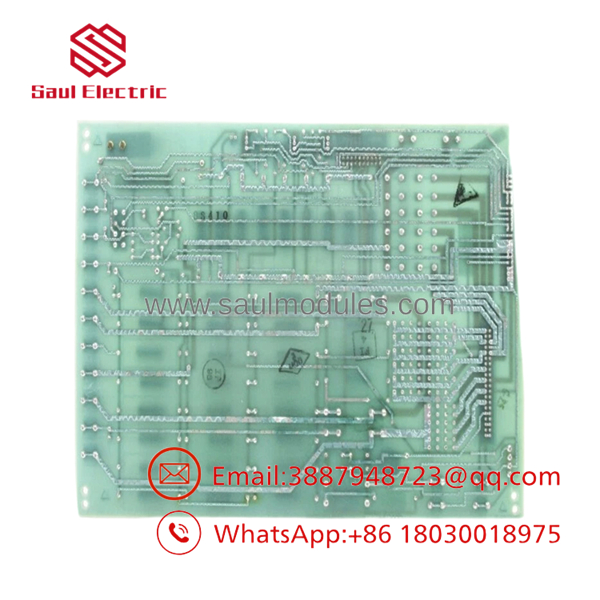
DS3800NPSE1C1E
The Veteran’s Tech Trap Guide (Crucial Value-Add)
⚠️ 1. Power Rail Sense BERG Jumpers
The DS3800NPSE1C1E utilizes physical BERG jumper blocks to calibrate voltage sensing thresholds and route specific rail configurations. Installing a replacement card without duplicating the jumper settings from your original board can cause the system to misread normal DC rail levels as power failures, causing immediate, false power-good trips.
Fix: Take a clear photo of every jumper block on your failed card before removal, and duplicate every jumper position line-for-line on the replacement board.
❗ 2. Card-Edge Contact Burning & Oxidation
Because this module routes DC power to adjacent processing boards, high current draw combined with dust or moisture can cause localized resistance and heating on the gold card-edge fingers.
Fix: Inspect the mating backplane rack connector for heat damage or debris before inserting the replacement. Clean the card-edge contacts gently with an isopropyl alcohol swab before seating.
⚠️ 3. Revision Suffix Parity (1C1E)
The trailing suffix 1C1E designates late-generation artwork revisions with higher-wattage sense resistors and upgraded noise-filtering capacitors compared to early 1A or 1B variants. Matching the full alphanumeric code ensures power dissipation parity and transient immunity.
Fix: Cross-reference the complete part number stamped on the PCB edge margin prior to ordering.
Frequently Asked Questions (FAQ)
Q: Can I hot-swap the DS3800NPSE1C1E board while the Mark IV system is powered on?
A: No. Pulling or inserting a power distribution card live can cause voltage spikes, arcing across card-edge contacts, or immediate backplane power loss that will trip the entire turbine control system. Always isolate control cabinet power prior to servicing.
Q: What is the most common failure mode on this module?
A: Electrolytic capacitor degradation due to continuous thermal exposure inside control cabinets over 15–20 years. This leads to elevated AC ripple on DC logic rails, triggering intermittent power-good alarms or processor resets.
Q: Does this card require software flashing or parameter programming after replacement?
A: No. The DS3800NPSE1C1E is a pure hardware-level power distribution and sensing board. It functions using analog comparators, linear regulators, and physical BERG jumpers—no software loading or EEPROM configuration is required.
Q: What is the difference between DS3800 and DS200 part numbers?
A: DS3800 series cards belong to older, full-frame GE systems (such as Speedtronic Mark IV), featuring dual card-edge gold connectors. DS200 series cards belong to newer systems (such as Mark V or Innovation Series) with pin-header connector interfaces. They are not interchangeable.
Q: What warranty is supplied with your surplus and refurbished stock?
A: Every DS3800NPSE1C1E board shipped carries a full 12-month replacement warranty. If a module fails under standard operating conditions within one year of installation, it is replaced directly from stock.

 Start Chat


