





Description
Product Introduction & Engineering Value
Upgrading or maintaining legacy plant control requires predictable, bulletproof processing power. The GE Fanuc IC693CPU363-CH sits at the top of the Series 90-30 CPU hierarchy, pairing an 80386EX microprocessor running at 25 MHz with a full 240 KB of configurable user memory. Designed as a single-slot plug-in module for slot 1 of any 90-30 baseplate, it delivers an ultra-fast scan execution rate of 0.22 ms per 1K of Boolean logic.
The Revision “CH” build incorporates enhanced firmware and circuit board updates that resolve earlier backplane timing quirks and improve high-speed communication over serial channels. With built-in support for up to 2,048 discrete inputs/outputs, hardware floating-point math routines, and 3 onboard serial ports supporting SNP, SNPX, and Modbus RTU Slave protocols, the IC693CPU363-CH keeps your processing deterministic without requiring a costly total platform rewrite.
Technical Specifications
| Parameter | Specification Details |
| Processor Type / Speed | Intel 80386EX @ 25 MHz |
| User Memory Capacity | 240 Kbytes (Shared RAM and battery-backed Flash) |
| Boolean Execution Speed | 0.22 milliseconds per 1K of logic |
| I/O Capacity | 2,048 Discrete Inputs (%I), 2,048 Discrete Outputs (%Q) |
| Register & Word Memory | Configurable up to 32,640 words (%R, %AI, %AQ) |
| System Baseplate Expansion | Supports up to 8 total baseplates (1 CPU baseplate + 7 Expansion/Remote) |
| Embedded Communications | Port 1 (RS-232), Port 2 (RS-485), Port 3 (RS-485 via Power Supply) |
| Supported Protocols | SNP, SNPX (Master/Slave), Modbus RTU Slave, Serial I/O |
| Backplane Current Draw | 890 mA from +5 VDC bus rail |
| Operating Temperature | 0°C to 60°C (32°F to 140°F) ambient |
Field Application & The “Trench” Experience
The Power Generation Auxiliary Control Recovery
At an aging municipal power facility, the primary balance-of-plant Series 90-30 rack suffered a catastrophic power spike through a legacy RS-232 programming cable. The event fried the serial transceiver chips on an older IC693CPU350 board, leaving the CPU locked in a permanent STOP/FAULT mode and blocking fuel feed permissive signals.
The control room engineer pulled a pre-tested IC693CPU363-CH from emergency spare stock. Because the 363 board features 240 KB of configurable memory compared to the 350’s fixed 32 KB limit, they downloaded the full Machine Edition backup project—including embedded diagnostic subroutines that previously didn’t fit on the old processor. They restored battery power, connected the RS-485 programming cable to Port 2, and placed the controller back into RUN mode. The entire swap took under 30 minutes, averting an extended boiler shutdown.
Primary Niche Applications
- Multi-Axis Packaging Conveyors: Utilizing firmware floating-point math to compute real-time acceleration curves across distributed servo drives.
- Refinery Tank Farm Monitoring: Handling extended %R and %AI register allocations (up to 32,640 words) for vast temperature and level sensor arrays.
- High-Density Remote I/O Networks: Managing 7 expansion baseplates over 50-foot cables without introducing scan cycle latency.
Transparency SOP: QA & Testing
- Step 1: Visual & Pin Contact Inspection
We inspect the card edge connector for microscopic gold-finger wear or solder bridging, check faceplate port pins (P1 RS-232 and P2 RS-485) for bent pins, and verify the memory backup battery retention clip.
- Step 2: Voltage Rail & Current Draw Calibration
The module is seated in an
IC693CHS39110-slot baseplate powered by anIC693PWR330supply. Power supply draw on the +5 VDC line is measured to ensure it sits cleanly at the factory nominal 890 mA. - Step 3: Full Memory & Firmware Verification
Using PACSystems Proficy Machine Edition (and legacy VersaPro), we perform a full memory test across all 240 KB of user RAM and Flash. Firmware revision “CH” is verified, and the internal real-time clock (RTC) is tested for voltage-retention hold.
- Step 4: Active Loop Communication Stress Test
All 3 serial ports are exercised under load: Port 1 (RS-232) and Port 2 (RS-485) run simultaneous SNP/Modbus RTU traffic while the CPU sweeps a simulated 2,048-point I/O program across 3 expansion racks. Zero packet loss or CPU fault table entries are permitted.
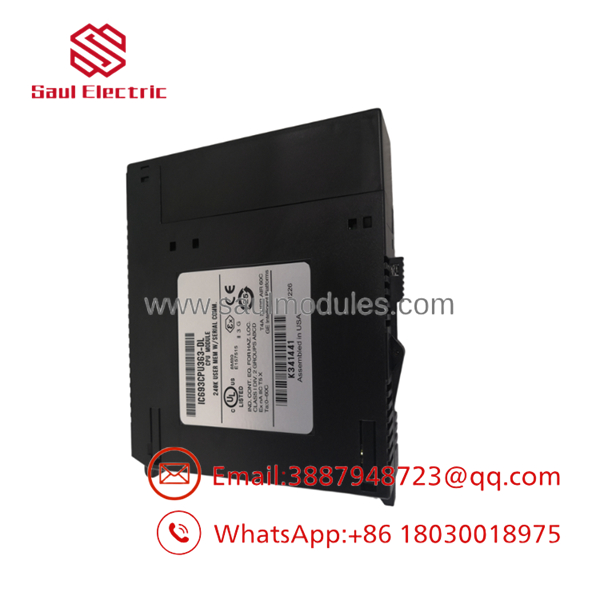
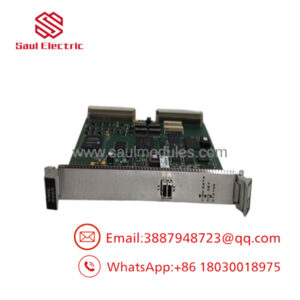
- IC693CPU363-CH
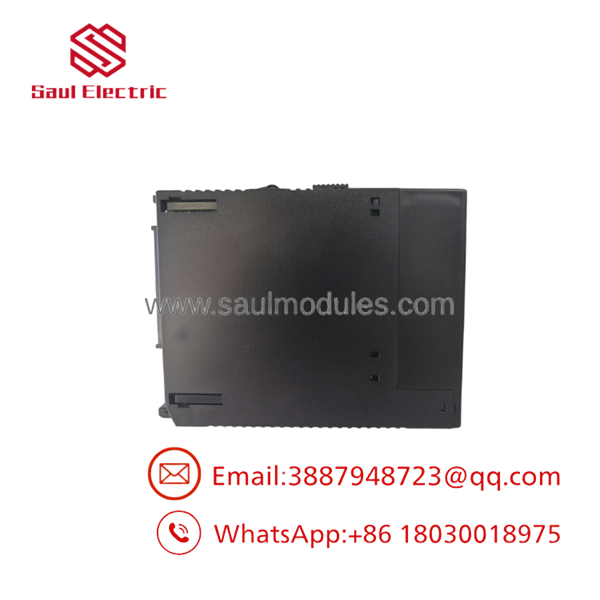
- IC693CPU363-CH
The Veteran’s Tech Trap Guide (Crucial Value-Add)
⚠️ TRAP 1: The RS-232 Pinout & Handshake Jumpers (Port 1 vs. Port 2)
The faceplate on the IC693CPU363 features two distinct ports: Port 1 is RS-232 (RJ-45 connector) and Port 2 is RS-485 (15-pin D-sub). Do not plug a standard 15-pin RS-232 PC cable directly into Port 2 without an RS-232/RS-485 converter (like the
IC690ACC901). Connecting RS-232 signal levels directly to Port 2 will blow out the RS-485 line driver ICs!
⚠️ TRAP 2: Removing the Shield Ground Bracket when Replacing CPU351/350
If you are upgrading an older installation from a
CPU351orCPU350to theIC693CPU363-CH, remove the old external shield ground bracket from the baseplate. The CPU363 has redesigned internal noise suppression and enhanced EMC shielding. Leaving the old grounding bracket installed can cause ground loop currents to flow through the CPU chassis.
PRO TIP: Battery Retention During Module Swap
The RAM memory in the CPU363-CH is maintained by a lithium battery located behind the door of the power supply module (connected via the backplane). If you remove the CPU module from the rack without first backing up your program to the internal Flash memory, your ladder logic will be lost. Always write your logic to non-volatile FLASH before pulling the card!
Dynamic FAQ
Q: What is the significance of the “-CH” suffix on the part number?
A: The “-CH” suffix denotes the hardware and firmware revision level. Revision CH includes factory performance updates, enhanced EMC/ESD noise immunity, and optimized backplane timing over older revisions (like AA, AB, or BD).
Q: Can I use Proficy Machine Edition an module?
A: Yes. The -CH is fully supported by all modern versions of PACSystems Proficy Machine Edition, as well as legacy software platforms including VersaPro, Logicmaster 90-30, and Control 90.
Q: How do I access Port 3 on the CPU363?
A: Port 3 is physically located on the 15-pin D-sub connector of the Series 90-30 power supply module mounted in Slot 0. The CPU communicates with this port through internal backplane connections.
Q: Does the support Floating Point Math?
A: Yes. Firmware release 9.0 and later (which includes the Revision CH) provides built-in floating-point math functionality directly in firmware.
Q: What warranty comes with your new surplus aned inventory?
A:ry CPU module is fully bench-tested, loaded with clean factory firmware, sealed in ESD protective packaging, and backed by our standard 12-month full-replacement warranty.

 Start Chat


