





Description
Product Introduction & Engineering Value
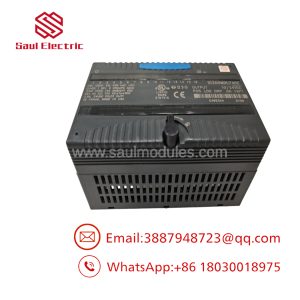
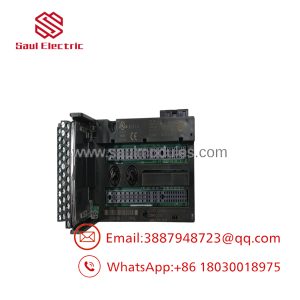
Having spent two decades troubleshooting legacy GE backplanes, I can tell you the IC698CPE040-JP remains the absolute backbone of heavy industrial plant control. When migrating aging Series 90-70 installations or pushing complex ladder logic through dense VME64 racks, this 1.8 GHz CPU delivers the raw execution speed required to prevent scan-time spikes.
It bridges traditional VME I/O with modern Ethernet Global Data (EGD) and Modbus TCP networks straight out of the slot. With 64 MB of dedicated user RAM and 64 MB of non-volatile flash, it keeps large symbolic variable tables and full offline documentation stored directly on the hardware.
Technical Specifications
| Feature / Spec | Specification |
| Microprocessor | 1.8 GHz Intel Pentium-M |
| User Memory | 64 MB battery-backed RAM |
| Flash Memory | 64 MB non-volatile flash |
| Boolean Execution Speed | 0.02391 µs per 1000 Boolean operations |
| Bus Compatibility | VME64 standard backplane (ANSI/VITA 1) |
| Embedded Ethernet | 2 auto-sensing 10/100 Mbps RJ-45 ports (internal switch) |
| Serial Communications | 3 isolated ports: 1x RS-232, 1x RS-485, 1x RS-232 Station Manager |
| Protocols Supported | EGD, SRTP TCP/IP, Modbus TCP Client/Server, Modbus RTU Slave, SNP |
| Power Requirements | +5 VDC @ 6.8A, +12 VDC @ 0.003A, -12 VDC @ 0.003A |
| Operating Temp Range | 0°C to 60°C (32°F to 140°F) — requires fan tray chassis |
| Program Blocks Allowed | Up to 512 blocks (max 128 KB per block) |
Field Application & The “Trench” Experience
During an unplanned shutdown at a midwestern paper mill, a failing CPU in the main wet-end section rack triggered repetitive backplane bus faults, locking up 12 analog input cards. The mill was losing thousands of dollars per hour of downtime. Swap out the CPU, load the project backup, and re-establish EGD communications to the drive cabinets—that was the mandate. Replacing the faulty card with a pre-tested IC698CPE040-JP brought all 512 program blocks online within 15 minutes of power-up, clearing bus stalls immediately.
Niche Application Scenarios
- Catalytic Cracking Unit Temperature Control: Executing multi-loop PID algorithms while logging high-frequency analog data over Reflective Memory or EGD network nodes.
- High-Speed Turbine Governor Controls: Processing complex speed control calculations where Boolean scan timing must remain consistently under 0.05 milliseconds.
- Automotive Stamping Line Coordination: Handling high-density Series 90-70 discrete I/O combined with third-party VME positioning boards on a shared backplane.
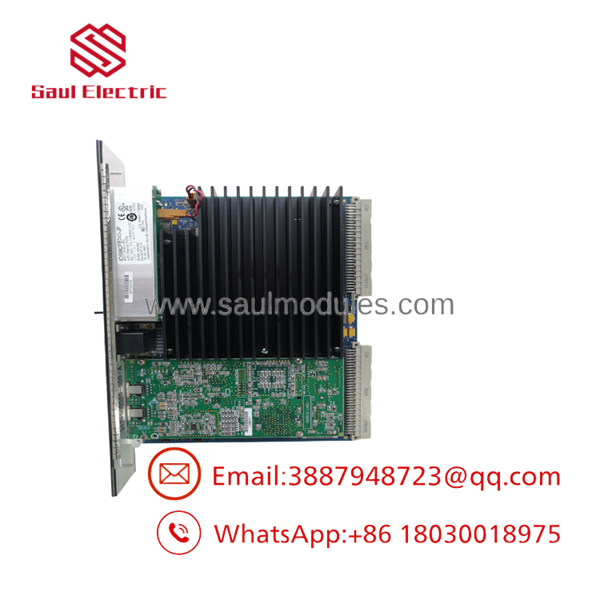
- IC698CPE040-JP
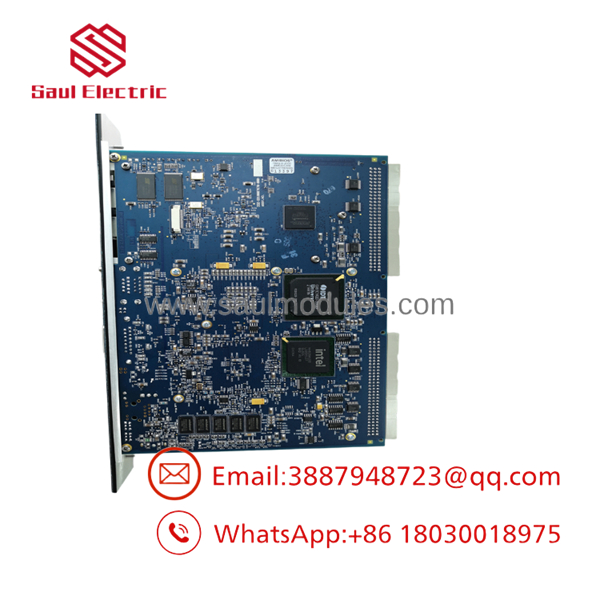
- IC698CPE040-JP
Transparency SOP: QA & Testing
To guarantee every new surplus or reconditioned unit operates reliably in production racks, our hardware testing lab follows a strict validation pipeline:
- Visual & ESD Inspection: Board components undergo high-magnification checks for solder fractures, damaged electrolytic capacitors, or bent VME connector pins.
- Chassis Power & Thermal Soak: The CPU is seated in a full RX7i rack equipped with a high-cfm fan tray and subjected to a 24-hour thermal stress cycle under 100% processing load.
- Communication Bus Exercising: All 3 serial ports (RS-232, RS-485, Station Manager) and both Ethernet ports are simultaneously exercised with continuous SNP, Modbus/TCP, and EGD traffic.
- Memory Retention Check: Battery backup circuitry and Flash write operations are verified by power-cycling the module under stored configuration profiles.
The Veteran’s Tech Trap Guide
⚠️ WARNING: Forced Cooling Requirement
The IC698CPE040-JP runs a 1.8 GHz processor that produces substantial heat inside enclosure racks. Running this CPU in an RX7i chassis without a functional fan tray will trigger dynamic thermal throttling or cause hard CPU halts within minutes. Always verify fan tray operation prior to commissioning.
PRO TIP: Firmware & Ethernet Switch Configuration
When replacing an older revision CPU, verify the firmware release level in PACSystems Machine Edition. Firmware versions prior to Release 5.00 lack SNTP time sync and advanced EGD selective consumption. Additionally, if using dual Ethernet ports in a daisy-chain setup, ensure your network layout doesn’t create unmanaged loops through the internal switch.
⚠️ WARNING: Memory Battery Connection
When unboxing a replacement unit, remember that the battery leads are kept disconnected to prevent shelf discharge. If you restore power without plugging in the lithium battery harness, any user program stored solely in volatile RAM will wipe upon the next power cycle.
Dynamic FAQ
Q: What is the main operational difference between the IC698CPE030 and the IC698CPE040-JP?
A: Clock speed and execution performance. The CPE030 runs a 600 MHz processor, whereas the CPE040-JP features a 1.8 GHz Intel Pentium-M processor, reducing Boolean logic execution times from 0.069 µs down to 0.02391 µs per 1,000 instructions.
Q: Can the support legacy GE Series 90-70 I/O modules?
A: Yes. The RX7i backplane supports Series 90-70 Discrete, Analog, and specialty VME modules, allowing straightforward drop-in system hardware upgrades without rewiring field terminal blocks.
Q: How does the CPU retain ladder logic and register data during long power outages?
A: User program memory is backed up by an external lithium battery pack connected to the CPU board. Additionally, logic, configuration files, and symbolic variables can be backed up to the 64 MB onboard non-volatile flash memory.
Q: How do you verify the authenticity and condition of your “New Surplus” units?
A: Every surplus item undergoes original OEM label verification, component serial matching, and complete functional bench testing inside an active RX7i chassis before entering clean stock storage.
Q: What warranty coverage comes with this replacement CPU?
A: All new surplus and fully reconditioned CPU modules include a standard 12-month full-replacement warranty starting from the date of delivery.

 Start Chat


