





Description
Product Introduction
The GE IC698CMX016-ED is a Control Memory Xchange (CMX) module for the PACSystems RX7i platform. It enables deterministic, high-speed memory sharing between PLCs, computers, and other compatible reflective memory devices through a fiber optic network. Unlike traditional Ethernet communications, data written to one node is automatically replicated to every node with minimal latency.
The -ED hardware and firmware revision corrected rare synchronization and Bad Data reporting issues observed on earlier revisions under heavy network traffic and elevated temperatures. If your facility still operates older -CB, -DC, or earlier hardware, verifying the revision before replacement is worthwhile.
Key Technical Specifications
| Parameter | Value |
|---|---|
| Manufacturer | GE Fanuc |
| Model | IC698CMX016-ED |
| Product Type | Control Memory Xchange (CMX) Module |
| PLC Family | PACSystems RX7i |
| User Memory | 16 MB SDRAM |
| Network Technology | Reflective Memory |
| Fiber Interface | Dual LC Multimode Fiber |
| Network Speed | 2.12 Gbaud |
| Maximum Network Nodes | 256 |
| Maximum RX7i Modules per Rack | 4 |
| Maximum Network Bandwidth | 174 MB/s |
| Operating Voltage | +5 VDC from Backplane |
| Current Consumption | 1.8 A |
| Configuration Software | Proficy Machine Edition Logic Developer PLC v4.5 or later |
| Compatible Network | VMIC 5565 Reflective Memory Family |
| Installation | Single-slot RX7i Rack Module |
Application Scenarios & The “Trench” Experience
Here’s something that doesn’t happen with ordinary Ethernet.
One PLC finishes updating process values. Another controller should receive those values immediately because it controls the next stage of production. A few milliseconds of delay can throw off synchronized motion, turbine simulation, or real-time testing.
Traditional Ethernet works well for many applications, but deterministic reflective memory was designed specifically for situations where timing matters every scan.
Typical Applications
- Power Generation — Synchronizes turbine simulation systems and redundant control platforms with deterministic memory updates.
- Oil & Gas — Shares high-speed process data among distributed RX7i controllers without relying on conventional polling.
- Automotive Test Facilities — Coordinates real-time simulation benches requiring microsecond-level data consistency.
- Defense & Aerospace Test Systems — Supports hardware-in-the-loop (HIL) simulation where deterministic communication is mandatory.
- Large Manufacturing Lines — Exchanges production variables among multiple PLCs without introducing unpredictable Ethernet latency.
Field Experience
A turbine testing laboratory operated four RX7i controllers connected through a reflective memory network. Engineers occasionally reported synchronization alarms only during summer testing.
Investigation showed the installed CMX modules were early hardware revisions. The site upgraded to IC698CMX016-ED modules, eliminating the intermittent Bad Data and Sync Loss events that had appeared only during large 64 KB transfers at elevated cabinet temperatures. The control strategy remained unchanged; the hardware revision solved the issue.
Transparency SOP: Quality Assurance & Testing
We don’t just ship boxes; we test them on actual PACSystems RX7i racks.
- Inbound Inspection
- Verify OEM labels, revision suffix (-ED), PCB condition, and fiber connectors.
- Inspect LC ports for contamination or mechanical damage.
- Screen for counterfeit markings and unauthorized repairs.
- Live Rack Testing
- Install the module in an RX7i rack.
- Confirm successful initialization.
- Verify reflective memory communication with another CMX node.
- Check LED diagnostics during continuous operation.
- Electrical Parameter Checks
- Measure +5 VDC current consumption.
- Verify optical transmitter and receiver operation.
- Confirm stable communication under sustained data transfer.
- Firmware Verification
- Record hardware and firmware revision.
- Confirm the module reports Revision ED.
- Verify compatibility with Proficy Machine Edition.
- Final QC & Anti-static Packaging
- Perform final visual inspection.
- Clean optical connectors.
- Package in anti-static material with connector protection caps.
- Record serial number for shipment traceability.
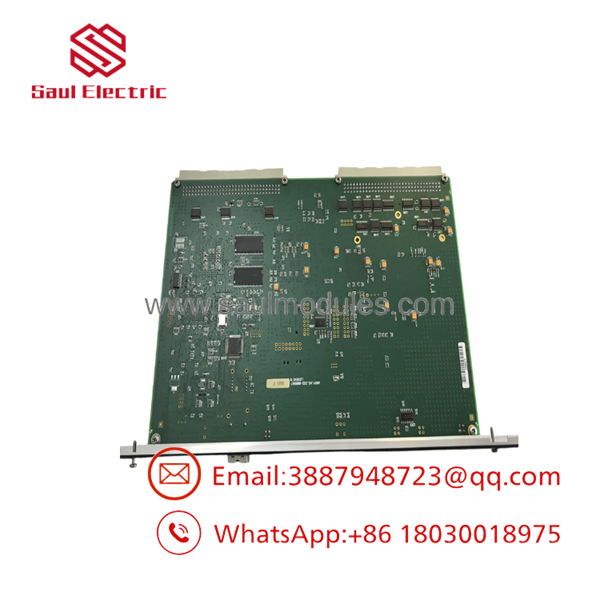
- IC698CMX016-ED
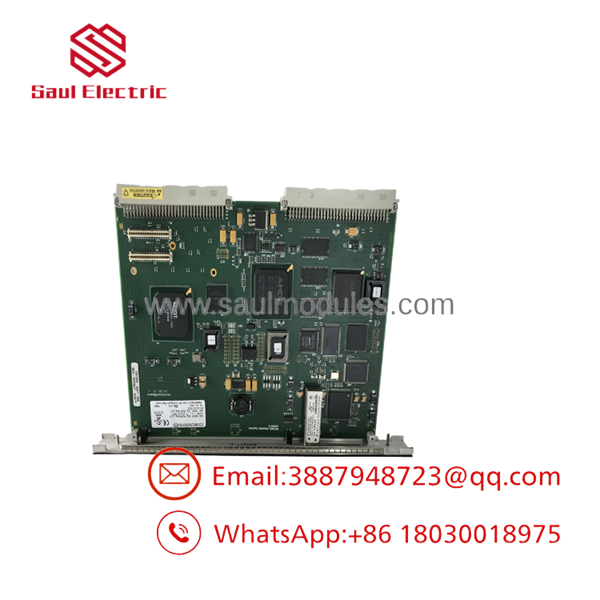
- IC698CMX016-ED
The Veteran’s Tech Trap Guide
⚠️ Verify the hardware suffix.
Not every IC698CMX016 is identical. Earlier revisions experienced rare synchronization issues during heavy network traffic. If you’re replacing a failed module, matching the -ED revision is generally the safest approach.
❗Keep the fiber loop intact.
Reflective memory operates as a daisy-chained fiber optic loop. Disconnect one section without properly completing the loop, and every downstream node can lose communication.
⚠️ Don’t overload the network.
The theoretical bandwidth is high, but having several controllers transmit large data blocks simultaneously can fill the transmit FIFO. Balance traffic whenever possible.
❗Inspect the fiber connectors first.
We’ve seen perfectly good modules replaced because contaminated LC connectors reduced optical signal strength. Clean the connectors before assuming the electronics have failed.
Frequently Asked Questions (FAQ)
Q1. What is the primary purpose of the IC698CMX016-ED?
It provides deterministic reflective memory communication between PACSystems RX7i controllers and other compatible reflective memory devices over a high-speed fiber optic network. Every write to local memory is automatically replicated to all participating nodes.
Q2. Does this module use standard Ethernet?
No. Although it uses fiber optic cabling, it is not an Ethernet module. It uses reflective memory technology rather than TCP/IP communication.
Q3. How many nodes can one network support?
A reflective memory network can support up to 256 compatible nodes connected in a fiber optic daisy-chain loop.
Q4. Can multiple CMX modules be installed in one RX7i rack?
Yes. A single PACSystems RX7i main rack supports up to four Memory Xchange modules.
Q5. Is the hot-swappable?
No. Remove rack power before replacing the module unless your system architecture and maintenance procedures explicitly support online replacement. Unexpected removal can interrupt every node on the reflective memory network.
Q6. Why is this module less expensive than purchasing through the OEM?
The PACSystems RX7i platform has mature lifecycle status, and most available inventory comes from unused surplus stock, strategic spare inventories, or professionally refurbished equipment. The price reflects the sourcing channel rather than reduced functionality.
Q7. Is this a genuine GE Fanuc module?
Available inventory typically consists of original GE Fanuc hardware in New Surplus or professionally refurbished condition. Request the hardware revision, firmware level, functional test report, and photographs of the actual module before purchasing. Also verify compatibility with your RX7i CPU firmware and reflective memory network configuration before installation.

 Start Chat


