





Description
Product Introduction
The GE IS200ICCAH1A is an Input Contact Conditioning Board (ICCA) designed for General Electric Speedtronic Mark VI turbine control systems and industrial drive cabinets. Mounted directly within a 6U VME rack cage, this card serves as a specialized signal conditioning bridge between plant-floor field contacts (such as pressure switches, limit switches, and breaker auxiliary contacts) and the main system processing cores (R, S, and T).
Capable of processing high-density discrete input channels, the ICCA module provides optoelectronic isolation and hardware-level contact debouncing. By filtering out electrical noise, contact bounce, and voltage transients before signals hit the VMEbus backplane, the card prevents erratic field contact behavior from triggering false protective trips or misinterpreting machine sequence states.
Key Technical Specifications
| Parameter | Specification / Value |
| Manufacturer | General Electric (GE) |
| System Architecture | Speedtronic Mark VI Turbine Control Systems |
| Board Functional Acronym | ICCA (Input Contact Conditioning / Interface Board) |
| Primary Function | Field contact signal isolation, voltage level translation, and noise suppression |
| Input Channels | High-density optically isolated discrete input channels |
| Isolation Rating | High-voltage optoelectronic isolation between field wiring and VMEbus logic |
| Rack Form Factor | 6U Eurocard form factor with dual VMEbus backplane connectors |
| Hardware Configuration | Physical BERG jumpers for wetting voltage routing and contact threshold selection |
| Operating Temperature | -30°C to +65°C Industrial Extended Range |
Application Scenarios & The “Trench” Experience
The Trench Story
It’s 2:30 AM at a gas-turbine peaking plant. Turbine #2 experiences a spurious trip attributed to a false “Lube Oil Pressure Low Switch Open” alarm during a routine load change. Field technicians verify that physical oil pressure is completely stable and the field pressure switch contacts remain firmly closed. Troubleshooting reveals that electrical noise induced on the field cable run was bypassing degraded filter capacitors on the original ICCA card, causing the processor to read a momentary open-circuit state. Swapping in a pre-tested GE IS200ICCAH1A module, setting the contact wetting jumpers, and latching the board into the VME cage eliminates the signal noise, clearing the trip fault and allowing the turbine to return to service.
Industrial Applications
- Gas & Steam Turbine Control Racks: Conditioning discrete trip interlocks, emergency stop loops, and valve position switches across Mark VI Simplex or TMR cores.
- Generator & Switchgear Monitoring: Reading high-voltage breaker state feedback, lockout relay contacts, and disconnect position switches.
- Industrial VFD Drive Cabinets: Handling safety interlock loops and remote run/stop contact feedback in heavy drive enclosures.
Transparency SOP: Quality Assurance & Testing
Every legacy ICCA module undergoes a strict, multi-stage reconditioning and dynamic validation protocol prior to dispatch:
- Inbound Physical Inspection: Detailed optical audit under magnification for thermal stress marks, optocoupler physical degradation, VME pin alignment, and surface-mount component fatigue.
- Ultrasonic ESD Cleaning: Deep solvent wash to eliminate airborne conductive carbon dust, oil haze, and industrial residues accumulated over decades of enclosure exposure.
- Optocoupler & Input Channel Audit: Testing 100% of discrete input channels with high-speed switching pulses to confirm optoelectronic isolation integrity and rapid response times.
- Debounce & Noise Suppression Test: Injecting noisy signal transitions across field inputs to confirm hardware debounce circuits properly suppress contact chatter.
- Live System Execution: Mounting the card in an active 6U VME test rack cage to confirm backplane communications handshaking and diagnostic status LEDs under load.
- Jumper Audit & ESD Packaging: Documenting all physical BERG jumper settings before vacuum-sealing the board in static-shielding ESD packaging.
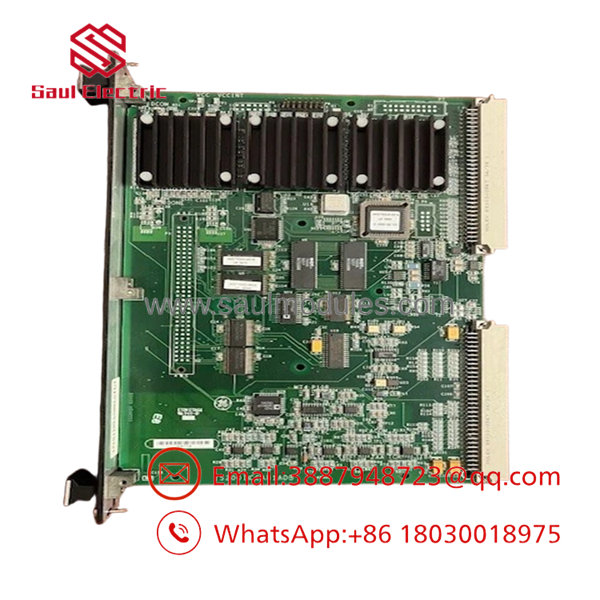
IS200ICCAH1A
The Veteran’s Tech Trap Guide (Crucial Value-Add)
⚠️ 1. Contact Wetting Voltage BERG Jumpers
The IS200ICCAH1A uses physical BERG jumper blocks to configure contact wetting voltage sources (e.g., internal 24VDC/125VDC vs. external field supplies). Inserting a replacement card without matching the original jumper configuration will cause the card to fail to detect contact closures or blow onboard protective fuses if external power collides with internal supplies.
Fix: Photograph every jumper header on your failed board before removal, and duplicate every setting position line-for-line on the replacement board.
❗ 2. VME Rack Alignment & Latching Levers
VMEbus connectors require even, firm pressure during insertion. Seating the card unevenly can bend connector pins or leave ground paths unengaged, resulting in bus errors or communication timeouts across adjacent cards.
Fix: Align the board precisely with the card-cage guide rails and engage both top and bottom ejector levers simultaneously to seat the board flush.
⚠️ 3. Revision Suffix Parity (H1A)
The revision code H1A indicates the primary artwork layout and component specifications for this module family. Matching the complete alphanumeric code ensures direct electrical and physical drop-in compatibility.
Fix: Cross-reference the complete part number stamped on the PCB margin prior to ordering.
Frequently Asked Questions (FAQ)
Q: Can I hot-swap the IS200ICCAH1A board while the Mark VI rack is under power?
A: No. Pulling or inserting a VME interface board live disrupts the VME backplane bus, which can crash the main system processor and cause an immediate, ungraceful turbine trip. Always isolate control rack power prior to servicing.
Q: What is the most common failure mode on this board?
A: Degradation of input optocouplers due to continuous high-duty-cycle switching, or damage to input resistors caused by external field voltage surges or short circuits.
Q: Does this card require software flashing or laptop downloading after installation?
A: No. The IS200ICCAH1A is a hardware-level input conditioning and interface board. Field contact mapping and logic processing are handled by the main rack CPU; this board operates based on hardware logic and physical jumper settings.
Q: What is the structural difference between IS200 and older DS3800 series cards?
A: IS200 series boards belong to the Mark VI / Innovation platform, featuring surface-mount components, high-density 6U VMEbus connectors, and advanced diagnostic capabilities. DS3800 boards belong to classic Mark IV systems with dual card-edge connectors.
Q: What warranty is supplied with surplus and refurbished stock?
A: Refurbished and new-surplus IS200ICCAH1A boards typically carry a standard 12-month replacement warranty covering component failure under normal operating conditions.

 Start Chat


