





Description
Product Introduction & Engineering Value
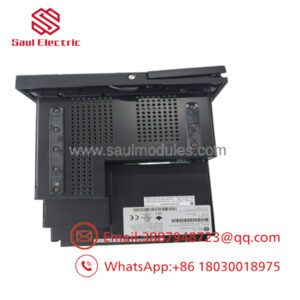
The GE IS200VAICH1C is a VAIC-series analog I/O board used in the GE Mark VI control platform. It interfaces analog field signals with the control system, making signal accuracy, terminal identification, and channel configuration central to replacement work.
One useful point for procurement: the suffix matters. A board that looks similar and carries the same VAIC family designation should not be treated as an automatic substitute. Verify the complete IS200VAICH1C identification and the application drawings before installation.
Technical Specifications
| Parameter | Specification |
|---|---|
| Manufacturer | General Electric |
| Part Number | IS200VAICH1C |
| Product Family | IS200 |
| Control Platform | Mark VI |
| Board Family | IS200VAIC |
| Board Type | Analog I/O Board |
| Configuration | H1C |
| Primary Function | Analog field-signal interface |
| Signal Interface | Analog input/output circuitry |
| Application | GE Mark VI control systems |
| PCB Format | Plug-in industrial control PCB |
| Replacement Method | Exact part-number and revision matching |
Technical note: The VAIC board family is associated with analog signal interfacing, but exact channel counts, input/output ranges, excitation/current-loop capabilities, terminal assignments, and accuracy specifications can vary by board configuration and application. Verify those values against the applicable GE Mark VI documentation rather than using generic VAIC specifications.
Field Application & the “Trench” Experience
Analog I/O failures can be deceptive. A bad signal may appear to be a transmitter problem, wiring issue, calibration problem, or controller problem before the actual board is identified.
A realistic turbine-maintenance scenario: a process measurement begins drifting intermittently. The technician traces the signal through the field wiring to the IS200VAICH1C interface. Before replacing it, the technician records the channel assignment and terminal wiring, checks the field device independently, and compares the spare board’s complete identification with the installed unit.
After replacement, the channel is verified against a known reference rather than simply checking whether a value appears on the operator screen.
A plausible number is not proof of a correct analog signal.
Niche application scenarios
- Mark VI turbine instrumentation: interfacing analog process measurements with the control system.
- Generator auxiliary monitoring: acquiring analog measurements used for turbine or generator supervisory control.
- Control-loop maintenance: replacing an aging analog interface PCB while preserving the existing Mark VI configuration.
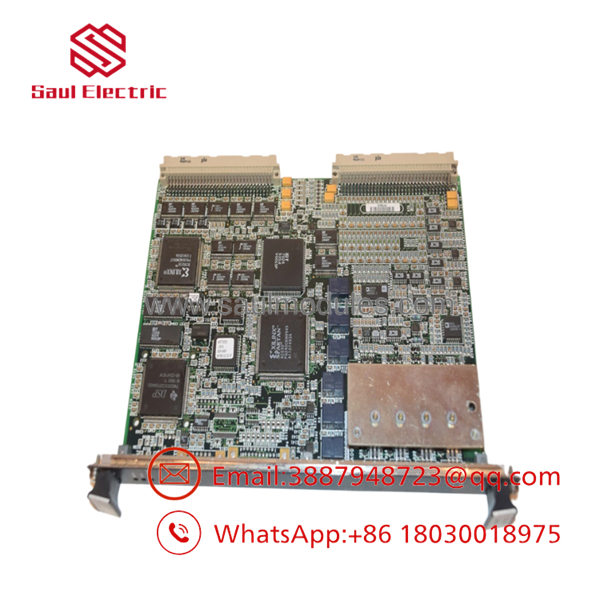
IS200VAICH1C
Transparency SOP: QA & Testing
For a New Surplus or Refurbished IS200VAICH1C, testing should include more than a power-up check.
Step 1 — Identification
Confirm IS200VAICH1C, board family, revision, and available serial/traceability information.
Step 2 — Hardware inspection
Inspect connectors, terminal interfaces, components, PCB traces, solder joints, and mounting points.
Step 3 — Configuration verification
Document jumpers, switches, and configuration settings where applicable.
Step 4 — Electrical screening
Check for shorts, abnormal resistance paths, damaged components, and visible evidence of overheating.
Step 5 — Analog functional testing
Where suitable test equipment is available, apply controlled known signals and verify the corresponding channel response according to the applicable GE procedure.
Step 6 — QA documentation
Record the test conditions, results, board condition, traceability information, and warranty.
For New Surplus stock, explicitly confirm whether the actual board has ever been installed or modified.
The Veteran’s Tech Trap Guide
⚠️ Trap #1 — Do not calibrate around a bad board.
If an analog channel is unstable or inaccurate, replacing calibration values without finding the hardware cause can mask the underlying problem.
⚠️ Trap #2 — Verify the channel assignment.
Moving a field wire to the wrong terminal can produce a perfectly believable reading from the wrong instrument.
PRO TIP: Record the original terminal and channel mapping before removing the board. After installation, compare each channel against the cabinet drawing and a known reference.
⚠️ Trap #3 — Don’t treat “signal present” as “signal correct.”
A board can pass a basic continuity or voltage check while an analog channel still has a scaling, isolation, or accuracy problem. Functional testing is the stronger verification.
Dynamic FAQ
What is the GE IS200VAICH1C?
The is a GE Mark VI VAIC analog I/O board used to interface analog field signals with the control system.
What does VAIC refer to?
VAIC identifies a family of GE Mark VI analog interface boards. The exact capabilities and channel assignments should be confirmed for the specific board configuration.
Is the IS200VAICH1C a digital I/O board?
No. It is associated with analog signal interfacing rather than being a conventional discrete digital I/O module.
Can another VAIC board replace it?
Not without engineering verification. Compare the complete part number, revision, channel configuration, terminal assignments, signal requirements, and application documentation.
How should a replacement be tested?
At minimum, inspect the PCB and perform appropriate electrical screening. For functional verification, use controlled known analog signals and compare the board response against the applicable GE specifications and system drawings.
How do I verify New Surplus authenticity and warranty?
Request photographs of the actual , including its identification label and PCB markings. Confirm whether it is unused, previously installed, repaired, modified, or tested. Obtain written warranty, DOA, and return terms before ordering.

 Start Chat


