





Description
Product Introduction
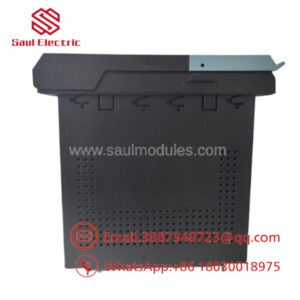
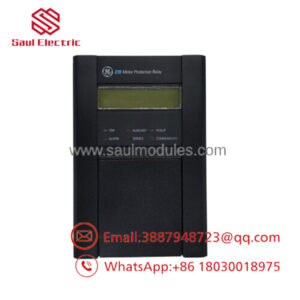
The GE IS200VCRCH1B (functionally identified as the VCRC card, with artwork revision IS200VCRCH1BB) is a high-density discrete contact reader processor board designed for GE Speedtronic Mark VI control systems. Installed directly into the VME controller rack, it acts as the primary communication and processing node for discrete field inputs (contact closures, limit switches, relay statuses) and digital command outputs sent to external equipment.
Instead of passing raw contact signals directly to the main CPU, the VCRC card handles localized optical isolation, contact bounce filtering, and sequence-of-events (SOE) time-stamping at the board level. This localized processing offloads high-speed contact scan tasks from the primary controller, guaranteeing millisecond-level event logging accuracy across complex power generation and industrial automation networks.
Key Technical Specifications
| Parameter | Specification / Value |
| Manufacturer | General Electric (GE) |
| Part Number | IS200VCRCH1B (Artwork Revision: IS200VCRCH1BB) |
| Functional Acronym | VCRC (VME Contact Reader Board) |
| System Compatibility | Speedtronic Mark VI Turbine Control System |
| I/O Capacity | Interfaces with up to 48 discrete contact channels |
| Time Stamping | Sequence of Events (SOE) tracking with 1 ms resolution |
| Isolation | Optical isolation per input channel against ground loops |
| System Interface | Dual VMEbus backplane connectors (P1/P2) |
| Power Consumption | +5V DC (3.2A), ±15V DC (0.4A) from rack backplane |
| Terminal Board Compatibility | Interfaces with TDRH and SRLY terminal boards via D-sub cables |
Application Scenarios & The “Trench” Experience
Picture this: It’s 4:10 AM during a stormy shift change at a 500MW gas-fired peaking plant. The unit suddenly trips on an unidentified “Turbine Trip – Emergency Stop Active” alarm string. Operators can’t tell which field device initiated the cascade—was it a low lube oil pressure switch or a manual E-stop button? The SOE log shows a scrambled mess of simultaneous timestamps because an aging VCRC contact reader card’s onboard crystal clock drifted, blinding the diagnostic buffer. Swapping in a pre-tested IS200VCRCH1BB board, re-establishing backplane bus sync, and restoring true 1ms contact timestamping isolates the faulty field pressure switch in minutes, clearing the turbine for a safe re-start before morning grid demand hits.
- Gas & Steam Turbine E-Stop / Trip Loops – Manages high-speed contact monitoring for emergency trip buttons, valve limit switches, and breaker trip feedbacks. Required for sub-millisecond Sequence of Events (SOE) accuracy.
- Generator Protection Interlocks – Interfaces with generator protection relays and sync check contactors. Required to ensure optical isolation prevents high-voltage substation transients from reaching the main VME control bus.
- Plant Auxiliary Contact Monitoring – Tracks status inputs from motor control centers (MCC), lube oil pumps, and cooling fans across large industrial combined-cycle facilities.
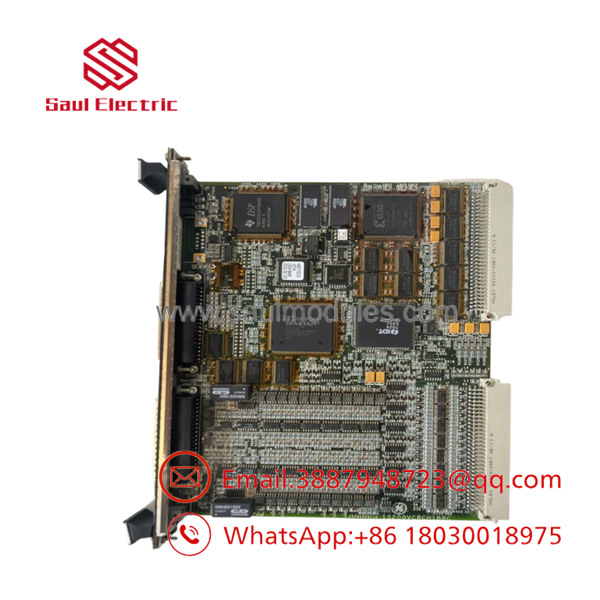
IS200VCRCH1B IS200VCRCH1BB
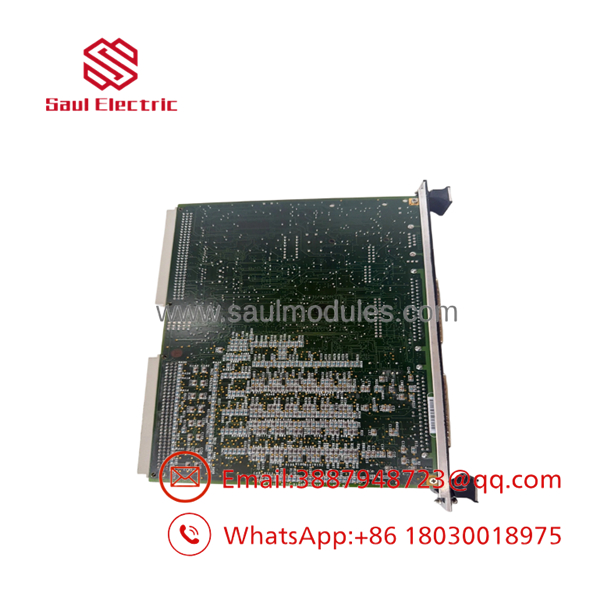
IS200VCRCH1B IS200VCRCH1BB
Transparency SOP: Quality Assurance & Testing
We don’t just ship boxes; we test them on actual GE Mark VI VME test racks before they ever leave our shop.
- Inbound & Hardware Inspection: Microscopic evaluation of VME bus connector pins, surface-mount ICs, and PCB trace paths. Anti-counterfeit verification of OEM GE serial tags.
- Backplane Power-On Audit: Board slotted into a powered Mark VI test rack to verify initial power-on self-test (POST) execution, onboard status LEDs, and clean rail draw (+5V, ±15V).
- Discrete I/O Signal Injection: High-speed pulse generators connected across all input channels via TDRH interface cables to test optical isolators, debounce filter timing, and 1ms SOE timestamping accuracy.
- VME Communication Stress Test: Continuous data read/write cycles executed over the VME backplane to verify the card maintains bus lock and zero dropped communication frames under full load.
- Anti-Static Sealing & Safe Packaging: Cleared of static charges, vacuum-sealed in an ESD shielding bag with desiccant, and packed inside custom foam boxes.
The Veteran’s Tech Trap Guide (Crucial Value-Add)
- ⚠️ Watch Out for “H1B” vs. “H1A” Revision Differences! The
H1Brevision (often labeled asIS200VCRCH1BBon the PCB silkscreen) includes updated onboard logic chips compared to the olderH1Avariant. While physically backward-compatible, plugging anH1Binto a rack expecting anH1Acan cause “Board Mismatch” alarms in ToolboxST if the card definition isn’t updated in the software project file. - ❗ Never Hot-Swap Without Inhibiting the Core In Triple Modular Redundant (TMR) systems, you can replace a VCRC board online, but only after inhibiting the target core (R, S, or T) in ControlST / ToolboxST first. Pulling a live VCRC board without inhibiting the core will drop discrete feedback signals instantly, causing voting mismatches that will trip the running turbine.
- ⚠️ Inspect the VME Backplane Pins First The DIN 96-pin connectors on the back of the VCRC board plug directly into the rack backplane. Inspect the male pins on the backplane slot for misalignment before sliding the card in. Forcing a card into a bent backplane pin will short out the +5V bus rail, taking down adjacent cards in the same rack.
- ❗ Verify Terminal Board Cable Keying The VCRC card connects to external terminal boards (like the TDRH) using multi-pin cables plugged into the front faceplate or backplane. Ensure the retaining screws are tightened evenly. A loose connector will cause intermittent contact state chattering in the alarm log.
Frequently Asked Questions (FAQ for Conversion)
Q: What is the functional difference between IS200VCRCH1B and IS200VCRCH1BB? A: IS200VCRCH1B is the primary commercial catalog part number, while IS200VCRCH1BB represents the specific printed circuit board (PCB) artwork revision level. They are the exact same physical board assembly; “BB” simply denotes the artwork version used during manufacturing.
Q: Does the IS200VCRCH1B board store configuration software on board? A: No. The VCRC board contains onboard boot firmware, but its operational parameters (such as contact debounce times and channel inversion flags) are downloaded automatically from the main Mark VI master controller (e.g., VCMX) upon system power-up.
Q: Can this card be used in both Simplex and TMR (Triple Modular Redundant) systems? A: Yes. In Simplex configurations, a single VCRC card handles the discrete contact reading. In TMR configurations, three VCRC cards operate in parallel across the R, S, and T cores, voting on contact states to eliminate single-point field sensor failures.
Q: Is this board compatible with standard GE Mark VI terminal blocks? A: Yes. The VCRC board interfaces with standard GE discrete terminal boards, primarily the TDRH (Terminal Board Discrete High-Density) and SRLY (Relay Terminal Board), using standard GE multi-conductor cables.
Q: Why buy Surplus / Refurbished stock over ordering direct from GE? A: Speedtronic Mark VI components are mature/legacy items with long OEM factory lead times and high emergency pricing. Stocking certified, fully bench-tested surplus hardware allows you to restore critical plant operations immediately without waiting months for factory production runs.

 Start Chat


