





Description
Key Technical Specifications
| Parameter | Value |
|---|---|
| Functional Acronym | WEPA (Wind Energy Pitch Axis) |
| Assembly Style | Modular multi-card component (Base board + AEPAH1B & BPPB sub-boards) |
| System Compatibility | GE 1.5 Megawatt (1.5MW) and related Wind Turbine Generator (WTG) assets |
| Nominal Supply Input | 125 V DC operational control bus |
| Discrete Inputs / Outputs | 20 x Discrete Inputs, 2 x Discrete Outputs, 9 x Relay Outputs |
| Analog Inputs / Outputs | 8 x Standard Analog Inputs, 1 x Isolated Analog Input |
| Encoder Interface | 1 x Dedicated Incremental Encoder Input track |
| PWM Channels | 2 x Pulse Width Modulation control outputs |
| Serial Communication Hardware | 3 Ports: COM1, COM2, and 1 x micro-miniature 9-pin socket D-connector (RS-485) |
| Network Interface | 1 x 10BaseT / AUI Ethernet interface link |
| Programmable Software Frame Rates | Selectable 10 ms, 20 ms, and 40 ms cycle execution updates |
| PCB Environmental Layer | Factory-applied conformal coating for moisture and debris isolation |
| Non-Operating Shock Limit | Maximum 10 G tracking displacement tolerance |
Product Introduction
The GE IS215WEPAH2B is a high-reliability Wind Energy Pitch Axis (WEPA) control board developed for the PACSystems Mark VIe Speedtronic series automated driver matrix. Installed directly within the pitching control cabinets of large industrial wind turbines—such as the mainstream GE 1.5MW fleet platforms—this specialized single-slot modular component coordinates real-time blade angle adjustments to maximize aerodynamic generation efficiency and protect structural assets during high-wind storms.
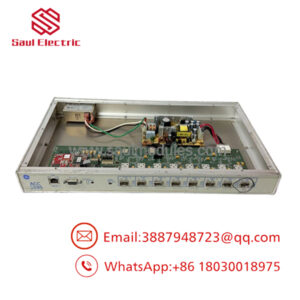
Architecturally, the IS215WEPAH2B features a dual-layer hardware design, integrating a pre-existing AEPAH1B printed circuit board and a BPPB connected daughter sub-board configuration. The module handles highly diverse high-density signaling footprints, managing 20 discrete inputs, 8 analog tracks, 9 relay outputs, and 2 dedicated pulse width modulation (PWM) channels to drive mechanical pitch actuators. To survive inside a nacelle environment, it features an extensive factory conformal coating that seals surface traces against moisture wicking and conductive carbon brush dust.
Installation & Commissioning Guide
Stage 1: Pre-Installation Preparation (Estimated Time: 15 minutes)
- ⚠️ Safety First: Lock out and tag out the primary 125 V DC input power feeds and backup battery banks driving the target turbine pitch cabinet. Working on an active control board poses severe tracking short risks and could cause un-commanded blade movements.
- Tools Required: Grounded static-dissipative ESD wrist strap, needle-nose pliers, precision alignment screwdrivers, and a digital multimeter.
- Data Verification: Use your ToolboxST configuration utility application to archive a full structural backup of the specific pitch axis parameter properties and firmware profiles before physical swap extraction.
Stage 2: Removing the Defective Card Assembly (Estimated Time: 10 minutes)
- Securely hook your ESD wrist strap to a bare-metal grounding terminal bar on the cabinet frame layout.
- Disconnect the main communication ribbons, the 10BaseT Ethernet line, and the micro-miniature 9-pin D-connector cables from the faceplate ports.
- Loosen the upper and lower faceplate retention screws anchoring the card frame housing to the chassis mounting plate.
- Squeeze the internal locking handles to disengage the rear connector pins safely from the backplane.
- ⚠️ Note: Pull the modular board out smoothly along its guide tracks to avoid flexing the connected daughter boards. Place the assembly directly inside an anti-static bag.
Stage 3: Installing the New WEPA Card (Estimated Time: 10 minutes)
- Extract the new IS215WEPAH2B module from its factory ESD packaging, handling it strictly by the structural faceplate edges.
Direct Turbine Control
- Confirm that all physical component groups, structural jumpers, and the H2B suffix code match your original machine node layout.
- Align the circuit board edges with the top and bottom guide rails of the designated controller rack slot.
- Slide the module rearward until it contacts the backplane, then apply firm, even pressure until the handles latch flush.
- Tighten the faceplate retention screws to ensure proper chassis electrical ground continuity.
Stage 4: Power-On & Loop Commissioning (Estimated Time: 20 minutes)
- Ensure the enclosure is clear of loose components, then re-apply primary 125 V DC control system line power.
- Monitor the faceplate LED diagnostic indicators; the primary status loops should pass initialization tests and light up solid green.
- Establish an engineering online link using ToolboxST software. Clear any residual memory tracking blocks and download your archived application-layer project properties.
- Run a controlled test sequence tracking blade movement parameters to ensure the incremental encoder input and PWM channels are operating within standard tolerances.
- ⚠️ Troubleshooting Note: If the system returns an immediate “Encoder Feedback Disconnect” or communication drops occur, cut power and check the ribbon headers bridging the internal AEPAH1B and BPPB daughter card layers. Even slight physical shift errors during transit can disrupt local high-density signal data.
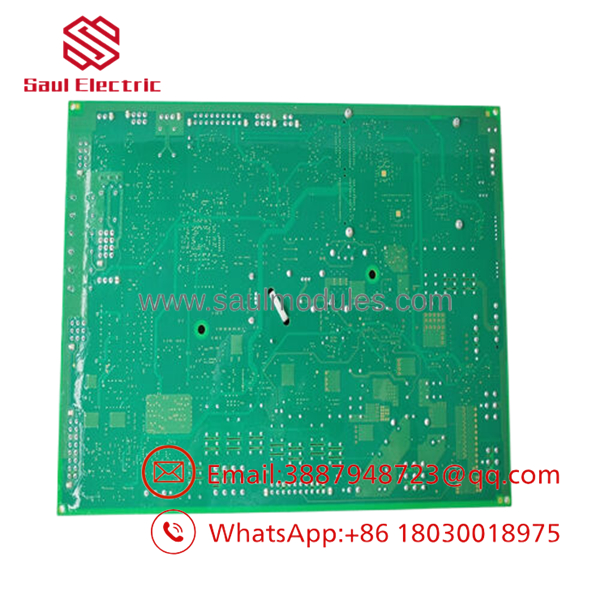
- IS215WEPAH2B
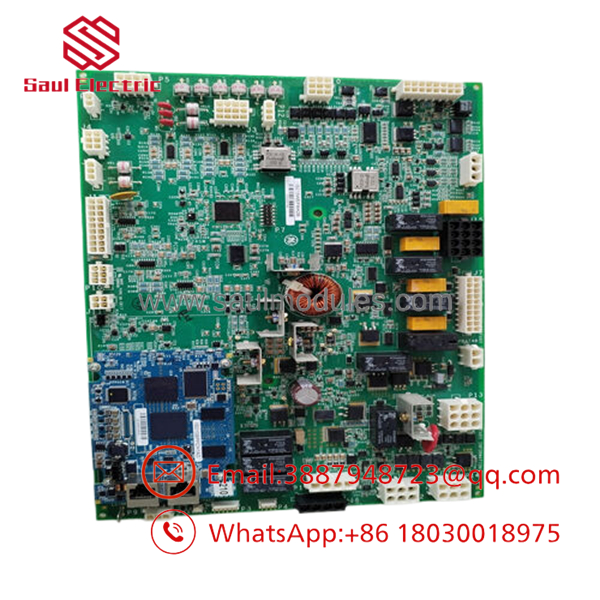
- IS215WEPAH2B
Frequently Asked Questions (FAQ)
What role do the integrated daughter boards play in this specific hardware profile?
The IS215WEPAH2B is engineered as a pre-assembled modular block rather than a standalone sheet card. It combines a primary underlying processing layer with specialized AEPAH1B and BPPB sub-boards. These daughter cards house the dense arrays of analog-to-digital converters, pulse width modulation (PWM) output circuits, and serial transceivers required to control the wind turbine’s pitch actuators.
Can this board support triple-modular redundant (TMR) turbine control architectures?
Yes. The WEPA platform is versatile and can be implemented in a simple simplex configuration or grouped within a Triple Modular Redundant (TMR) loop configuration. In a TMR system, three identical cards vote on execution inputs and encoder signals to provide a high-availability fallback if one board encounters a processing fault.
What do the selectable software frame rates (10 ms, 20 ms, 40 ms) specify?
The programmable frame rates dictate the exact deterministic intervals at which the board’s internal microprocessors execute application logic. This determines how quickly the card reads physical I/O channels, calculates orientation adjustments, and transmits new positioning signals out to the blade pitch motors.
Is it normal for the board to execute a minor delay when entering its initialization phase?
Yes. Upon a cold boot or power cycle, the internal monitoring processor runs through a comprehensive Power-On Self-Test (POST). It validates the circuit paths of the sub-boards, tests RAM registers, and syncs data paths with the master controller core. This safety verification loop can take up to several seconds to complete before the status LEDs stabilize to green.
Since these Mark VIe components are highly specialized, what is the source of this inventory?
Our stock consists of verified New Original / New Surplus units sourced from climate-controlled wind energy utility warehouse reserves and canceled generation project packages. Because factory production of these legacy generations has ceased, they are increasingly difficult to obtain via standard distribution channels. We perform comprehensive trace examinations and continuity tests to guarantee out-of-box reliability, and we back this component with a full 1-year warranty.

 Start Chat


