



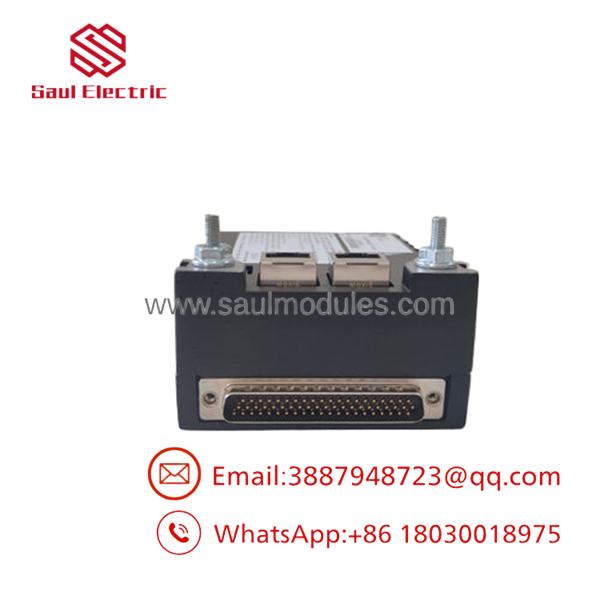


Description
Key Technical Specifications
| Parameter | Value |
|---|---|
| Manufacturer | GE (General Electric) |
| Model | IS220PPROS1B |
| Product Type | Backup Turbine Protection I/O Pack |
| Series | Mark VIe / Mark VIeS |
| Protection Architecture | Triple Modular Redundancy (TMR) |
| Processor Board | BPPC Processor Card |
| Speed Inputs | 3 independent pulse-rate inputs |
| Speed Frequency Range | 2 Hz to 20 kHz |
| Speed Accuracy | ±0.05% of reading |
| Generator/Bus Voltage Input | 75–127 V AC RMS |
| Communication | Dual 10/100 Mbps Ethernet (IONet) |
| Operating Voltage | 28 V DC nominal |
| Operating Temperature | -40 °C to +70 °C (PPROS1B) |
| Typical Applications | Gas Turbine, Steam Turbine, Generator Protection, Overspeed Protection |
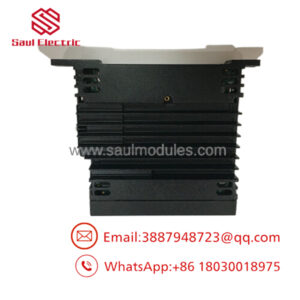
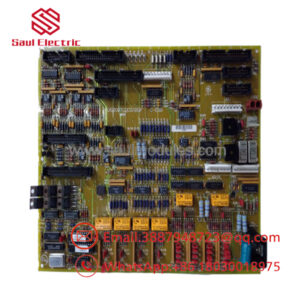
The IS220PPROS1B is an independent backup protection I/O Pack used in GE Mark VIe safety architectures. It monitors turbine overspeed, generator synchronization, and emergency trip circuits independently from the primary turbine controller. It is commonly installed with TPRO, SPRO, TREA, and TREG terminal/trip boards depending on the system configuration.
Product Introduction
The GE IS220PPROS1B is a Backup Turbine Protection I/O Pack developed for the GE Mark VIe and Mark VIeS control platforms. Unlike standard process I/O modules, this pack operates as an independent protection layer that continuously supervises turbine speed, generator synchronization, and emergency trip logic. If an unsafe operating condition is detected, it can initiate an emergency shutdown without relying on the primary controller.
Designed for critical power generation applications, the IS220PPROS1B supports Triple Modular Redundancy (TMR) architectures, high-speed pulse inputs, and deterministic Ethernet communications. It is widely deployed in gas turbines, steam turbines, and combined-cycle power plants where functional safety and turbine protection are essential.
Troubleshooting Quick Reference
| Symptom | Possible Cause | Relevance to this Part | Quick Check Method | Recommendation |
|---|---|---|---|---|
| Backup protection unavailable | Loss of 28 V DC supply | ✅ High | Measure supply voltage at the I/O Pack connector | Restore power before replacing the module |
| Overspeed alarm without actual overspeed | Faulty magnetic pickup or noisy speed signal | ✅ High | Measure pulse amplitude and frequency from each speed sensor | Verify speed pickups before replacing the I/O Pack |
| Emergency trip fails self-test | Trip board or emergency relay fault | ✅ High | Check TREG/TREL/TRES trip board diagnostics | Inspect trip hardware before replacing PPRO |
| Generator synchronization alarm | PT wiring or voltage sensing problem | ⚠️ Medium | Verify 75–127 V AC voltage inputs | Inspect PT circuits and wiring |
| Ethernet communication lost | Network cable or IONet configuration issue | ✅ High | Check Link LEDs and controller diagnostics | Verify Ethernet configuration and cabling |
| One TMR channel reports faults | Faulty protection channel or terminal board | ✅ High | Compare diagnostics across all three channels | Inspect associated terminal board before replacing the I/O Pack |
Field Tip: Most PPRO replacement requests are ultimately traced to failed magnetic pickups, PT wiring problems, emergency trip board faults, or network configuration issues. Before replacing the IS220PPROS1B, capture diagnostic logs, verify all three speed inputs, inspect the emergency trip board, and confirm stable 28 V DC power. These checks typically eliminate unnecessary module replacements.
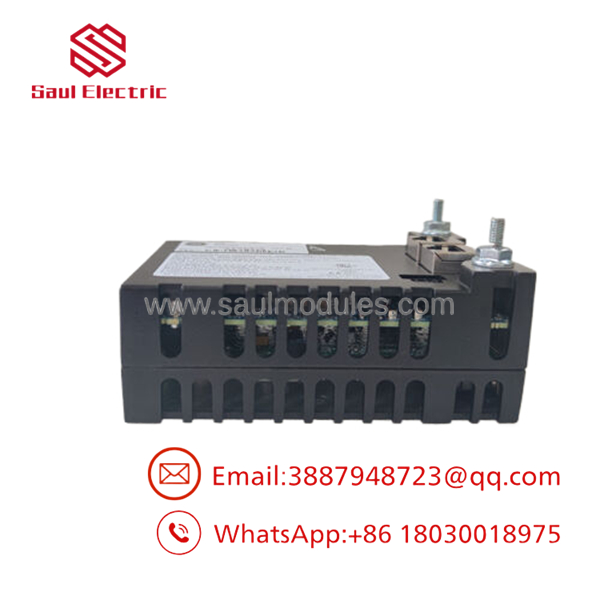
- IS220PPROS1B
Frequently Asked Questions (FAQ)
Q1. What is the primary function of the ?
The provides an independent backup turbine protection system for GE Mark VIe and Mark VIeS platforms. It continuously monitors turbine overspeed, emergency trip logic, and generator synchronization independently of the primary controller.
Q2. Does this module support Triple Modular Redundancy (TMR)?
Yes. The is specifically designed for TMR safety architectures. A typical installation uses three PPRO I/O Packs together with compatible TPRO, SPRO, or TREA terminal boards to provide fault-tolerant turbine protection.
Q3. What types of signals can the module monitor?
The module monitors three independent speed inputs, generator and bus voltage signals, emergency trip feedback, and synchronization status. It can independently verify turbine operating conditions and initiate protective action when required.
Q4. Can the be replaced while the turbine is operating?
No. This module is part of the turbine protection system and is not hot-swappable. Always follow plant lockout/tagout procedures, isolate the protection circuit, and use proper ESD precautions before replacement.
Q5. Is this product supplied as new or refurbished?
Unless otherwise specified, this listing refers to New Original (New Surplus) inventory. Every unit should undergo serial number verification, visual inspection, communication testing, protection function verification, and ESD-safe packaging before shipment.
Q6. What inspections should be completed before shipment?
A recommended quality inspection includes:
- OEM part number and serial number verification
- Anti-counterfeit inspection and traceability verification
- Visual inspection for corrosion or repair marks
- 28 V DC power-on verification
- Ethernet communication testing
- Speed input simulation and frequency verification
- Protection logic self-test
- Final anti-static packaging with QC documentation
Test reports and inspection photographs should be available upon request.
Q7. What is the most common installation mistake?
The most frequent issue is replacing the I/O Pack without verifying the magnetic speed pickups, terminal board configuration, or trip board compatibility. Before removing the original module, record the protection configuration, photograph every connection, and document the firmware revision. Matching the original hardware configuration significantly reduces commissioning time and prevents nuisance protection trips.

 Start Chat


