





Description
Product Introduction
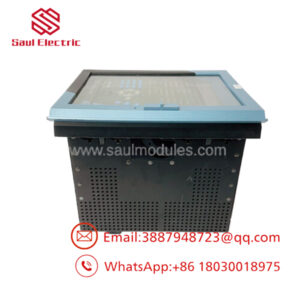
The GE IS420ESWAH3A is an unmanaged industrial Ethernet switch developed specifically for the Mark VIe and Mark VIeS turbine control platforms. Unlike a commercial office switch, it is designed for deterministic industrial communications, supporting GE’s IONet architecture that links controllers, I/O packs, engineering workstations, and operator interfaces.
In our field experience, network hardware is often overlooked until a communication fault shuts down an entire turbine. The IS420ESWAH3A addresses that problem by providing redundant power inputs, industrial environmental ratings, and reliable 10/100 Mbps switching for real-time control traffic. One important distinction is that the H3A version has no fiber ports, making it ideal for copper-only IONet installations.
Key Technical Specifications
| Parameter | Value |
|---|---|
| Manufacturer | GE |
| Model | IS420ESWAH3A |
| Product Type | Mark VIe IONet Ethernet Switch |
| Product Series | Mark VIe / Mark VIeS |
| Copper Ports | 8 × 10/100Base-TX RJ-45 |
| Fiber Ports | None |
| Network Standards | IEEE 802.3, 802.3u, 802.3x |
| Power Supply | 24/28 VDC |
| Power Redundancy | Dual Diode-OR Redundant Inputs |
| Maximum Current | 1 A |
| Mounting | DIN Rail |
| Cooling | Fanless Convection Cooling |
| Operating Temperature | -40°C to +70°C |
| Storage Temperature | -40°C to +85°C |
| Hazardous Area Rating | Class I Div 2, Zone 2, ATEX |
| Environmental Rating | G3 Corrosion Resistant |
Application Scenarios & The “Trench” Experience
Anyone who has spent a night troubleshooting a turbine network has probably experienced this.
Everything appears healthy. Controllers are running. I/O packs have power. Yet half the field devices suddenly disappear from IONet. Engineers start replacing cables because network switches “rarely fail.”
Sometimes they’re right.
Sometimes they spend six hours chasing a switch with an intermittent power input.
Typical Applications
- Gas Turbine Power Plants — Mark VIe controller networking — Connects controllers, I/O packs, and HMIs through IONet.
- Steam Turbine Control — Distributed control communications — Maintains deterministic Ethernet traffic for turbine protection.
- Combined Cycle Facilities — Control cabinet networking — Supports high-availability communication between redundant controllers.
- Industrial Cogeneration Plants — Balance-of-Plant integration — Connects operator stations and engineering workstations.
- Turbine Retrofit Projects — Legacy Mark VIe modernization — Replaces aging ESWA switches without changing network architecture.
Field Replacement Example
A utility operating two Frame 9E gas turbines experienced random IONet communication losses approximately every three days. Initial troubleshooting focused on controller firmware and CAT5e cabling because diagnostic logs pointed to multiple I/O packs simultaneously.
The actual problem was an aging IS420ESWAH3A whose redundant power input terminal had loosened after years of thermal cycling. Installing a tested replacement switch restored network stability immediately and eliminated recurring communication alarms.
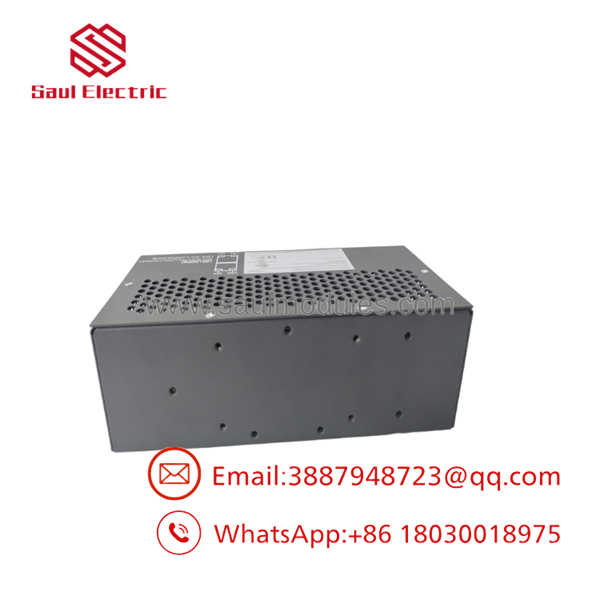
- IS420ESWAH3A
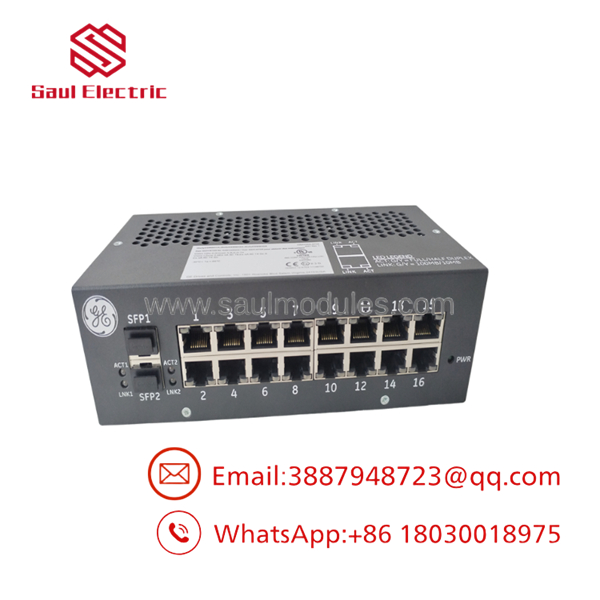
- IS420ESWAH3A
Transparency SOP: Quality Assurance & Testing
We don’t just ship boxes; we test them on actual GE Mark VIe hardware whenever practical.
- Inbound Inspection
- Verify GE labels and hardware revision.
- Check housing, connectors, and DIN-rail mounting tabs.
- Screen for counterfeit components and repaired PCBs.
- Live Rig Testing
- Power-on diagnostics.
- Verify all eight Ethernet ports.
- Confirm IONet communication with Mark VIe hardware.
- Link-speed and activity verification.
- Electrical Parameter Checks
- Measure redundant power input voltage.
- Verify current consumption.
- Check connector continuity.
- Inspect internal power regulation.
- Hardware Verification
- Record hardware revision.
- Confirm compatibility with the intended Mark VIe configuration.
- Log serial number for traceability.
- Final QC & Packaging
- Anti-static packaging.
- Shock-resistant protective materials.
- Final visual inspection before shipment.
The Veteran’s Tech Trap Guide
⚠️ Don’t replace this with a commercial Ethernet switch.
IONet is a real-time control network. An unmanaged office switch may pass traffic, but it may also introduce latency or behavior that causes intermittent controller communication faults.
❗ Verify the power source before replacing the switch.
Many “failed” switches are actually suffering from unstable 24 VDC power supplies or loose Phoenix connectors.
⚠️ Know your ESWA variants.
The has no fiber ports. If your existing installation uses optical uplinks, verify whether the original switch is an H1A, H2A, H4A, or H5A model before ordering.
❗ Label every Ethernet cable. Trust me.
Eight identical CAT5e cables can become a guessing game after replacement. Label both ends before disconnecting anything.
Frequently Asked Questions (FAQ)
Q1. Can the be hot-swapped?
Generally, no. Although the switch uses redundant power inputs, replacing it should be performed during a planned maintenance window to avoid interrupting IONet communications.
Q2. Does this switch include fiber-optic ports?
No. The is the copper-only version with 8 × 10/100Base-TX RJ-45 ports. Other ESWA variants provide one or two fiber ports.
Q3. Is it a managed Ethernet switch?
No. It is an industrial unmanaged switch optimized for GE IONet applications. Configuration is minimal, reducing maintenance requirements and startup complexity.
Q4. Which systems use this switch?
It is designed for GE Mark VIe and Mark VIeS turbine control systems used in gas turbines, steam turbines, and other critical rotating equipment.
Q5. Why is this switch different from a standard industrial Ethernet switch?
It is qualified for GE’s turbine control environment, including hazardous-location capability, G3 corrosion resistance, redundant power inputs, and compatibility with the IONet architecture.
Q6. Why is surplus inventory often less expensive than buying directly from the OEM?
Most available inventory comes from project overruns, strategic spare-part reductions, or plant modernization programs. Lower pricing reflects the supply chain rather than reduced functionality. Every unit should still be inspected and function-tested before shipment.
Q7. What warranty is typically provided?
Most professionally tested surplus units include a 12-month warranty covering functional defects during normal operation. Damage resulting from incorrect wiring, electrostatic discharge (ESD), overvoltage, or physical abuse is typically excluded.
Engineering Note: Before replacing an , document the network topology, controller IP assignments, redundant power wiring, and cable routing. Network problems that appear to be switch failures often originate from loose power terminals, damaged Ethernet cables, or duplicate network addresses.


 Start Chat


