





Description
Product Introduction & Engineering Value
Many legacy VME systems continue to outperform expectations because their computing platform remains stable even after years of continuous operation. When processor hardware eventually reaches end of life, replacing the CPU board is often considerably less disruptive than redesigning the complete control system.
The GE V7768-31200 belongs to the V7768 family of embedded VME single board computers. Built around an Intel Core 2 Duo processor and the Intel 945GME chipset, it delivers high-performance x86 processing while maintaining compatibility with existing VME infrastructures used in industrial automation, defense, transportation, simulation, and scientific instrumentation.
Technical Specifications
| Parameter | Specification |
|---|---|
| Manufacturer | GE Intelligent Platforms / Abaco Systems |
| Model | V7768-31200 |
| Product Type | VME Single Board Computer |
| Form Factor | 6U VME |
| Processor | Intel® Core™ 2 Duo |
| Maximum CPU Speed | Up to 2.16 GHz |
| Chipset | Intel 945GME Express |
| System Memory | Up to 2 GB DDR2 SDRAM |
| Ethernet | Dual 10/100/1000 Mbps Ports |
| Storage Interfaces | SATA, Optional CompactFlash |
| Expansion | One PCI-X PMC Site |
| VME Bridge | Tundra Universe II |
| Operating System Support | VxWorks, Linux, Windows XP Embedded (configuration dependent) |
Field Application & The “Trench” Experience
During the modernization of an automated environmental test chamber, engineers began experiencing random processor lockups on a legacy VME platform after years of uninterrupted service. Diagnostic logs ruled out the I/O modules and identified the processor board as the source of the instability.
After installing a verified V7768-31200, the system booted using the existing VME architecture with no software modifications. Following BIOS verification, network configuration, and VME communication tests, the chamber resumed continuous operation while preserving the original control application.
Typical deployment scenarios include:
- Aerospace hardware-in-the-loop simulation systems
- Industrial process monitoring and supervisory control
- Automated semiconductor test equipment
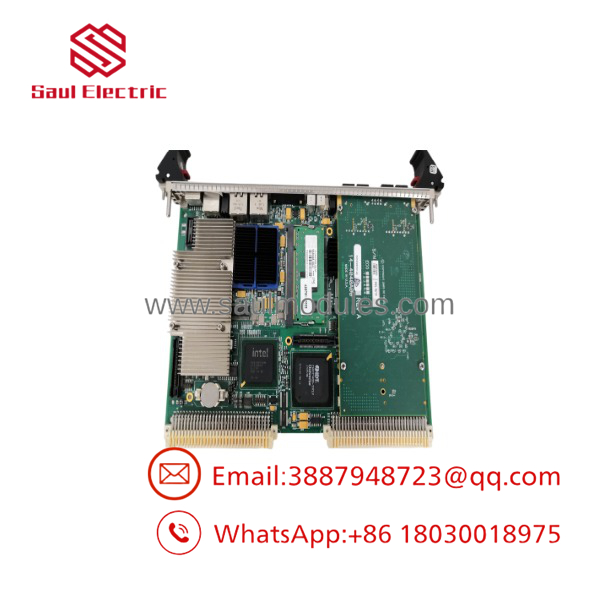
V7768-31200
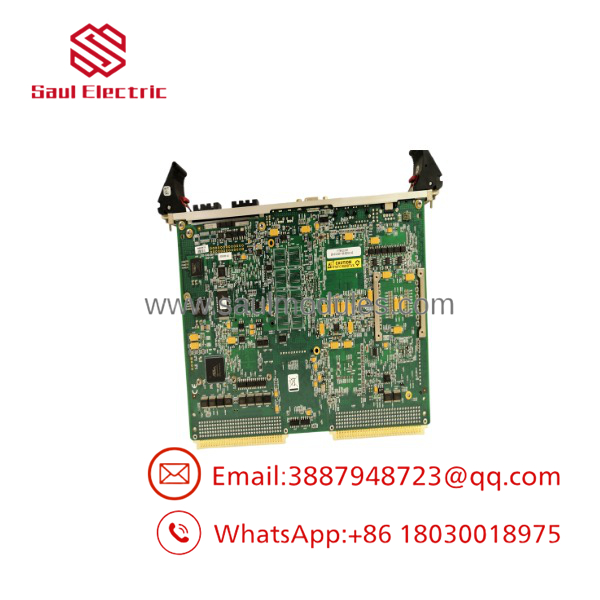
V7768-31200
Transparency SOP: QA & Testing
Every V7768-31200 board follows a documented inspection procedure before shipment.
- Verify the complete part number, PCB revision, and processor configuration.
- Inspect VME connectors, PMC connector, and front-panel interfaces.
- Perform power-on diagnostics and BIOS verification.
- Test DDR memory, Ethernet interfaces, SATA controller, USB ports, and serial interfaces.
- Confirm VME communication through a compatible chassis when available.
- Package the board using ESD-safe materials with reinforced protective packaging.
The Veteran’s Tech Trap Guide
⚠️ Confirm the Exact Assembly Number
Several V7768 variants differ in processor type, memory population, BIOS revision, and installed options. Always verify the complete assembly number before ordering.
⚠️ Don’t Overlook the PMC Configuration
Many OEM systems rely on PMC expansion cards for specialized communications or data acquisition. Replacing only the SBC without verifying PMC compatibility can create unexpected hardware faults.
PRO TIP:
Before declaring the CPU board defective, inspect the VME backplane connectors and power rails. Oxidized DIN connectors or unstable chassis power frequently produce intermittent failures that resemble processor board issues.
Dynamic FAQ
Q1. What is the primary function of the V7768-31200?
It serves as the central processing unit of a VMEbus system, executing embedded operating systems and managing communication with VME I/O modules and peripheral devices.
Q2. Which processor does this board use?
The V7768 family is built around an Intel Core 2 Duo processor operating at speeds of up to 2.16 GHz, depending on the specific configuration.
Q3. Can the -31200 replace older GE Fanuc VME SBCs?
In many systems, yes. However, BIOS version, operating system, PMC devices, and application software should all be verified before replacement to ensure compatibility.
Q4. Is this board still in production?
No. The entered a restricted production/end-of-life phase, and newer Intel-based VME SBCs are recommended for new designs. Existing systems are typically supported through New Surplus and professionally refurbished inventory.
Q5. How is New Surplus inventory authenticated?
Each board is inspected for correct labeling, physical integrity, connector condition, and component authenticity. Functional testing is performed in a compatible VME platform whenever practical.
Q6. Is warranty coverage available?
Yes. Professional industrial automation suppliers typically offer warranty protection for both New Surplus and Refurbished boards, with coverage periods varying by inventory condition and supplier policy.

 Start Chat


