





Description
Product Introduction
The Abaco / GE Intelligent Platforms VMIVME-3122 (VMIC 3122) is a high-density, 6U VMEbus analog-to-digital input module engineered for demanding real-time data acquisition and process control architectures. Capable of handling up to 64 single-ended or 32 differential analog channels, this board delivers rapid sampling rates and 12-bit conversion precision across complex industrial and defense monitoring environments.
Designed to operate in harsh electrical noise conditions, the VMIVME-3122 features onboard signal conditioning, programmable gain settings, and robust overvoltage protection across every input line. It serves as a core analog interface in long-lifecycle VME card cages, eliminating the need to redesign entire instrumentation racks when replacing degraded legacy ADC cards.
Key Technical Specifications
| Parameter | Value |
| Board Architecture | Standard 6U Single-Slot VMEbus (VME64 compatible) |
| Input Channels | 64 Single-Ended or 32 Differential channels (Jumper selectable) |
| ADC Resolution | 12-Bit |
| Input Voltage Ranges | ±5V, ±10V, 0 to +5V, 0 to +10V (Software/Hardware configurable) |
| Conversion Speed | High-speed multi-channel scanning (typical < 10 µs per channel) |
| Overvoltage Protection | Up to ±35V continuous input protection |
| Onboard Memory / Buffering | Onboard data buffer FIFO for burst sampling |
| Operating Temperature | 0°C to +65°C (Standard) / -40°C to +85°C (Rugged variants) |
| Power Requirements | +5VDC and ±12VDC from VME backplane |
Application Scenarios & The “Trench” Experience
It was during a critical engine test cell run at an aerospace research facility when an entire bank of pressure transducer signals suddenly froze. The control room SCADA system threw a backplane conversion timeout alarm. The culprit? An aging ADC driver chip on an old VME analog input card had thermal-cracked after 15 years of continuous heat cycling. With test cell downtime costing upwards of $20,000 per day, finding a direct drop-in VMIVME-3122 card was the only way to recover real-time telemetry before the testing window closed.
- Aerospace Test Benches & Simulators – Sampling dozens of pressure, strain gauge, and accelerometer sensors during real-time flight simulations.
- Power Generation Telemetry – Monitoring high-density analog sensor arrays (temperature, vibration, fluid pressure) across steam and gas turbine skids.
- Semiconductor Fab Automation – Reading process chamber pressure transducers and mass flow controller (MFC) feedback loops.
- Defense & Sonar Processing – Capturing multi-channel hydrophone or radar feedback signals into central processing nodes.
Field Case Study
A steel rolling mill faced an unexpected shutdown when an analog input card processing roll-gap thickness feedback failed on their main VME-based drive controller. OEM lead times for new-generation conversions were quoted at 4 months with major panel re-wiring required. We shipped a fully bench-tested VMIVME-3122 board overnight. The plant automation team matched the hardware channel jumper blocks, slid the card into Slot 4, performed a zero/span calibration via software, and brought the mill back to 100% production capacity before midday.
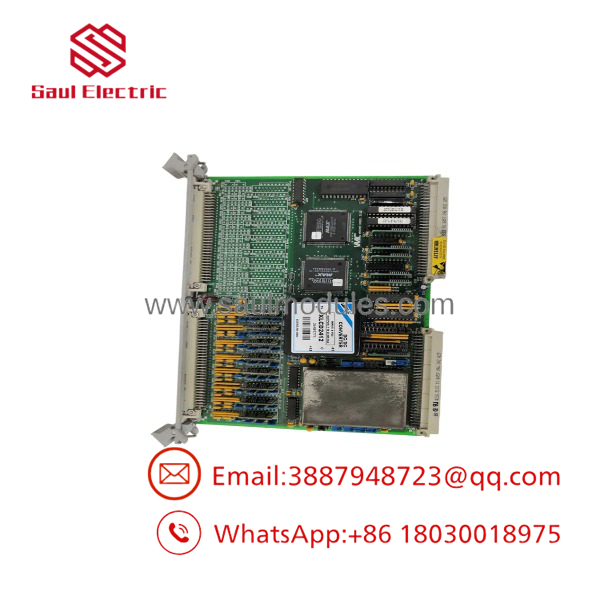
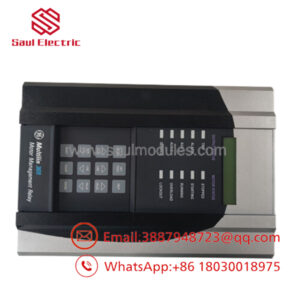
VMIVME-3122
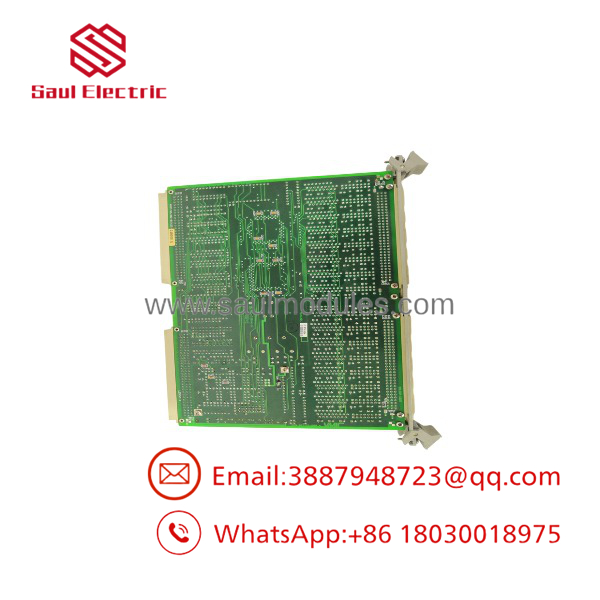
VMIVME-3122
Transparency SOP: Quality Assurance & Testing
Analog data acquisition cards must deliver absolute measurement integrity. Every VMIVME-3122 board undergoes a strict multi-step validation process before entering our ready-to-ship stock.
- Inbound Visual & Pin Audit: Inspecting P1/P2 DIN connector pins for bends or oxidation, auditing PCB traces under magnification, and checking onboard DIP switches/jumpers.
- Backplane Power Rail Stress Test: Slotting the board into a VME chassis and measuring current draws across +5V, +12V, and -12V rails to verify onboard DC-DC converter health.
- Multi-Channel Precision Calibration: Injecting precise voltage references (0V, 2.5V, 5V, 10V) from a precision signal calibrator across all 64 channels to verify ADC linearity and 12-bit conversion accuracy.
- Gain & Scanning Rate Verification: Exercising software-programmable gain settings and high-speed multi-channel scan loops under simulated load conditions.
- ESD Static-Shield Packaging: Cleaning edge connectors and sealing the certified card in heavy anti-static ESD barrier packaging with fresh desiccant.
The Veteran’s Tech Trap Guide (Crucial Value-Add)
- ⚠️ Single-Ended vs. Differential Selection: The VMIVME-3122 can be configured for 64 single-ended inputs or 32 differential inputs via onboard header jumpers. If your replacement board is configured for differential mode while your field cabling is wired for single-ended, half your channels will read completely dead or rail to max voltage. Check and match all jumper blocks before inserting the card.
- ❗ Never Connect Live Signal Lines to an Unpowered Card: Applying active ±10V field signals to the card’s input pins while the VME chassis is powered OFF can forward-bias protection diodes, damaging the onboard analog multiplexer ICs over time.
- ⚠️ Verify Input Voltage Range Jumpers: Ensure the hardware input voltage jumpers (e.g., ±10V vs. 0–10V) match your field transmitter scaling. A mismatch will result in clipped signals or half-scale data errors in your SCADA software.
- ❗ Ground Loop Management: Always tie the signal shield grounds strictly at one common earth point. Multiple ground returns across a long cable run will create ground loops that introduce high-frequency ripple into the 12-bit conversion values.
Frequently Asked Questions (FAQ for Conversion)
Q: What is the difference between single-ended and differential mode on the ?
A: Single-ended mode allows up to 64 channels sharing a common ground return (ideal for high-density, low-noise environments). Differential mode uses two wires per channel across 32 channels, providing high common-mode noise rejection for long field sensor runs.
Q: Can I hot-swap the out of an active VME chassis?
A: No! Standard VMEbus architectures are not live-swappable. Removing or inserting this board while the backplane is energized can trigger power spikes that ruin the ADC chips or lock up the main CPU bus.
Q: Is the compatible with VxWorks, Linux, and Windows NT/2000 legacy environments?
A: Yes. Native driver support and memory-mapped register structures exist for standard real-time operating systems including VxWorks, LynxOS, Linux, and legacy Windows platforms.
Q: What warranty coverage is provided on this refurbished or surplus board?
A: Every board shipped—whether factory-sealed new surplus or bench-tested refurbished—includes a complete 12-month replacement warranty.
Q: Why buy surplus VMIC boards instead of upgrading the entire system?
A: Replacing a single VME board costs a fraction of a full control system overhaul. It avoids months of panel re-engineering, drawing revisions, re-cabling, and software application re-validation.

 Start Chat


