





Description
Key Technical Specifications
| Parameter | Value |
|---|---|
| Manufacturer | GE Fanuc / VMIC (Abaco Systems) |
| Model | VMIVME-7455 |
| Product Type | VMEbus IDE CD-ROM Drive Module |
| Form Factor | 6U Single-Slot VMEbus |
| Drive Type | 24X IDE CD-ROM or faster |
| Interface | ATAPI / IDE |
| Host Connection | VMEbus P2 user-defined connector |
| Supported Media | CD-ROM, CD-I, Video CD, Enhanced CD, CD PLUS |
| Data Transfer Rate | 1.55–3.60 MB/s sustained |
| Burst Transfer Rate | Up to 16.7 MB/s |
| Typical Access Time | 130 ms |
| Power Supply | +5 VDC (600 mA typical during read) |
| Operating Temperature | 5 °C to 50 °C |
| Storage Temperature | 0 °C to 55 °C |
| Humidity | 20–80% RH, non-condensing |
| Optional Cable Kits | VMXC-3, VMXC-H, VMXC-9, VMXC-K (application dependent) |
The VMIVME-7455 connects to compatible VME single-board computers through the VMEbus P2 connector and is intended to provide removable optical media support for embedded systems.
Product Introduction
The GE VMIVME-7455 is a 6U single-slot VMEbus IDE CD-ROM Drive Module developed by VMIC (later GE Fanuc Intelligent Platforms and now Abaco Systems) for embedded VME computer systems. It allows VME-based controllers to access software, operating system media, maintenance utilities, and archived data directly from industry-standard IDE CD-ROM discs.
Unlike external optical drives, the VMIVME-7455 occupies a single VME slot and communicates with compatible VMIC single-board computers through the P2 backplane IDE interface, eliminating the need for external cabling in many installations. Depending on the SBC configuration, optional VMXC cable assemblies are available for single-slot and dual-slot processor boards. The module was commonly deployed in military, aerospace, industrial automation, and test & measurement systems where VMEbus architectures remain in service.
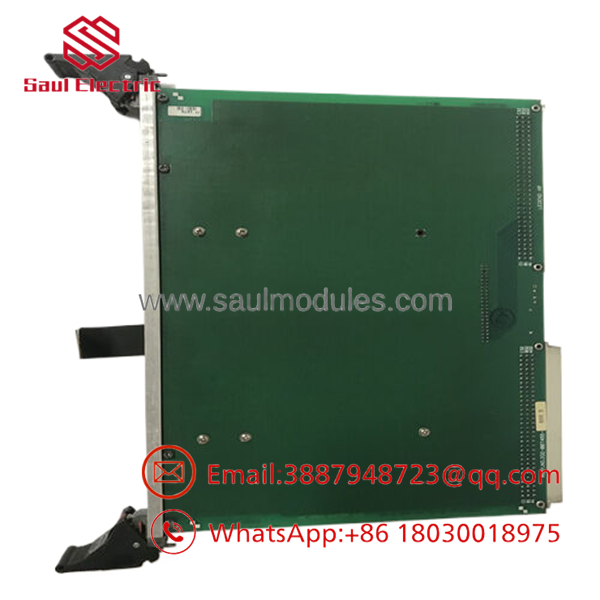
- VMIVME-7455
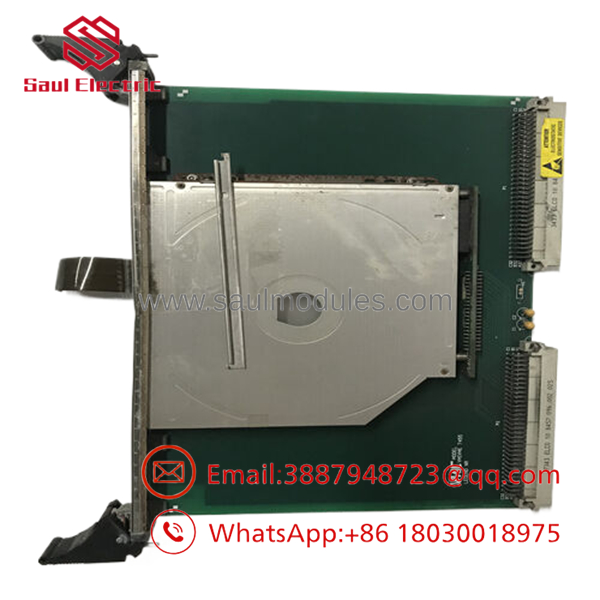
- VMIVME-7455
Troubleshooting Quick Reference
| Symptom | Possible Cause | Relevance | Quick Check Method | Recommendation |
|---|---|---|---|---|
| CD-ROM not detected | IDE cable or P2 connection fault | ✅ High | Verify VMXC cable and P2 connection | Reseat module and inspect cable |
| Disc cannot be read | Damaged or incompatible media | ✅ High | Test with a known-good CD | Replace damaged media |
| Boot from CD fails | BIOS boot configuration | ⚠️ Medium | Check SBC BIOS boot sequence | Configure IDE CD-ROM as boot device |
| Drive not spinning | Missing +5 V power | ✅ High | Measure VME power rails | Verify chassis power supply |
| Intermittent read errors | Dirty optical lens or vibration | ⚠️ Medium | Clean drive and inspect mounting | Replace drive if necessary |
| SBC cannot communicate with drive | Incorrect cable assembly | ⚠️ Medium | Confirm VMXC cable type | Install correct cable for SBC model |
| Slow read performance | Aging optical drive | ❌ Low | Measure transfer rate | Replace CD-ROM mechanism if worn |
Field Tip: Most issues result from incorrect cable selection, aging optical drives, or BIOS configuration rather than failure of the VME interface itself. Before replacing the module, verify the P2 IDE connection, confirm the appropriate VMXC cable assembly, and test using a known-good bootable CD.
Frequently Asked Questions (FAQ)
Q1. What is the primary function of the ?
The provides IDE CD-ROM capability for compatible VMEbus embedded computers, allowing software installation, operating system booting, diagnostics, and data retrieval from optical media.
Q2. What CD formats are supported?
The module supports multiple optical media formats, including:
- CD-ROM
- CD-I
- Video CD
- Enhanced CD
- CD PLUS
This broad compatibility makes it suitable for both software distribution and multimedia applications.
Q3. How does the connect to the processor board?
The module communicates through the VMEbus P2 connector using an ATAPI/IDE interface. Depending on the processor board and slot arrangement, different VMXC cable assemblies (VMXC-3, VMXC-H, VMXC-9, or VMXC-K) are required.
Q4. Which systems commonly use this module?
It is designed for VMIC/GE Fanuc VME single-board computers and is widely used in:
- Industrial automation
- Aerospace and defense
- Test and measurement
- Power generation
- Embedded control systems
Q5. Is the still manufactured?
No. The entered Restricted Production Phase (RPP) in 2007 and is considered a legacy product. Most available units today are supplied as New Surplus, refurbished, or professionally tested spare parts.
Q6. Can the module boot an operating system from CD?
Yes. When supported by the host SBC BIOS and correctly configured, the can be used as a bootable IDE CD-ROM device for operating system installation and system recovery.
Q7. What should I verify before installation?
Engineers should verify:
- Complete model number ()
- SBC compatibility
- Required VMXC cable assembly
- IDE master/slave configuration
- BIOS boot settings
- VME chassis power supply
- P2 connector condition
- Optical media integrity
- ESD protection during installation
Performing these checks before commissioning helps ensure reliable CD-ROM operation and minimizes downtime in legacy VMEbus systems.

 Start Chat


