





Description
Product Introduction
The GESPAC GESADA-1 is an Analog/Digital Interface Board designed for GESPAC modular industrial control systems. It provides analog signal acquisition together with analog output capability, allowing controllers to interface with transmitters, sensors, actuators, and other process instrumentation.
To be honest, this is an older interface board, but many legacy automation systems still depend on it. Unlike digital I/O modules, the GESADA-1 performs both analog-to-digital (A/D) conversion and digital-to-analog (D/A) conversion. Before replacing the board, verify the voltage ranges, calibration constants, and controller compatibility. Many “board failures” ultimately trace back to field wiring or sensor faults rather than the module itself.
Key Technical Specifications
| Parameter | Value |
|---|---|
| Manufacturer | GESPAC |
| Model | GESADA-1 |
| Product Type | Analog/Digital Interface Board |
| Analog Inputs | 16 Channels |
| Analog Outputs | 4 Channels |
| A/D Resolution | 10-bit |
| D/A Resolution | 10-bit |
| Input Function | Analog-to-Digital Conversion |
| Output Function | Digital-to-Analog Conversion |
| Power Supply | +5 VDC and ±12 VDC |
| Application | Industrial Process Control |
| Product Status | Legacy / Obsolete |
Application Scenarios & The “Trench” Experience
Here’s a familiar maintenance story.
A legacy machine suddenly reports unstable pressure readings on multiple process loops. Instrument technicians replace transmitters. Electricians megger the field cables. Everything checks out. The actual problem turns out to be a failed analog input channel on the interface board that has been operating continuously for decades.
Typical applications include:
- Industrial Automation — Collecting analog signals from pressure, flow, and temperature transmitters.
- Process Manufacturing — Providing analog feedback to distributed control equipment.
- Machine Control — Interfacing PLCs with proportional valves and analog actuators.
- Research Systems — Data acquisition requiring multiple analog input channels.
- Legacy Control Platforms — Supporting installed GESPAC-based automation systems.
Field Replacement Example
An industrial test facility experienced drifting analog measurements on several channels while all field transmitters remained within calibration. Engineers isolated the problem to a deteriorating GESADA-1 input stage. After installing a tested replacement, verifying channel scaling, and recalibrating the analog outputs, measurement stability returned without replacing any field instrumentation.
Transparency SOP: Quality Assurance & Testing
We don’t just ship boards; we test them on compatible GESPAC hardware whenever practical.
- Inbound Inspection
- Verify catalog number and PCB revision.
- Inspect edge connectors, ICs, capacitors, and solder joints.
- Check for corrosion, overheating, or unauthorized repair.
- Live Functional Testing
- Apply the specified +5 VDC and ±12 VDC supplies.
- Verify board initialization.
- Confirm analog input acquisition.
- Verify analog output operation.
- Electrical Parameter Checks
- Test all sixteen analog input channels.
- Verify four analog output channels.
- Confirm A/D and D/A conversion accuracy.
- Hardware Verification
- Record PCB revision.
- Verify calibration where applicable.
- Document compatibility with the customer’s controller.
- Final QC & Anti-static Packaging
- Complete functional inspection.
- ESD-safe packaging.
- Shock-resistant industrial packaging.
- Full serial-number traceability.
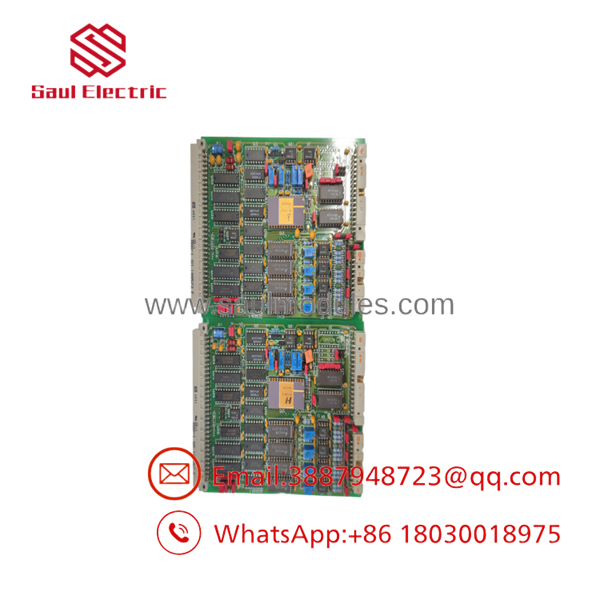
- GESADA-1
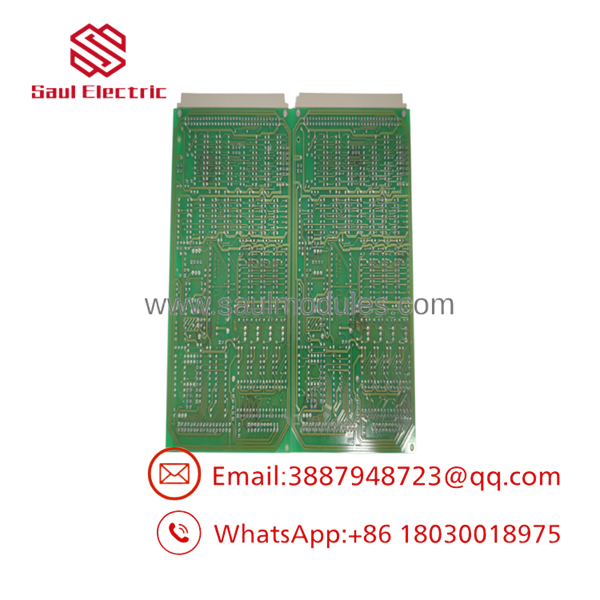
- GESADA-1
The Veteran’s Tech Trap Guide
⚠️ Verify the power rails first.
The requires +5 VDC and ±12 VDC supplies. If one rail is missing, the board can appear completely defective even though the hardware is healthy.
❗ Don’t condemn the board before checking the sensors.
A failed transmitter or broken shield connection can generate symptoms identical to a failed analog input channel. Measure the field signal directly before replacing the module.
⚠️ Recalibrate after replacement.
Even identical replacement boards can exhibit slight analog offset differences. Verify scaling and calibration before returning the system to production.
❗ Observe ESD precautions.
The analog conversion circuitry is more sensitive than standard digital I/O modules. Ground yourself before handling the board, and always transport it in anti-static packaging.
Frequently Asked Questions (FAQ)
Q1. What is the primary function of the ?
It performs analog-to-digital conversion for sixteen input channels and digital-to-analog conversion for four output channels, allowing analog field devices to interface with GESPAC control systems.
Q2. How many analog channels are supported?
The module provides 16 analog input channels and 4 analog output channels, each using 10-bit conversion.
Q3. Is the still manufactured?
No. The module belongs to a legacy GESPAC platform. Most available units are sourced from industrial surplus inventories or professionally refurbished stock.
Q4. Can it be hot-swapped?
No. Power down the controller before installing or removing the board. Hot-swapping can damage the module or the backplane unless the host system explicitly supports live replacement.
Q5. Why do these modules typically fail?
Common causes include aging electrolytic capacitors, power supply problems, thermal cycling, connector oxidation, and electrical overstress on analog input circuits.
Q6. Can I replace it with a newer analog I/O board?
Not directly. Although modern analog modules offer higher resolution and additional diagnostics, replacement generally requires hardware, backplane, and software compatibility verification.
Q7. What warranty is typically available?
Most industrial automation suppliers provide a 12-month warranty on functionally tested new surplus or professionally refurbished boards. Before commissioning, verify the supply voltages, analog calibration, channel assignments, and controller compatibility to ensure reliable operation.

 Start Chat


