





Description
Core Product Summary
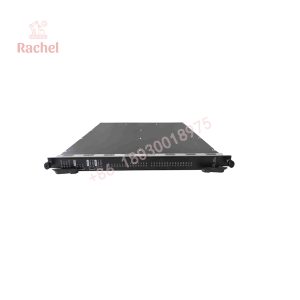
The HIMA F8650E is a central processing module for HIMA H51q programmable electronic safety systems. It executes the safety application within the programmable electronic system (PES) and coordinates controller-level functions, including internal diagnostics and communication with associated system components. Its architecture uses two clock-synchronized 32-bit Intel 386EX microprocessors to support the system’s safety-related processing design.
The F8650E includes two electrically isolated RS-485 serial interfaces, a four-digit diagnostic display, and a fail-safe watchdog with a 24 V DC output rated for loads up to 500 mA. Each processor has separate program and data memory. Selection and replacement require attention to the installed H51q configuration, central rack arrangement, operating-system revision, engineering software, and serial communication settings. The F8650E should not be treated as interchangeable with another HIMA central module solely because the modules share a similar appearance or family designation.
Key Technical Specifications
| Parameter | Specification |
|---|---|
| Manufacturer | HIMA |
| Model | F8650E |
| Product type | Central processing module (CPU) |
| System family | HIMA H51q |
| Processor | 2 × Intel 386EX, 32-bit |
| Processor clock frequency | 25 MHz |
| Operating-system memory | 1 MB Flash-EPROM per processor |
| User-program memory | 512 KB Flash-EPROM per processor |
| Data memory | 256 KB SRAM per processor |
| Serial interfaces | 2 electrically isolated RS-485 interfaces |
| Serial communication baud rates | 9,600 bps and 57,600 bps; other rates may be configurable by software |
| Diagnostic interface | Four-digit matrix display |
| Internal system supply | 5 V DC |
| Current consumption | 2,000 mA at 5 V DC |
| Rack space | 8 TE |
| Watchdog output | 24 V DC, up to 500 mA, short-circuit protected |
| Safety application context | H51q programmable electronic safety systems |
| Safety capability of the system family | Up to SIL 3, subject to the applicable system configuration and safety requirements |
Engineering Selection Highlights
- Controller platform: The F8650E is intended for the H51q system family. Confirm the installed central rack and system configuration before selecting it as a replacement.
- Dual-processor architecture: Two clock-synchronized Intel 386EX processors execute the central processing functions. This architecture is relevant when assessing the controller’s safety-related hardware design.
- Memory configuration: Each processor has dedicated operating-system, user-program, and data memory. The exact application and operating-system requirements should be checked against the installed controller configuration.
- Serial communication: Two electrically isolated RS-485 interfaces support serial data exchange. Confirm the required protocol, station addressing, baud rate, and wiring arrangement.
- Diagnostic display: The four-digit matrix display provides access to controller diagnostic information, helping maintenance personnel identify system states and fault indications.
- Power and rack requirements: The specified internal supply requirement is 5 V DC at 2 A, and the module occupies 8 TE. Check available rack power capacity and mounting space.
- Safety-system integration: The F8650E belongs to a safety-related controller architecture. Hardware replacement, program loading, and commissioning must follow the applicable system safety procedures.
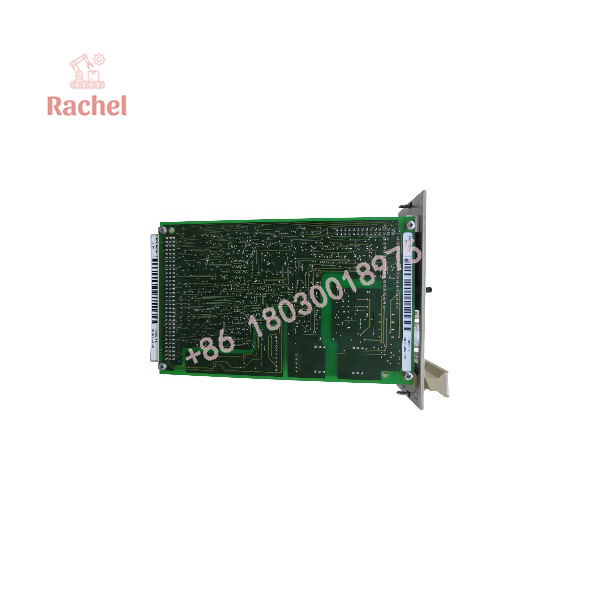
F8650E
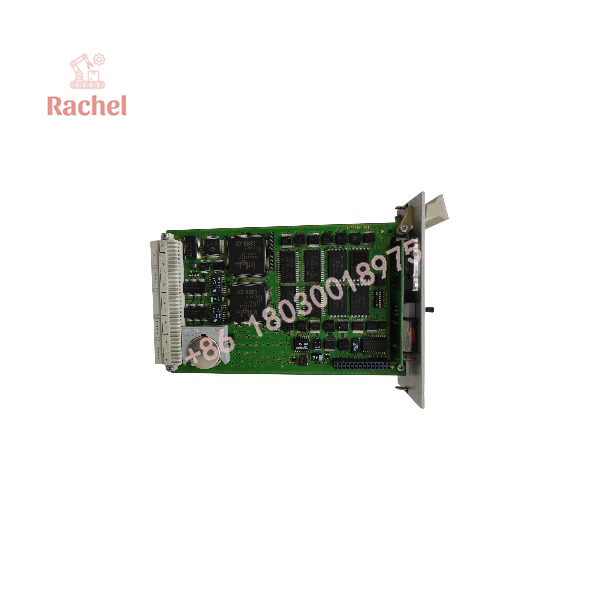
F8650E
System Compatibility & Integration Requirements
| Item / dependency | Compatibility or requirement | Practical note |
|---|---|---|
| Programmable electronic system | HIMA H51q | Confirm the specific system configuration, including MS, HS, or HRS arrangements where applicable. |
| Central rack | Applicable H51q central subrack | Confirm the module position and rack arrangement before installation. |
| Controller architecture | Dual, clock-synchronized processors | Verify that the replacement matches the intended hardware configuration. |
| Serial communication | Two electrically isolated RS-485 interfaces | Check port assignment, communication wiring, and connected-device requirements. |
| Serial baud rate | 9,600 or 57,600 bps, with software configuration options | Ensure that the configured rate agrees with the connected equipment and project settings. |
| Engineering software | ELOP II or the software appropriate to the installed operating-system revision | Confirm software and firmware compatibility before loading or modifying a project. |
| System power | 5 V DC, 2 A module consumption | Check the central rack’s available supply capacity. |
| Redundant controller arrangement | Supported within applicable H51q system configurations | Verify the installed redundancy arrangement and required configuration before replacing a central module. |
Dimensions, Mounting & Connection Notes
The HIMA F8650E is designed for installation in the central rack of a compatible H51q programmable electronic safety system.
- Rack allocation: 8 TE.
- System supply: 5 V DC, with a specified current consumption of 2 A.
- Serial connections: Two electrically isolated RS-485 interfaces.
- Diagnostics: Four-digit matrix display.
- Fault response: A fail-safe watchdog provides a 24 V DC output rated for loads up to 500 mA.
Before installation, confirm the rack position, grounding arrangements, communication wiring, and module identification. Observe the manufacturer’s electrostatic-discharge precautions when handling the module.
Because this is a safety-system central processing module, replacement and recommissioning should be carried out by qualified personnel following the applicable hardware and safety manuals. Do not assume that identical rack dimensions establish functional compatibility.
Detailed Product Overview
Central processing architecture
The HIMA F8650E is a central module for the H51q programmable electronic safety system. Its principal task is to execute the configured safety application and coordinate central-controller functions. The module uses two clock-synchronized Intel 386EX 32-bit microprocessors.
Each processor has its own memory resources. These include Flash-EPROM for the operating system and user program, along with SRAM for data storage. The architecture maintains separate processor memories and uses hardware comparison and monitoring mechanisms as part of its safety-related design.
For maintenance engineers, this architecture makes the module more than a conventional processor board. Its operation depends on the interaction of processor hardware, memory contents, diagnostic functions, and the surrounding H51q system.
Memory and application configuration
The F8650E has dedicated memory for the operating system, user program, and runtime data. The user program contains the application logic configured for the installation. Consequently, a physical module replacement does not by itself establish that the controller is ready to resume operation.
The installed operating-system revision, application program, project configuration, and system arrangement must be considered during restoration. Engineering software requirements can differ by operating-system revision, so the applicable programming environment should be established before downloading or modifying the application.
Serial interfaces and diagnostics
Two electrically isolated RS-485 interfaces provide serial communication capabilities. Configurable baud rates include 9,600 and 57,600 bps. The actual settings must agree with the connected devices and the intended communication configuration.
The four-digit matrix display provides diagnostic information for maintenance and troubleshooting. Engineers should evaluate displayed states together with system alarms, power conditions, and communication status rather than assuming that every controller fault originates in the central module.
The fail-safe watchdog is another important element of the design. Its output is rated at 24 V DC and up to 500 mA, with short-circuit protection. Its role is related to the system’s defined fault response; it should not be treated as a general-purpose output channel.
Rack integration and maintenance
The F8650E occupies 8 TE in its intended central rack arrangement and has a specified 5 V DC current consumption of 2 A. These values are important when checking the physical installation and power budget.
For replacement planning, compare the complete module designation and available identification details against the installed hardware. Confirm the central rack configuration, communication connections, software revision, and any redundant-controller arrangement. After installation, perform the prescribed functional checks before returning the safety system to operation.
Applications & System Role
The HIMA F8650E occupies the central processing layer of an H51q programmable electronic safety system. Unlike an individual input or output module, it performs controller-level processing and participates in coordinating the safety application with the system’s I/O and communication resources.
Its main engineering roles include:
- Safety application execution: Processes the configured user program within the central controller architecture.
- Controller diagnostics: Uses internal monitoring and a diagnostic display to indicate controller operating states and detected faults.
- Serial data exchange: Provides two isolated RS-485 interfaces for supported communication functions.
- System coordination: Interfaces with the controller’s I/O bus and associated central-system resources.
- Fault response: Uses a fail-safe watchdog mechanism to support the defined fault response of the safety system.
- Redundant system operation: Can be used within applicable H51q configurations that employ redundant central modules, subject to the system design.
The F8650E is relevant to maintenance, control-system restoration, and spare-parts planning for existing H51q installations. Its suitability depends on the complete system configuration and the safety application’s requirements, rather than the processor specifications alone.
Frequently Asked Questions
What is the HIMA F8650E?
The HIMA F8650E is a central processing module for the HIMA H51q programmable electronic safety system. It executes the configured safety application and supports central-controller diagnostics and communication.
Which system does the F8650E belong to?
The F8650E is associated with the HIMA H51q system family. Its suitability for a particular installation depends on the installed system configuration and hardware requirements.
Which processor does the F8650E use?
It uses two clock-synchronized Intel 386EX 32-bit microprocessors operating at 25 MHz.
What communication interfaces are available?
The module has two electrically isolated RS-485 serial interfaces. Supported configurations include baud rates of 9,600 and 57,600 bps, with additional software-configurable options.
What are the power requirements of the F8650E?
The specified internal system supply is 5 V DC, with a current consumption of 2 A. The available rack supply capacity should be checked before installation.
How does the F8650E support fault detection?
The module incorporates processor-monitoring mechanisms, a diagnostic display, and a fail-safe watchdog. The resulting system response depends on the detected fault and the configured safety architecture.
Can the F8650E be used in a redundant H51q system?
It can be used within applicable H51q configurations with redundant central modules. The required arrangement and replacement procedure must match the installed system design.
What should be checked before ordering a replacement F8650E?
Confirm the complete model designation, installed H51q configuration, rack requirements, communication connections, operating-system revision, and application-program requirements. Where a redundant controller is installed, the replacement procedure must also account for the system’s redundancy configuration.

 Start Chat


