





Description
Product Introduction & Engineering Value
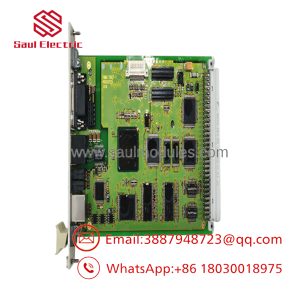
F8650X is the central processing module for HIMA H51q safety systems. It uses two clock-synchronized microprocessors, with separate processor memory, to execute safety-related control functions. The module also provides diagnostics, I/O-bus management, redundant-system coordination, and isolated RS-485 communication.
This is not a routine PLC CPU swap. The replacement must be checked against the installed H51q architecture, hardware revision, operating-system version, application program, redundancy arrangement, and safety certification status. HIMA’s own revision list specifically identifies F8650X for the H51q-MS/HS/HRS variants.
Technical Specifications
| Parameter | Specification |
|---|---|
| Manufacturer | HIMA Paul Hildebrandt GmbH |
| Part Number | F8650X |
| System Family | H51q |
| System Compatibility | H51q-MS, H51q-HS, H51q-HRS |
| Hardware Type | Safety-related central module |
| Processor | 2 × synchronized microprocessors |
| Processor Type | Intel 386EX, 32-bit |
| Clock Frequency | 25 MHz |
| Operating-System Memory | 1 MB Flash-EPROM per processor |
| User-Program Memory | 1 MB Flash-EPROM per processor |
| Data Memory | 1 MB SRAM per processor |
| RS-485 Interfaces | 2, electrically isolated |
| Diagnostic Display | Four-digit matrix/alphanumeric display |
| Safety Watchdog | 24 V output, up to 500 mA, short-circuit protected |
| Power Consumption | 5 V / 2 A |
| Module Space | 8 SU |
The detailed F8650X data sheet specifies the dual Intel 386EX architecture, 25 MHz clock, 1 MB memory allocations, two isolated RS-485 interfaces, four-digit diagnostic display, and 5 V / 2 A operating data.
System-level architecture
The F8650X is designed to operate as the central module within the H51q system. The safety manual describes the central-module architecture as including synchronized processors, separate memory, a hardware comparator, dual-port RAM for redundant central modules, I/O-bus logic, battery-backed SRAM, power-supply monitoring, and a fail-safe watchdog.
HIMA’s current revision documentation identifies F8650X revision 01 within the listed H51q safety-device certification.
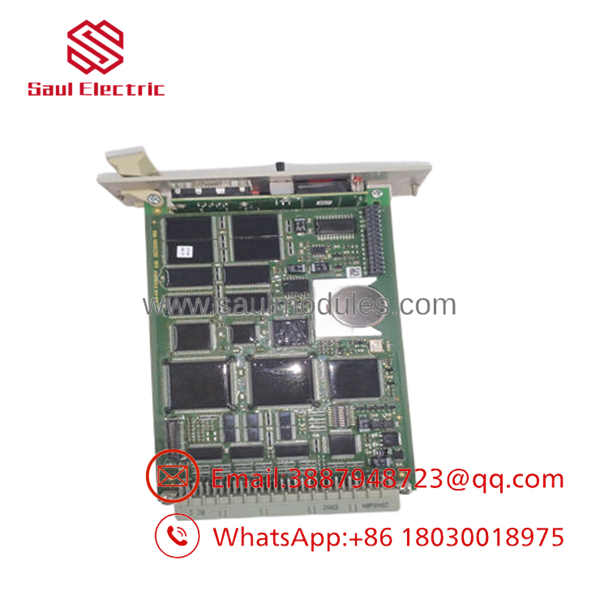
F8650X
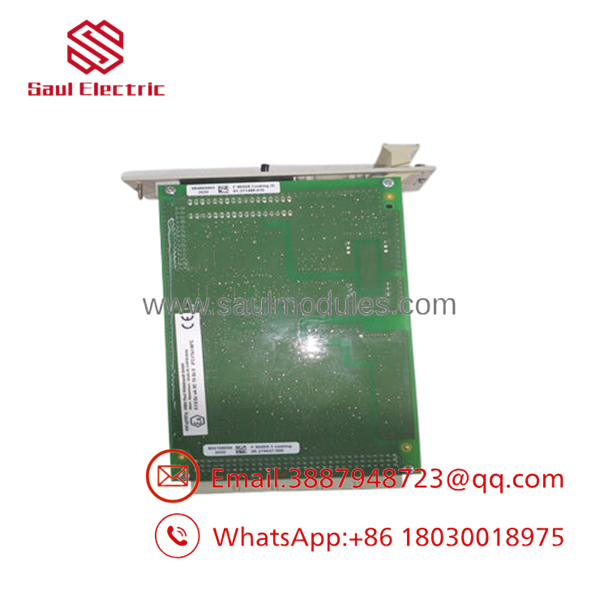
F8650X
Field Application & the “Trench” Experience
A plant has an older H51q-HS safety controller running an emergency shutdown application. One central module begins reporting processor-related diagnostics during operation. The maintenance team has an in the spare-parts cabinet.
The physical replacement is straightforward.
The engineering work is not.
Before installation, the team needs to verify the hardware revision, operating-system compatibility, application program, redundancy arrangement, battery condition, and communication configuration. After replacement, the safety application must be restored and the complete safety function validated according to the site’s approved procedures.
HIMA’s documentation specifically identifies as the H51q central module for H51q-MS, H51q-HS, and H51q-HRS configurations.
Niche application scenarios
- Emergency shutdown systems: redundant safety logic for process-unit shutdown sequences.
- Burner management: safety interlocks, permissives, and trip logic for combustion equipment.
- Compressor protection: shutdown logic coordinating pressure, vibration, temperature, and equipment-permissive signals.
- Process safety systems: centralized safety logic with distributed HIMA I/O modules.
Transparency SOP: QA & Testing
For New Surplus or Refurbished inventory, the receiving procedure should be more demanding than a simple power-on test.
- Identity check — Confirm and record the hardware/revision markings.
- Physical inspection — Examine the PCB assembly, connectors, front-panel display, mounting hardware, and backplane contacts.
- Battery assessment — Check battery condition and diagnostic status before relying on stored SRAM data.
- Power-up test — Verify normal startup and diagnostic-display behavior in a compatible H51q test rack.
- Communication test — Verify both applicable RS-485 interfaces.
- Processor diagnostics — Check for CPU, memory, watchdog, and system-bus faults.
- Application test — Load or verify the intended project using the approved HIMA engineering procedure.
- System validation — Confirm I/O communication, redundancy behavior, diagnostics, and safety functions before returning the system to service.
HIMA documentation notes that the central module contains battery-backed SRAM and provides battery monitoring. One published data sheet recommends battery replacement no later than six years, or within three months after the BATI indication appears.
The Veteran’s Tech Trap Guide
⚠️ Trap #1 — Confusing with F8652X
This is a basic but costly mistake.
is the central module for H51q systems. F8652X is the corresponding central module for H41q systems. HIMA’s certification documentation explicitly distinguishes the two.
PRO TIP: Match the CPU to the complete system designation—not merely the fact that both modules are HIMA safety CPUs.
⚠️ Trap #2 — Assuming the replacement CPU contains the correct application
A spare is hardware. It does not automatically mean that the site’s validated safety application is present and correct.
The project, operating system, configuration, and safety validation process must be handled according to the approved site procedure.
⚠️ Trap #3 — Ignoring the battery
uses battery-backed SRAM. A controller that has been sitting on a shelf for years deserves a battery check before installation.
⚠️ Trap #4 — Treating a diagnostic-free startup as proof of safety
A CPU can start without obvious hardware alarms and still require application-level verification. Check the complete safety function, including I/O, communication, watchdog behavior, redundancy, and final-element response.
Dynamic FAQ
What is HIMA ?
is a safety-related central module for HIMA H51q-MS, H51q-HS, and H51q-HRS systems. It uses two synchronized processors and is intended for safety-related control applications.
Is a safety CPU?
Yes. HIMA identifies it as a central module for H51q safety systems, and its documented safety application includes SIL 3-rated configurations.
What processor does use?
The published data sheet specifies two Intel 386EX 32-bit microprocessors operating at 25 MHz.
How much memory does have?
The documented architecture provides 1 MB Flash-EPROM for the operating system and 1 MB Flash-EPROM for the user program per microprocessor, plus 1 MB SRAM per processor. Actual usable capacity can depend on the operating-system version.
Can replace an F8650?
Do not assume that an is automatically a drop-in replacement for every F8650 installation. The X revision, operating-system version, project configuration, associated modules, and certification requirements need to be checked before substitution.
What should I request when buying New Surplus ?
Request photographs of the actual module, complete part-number and revision markings, firmware/OS information where available, battery condition, functional test results, and written warranty terms. For a safety CPU, also confirm whether the unit was tested in a compatible H51q rack.
Does require a battery?
Yes. The central module uses battery-backed SRAM and includes battery monitoring. Battery condition should therefore be part of the receiving inspection for both used and long-stored surplus units.
Is still relevant for legacy H51q systems?
Yes. HIMA’s current revision documentation continues to identify as a certified central module for H51q-MS, H51q-HS, and H51q-HRS systems. For a legacy installation, maintaining a tested spare can reduce the risk associated with an unexpected central-module failure.

 Start Chat


