





Description
Product Introduction & Engineering Value
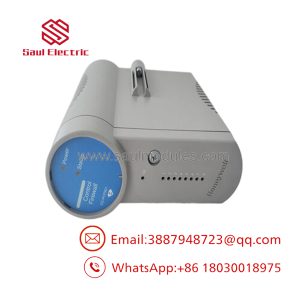
The Honeywell CC-PAON01 is a 16-channel, high-level analog output module for Experion PKS Series C control systems. It delivers 4–20 mA current signals to compatible actuators, control devices, and recording instruments. Built-in diagnostics, output readback, and open-wire detection help maintenance teams identify output faults without relying solely on downstream process symptoms.
For replacement planning, the key considerations are the field device’s current-input requirements, allowable load resistance, IOTA compatibility, and configured failure response. The CC-PAON01 does not provide HART communication; applications requiring HART-capable output functionality should be evaluated separately.
Technical Specifications
| Parameter | Specification |
|---|---|
| Manufacturer | Honeywell |
| Model | CC-PAON01 |
| Product family | Experion PKS Series C |
| Module type | High-Level Analog Output |
| Output channels | 16 |
| Output signal | 4–20 mA |
| Directly settable output current | 0 mA or 2.9–21.1 mA |
| Output ripple | Less than 100 mV peak-to-peak at power-line frequency, across a 250 Ω load |
| Output temperature drift | 0.005% of full scale per °C |
| Output readback accuracy | ±4% of full scale |
| Output current linearity | ±0.05% of full scale, nominal |
| Resolution | ±0.05% of full scale, as specified in the source document |
| Calibrated accuracy | ±0.35% of full scale at 25°C, including linearity |
| Maximum resistive load | 800 Ω, with 24 V supply operating from 22–28 VDC |
| Maximum output compliance voltage | 16 V |
| Maximum open-circuit voltage | 22 V |
| Response time | Settles within 1% of final value within 80 ms |
| HART support | No |
| Nonredundant IOTA | CC-TAON01 |
| Redundant IOTA | CC-TAON11 |
Source: Honeywell, Experion Series-C I/O Specification, EP03-490-520, Section 5.11.
Engineering note: The maximum load rating depends on the specified supply-voltage conditions. Check the actual field-device load and loop wiring before approving the module for an application. The published resolution entry is reproduced from the specification; consult the original document when preparing a formal design calculation.
Field Applications and Practical Maintenance Scenarios
Consider a representative refinery maintenance situation: a control valve no longer follows its controller output command, and the valve-positioning signal appears inconsistent with the expected operating range. Before replacing hardware, an instrumentation technician checks the controller command, measures the 4–20 mA loop current, inspects the field wiring, and verifies the actuator or positioner’s input requirements.
If testing confirms that the analog output module has failed, a compatible CC-PAON01 replacement can restore the output channel after the approved replacement and commissioning procedure. The technician should then verify the commanded current, field-device response, output diagnostics, and configured failure behavior.
This is an illustrative engineering scenario, not a documented customer installation.
Other application scenarios include:
- Control valve positioning: Sending 4–20 mA commands to compatible valve positioners in flow, pressure, and temperature control loops.
- Variable-speed drive references: Providing an analog current reference to compatible drives that accept 4–20 mA speed commands.
- Process recording and indication: Transmitting analog output signals to compatible recording instruments and external indicators.
These applications require confirmation of the receiving device’s electrical specifications and the system’s approved output configuration.
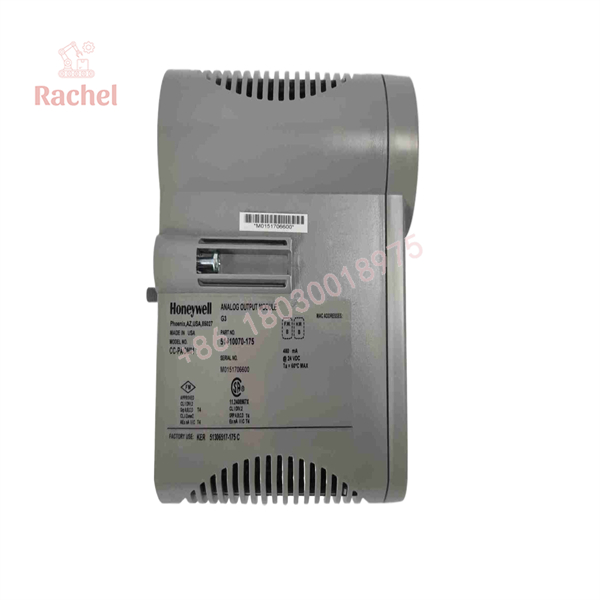
CC-PAON01
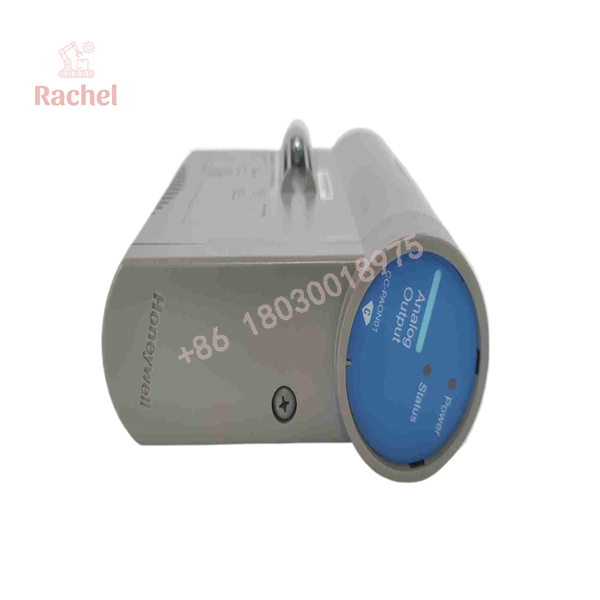
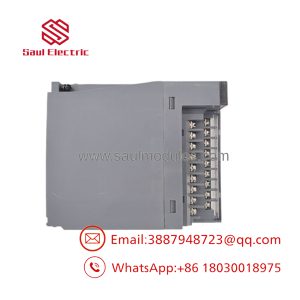
CC-PAON01
Quality Assurance and Testing
For industrial spare-parts procurement, inspection should establish both the unit’s physical condition and the extent of functional testing.
Step 1 — Physical and identity inspection
Verify the CC-PAON01 model marking, available serial or traceability information, connector condition, housing integrity, and evidence of damage or previous repair.
Step 2 — Output function testing
Where suitable test facilities are available, evaluate representative output commands across the declared test range. Check output current, readback behavior, diagnostic indications, and response time against the applicable acceptance criteria.
Step 3 — Documentation and release
Record the test scope, results, unit identification, and any limitations. Confirm whether the item is new surplus or refurbished, and document the applicable warranty and return terms.
These are recommended QA practices, not a claim that a specific unit has passed testing. For critical control applications, request a unit-specific functional test report and confirm whether the test includes the output channels and diagnostics required by your site.
Replacement Pitfalls: Three Checks That Matter
Pitfall 1: Ignoring the output load
The maximum specified resistive load is 800 Ω under the documented 22–28 VDC supply conditions. Account for receiver resistance, cable resistance, and other series elements in the current loop. An excessive load can prevent the output from reaching the requested current.
Pitfall 2: Overlooking FAILOPT behavior
The Series C analog output supports a configurable per-channel failure response: hold the last value or move to a configured safe value. If the I/O module’s electronics fail, the output goes to zero according to the published specification. Verify the approved process safety and control requirements before changing or recommissioning a channel.
Pitfall 3: Replacing the module without checking the IOTA
The documented termination assemblies are CC-TAON01 for nonredundant configurations and CC-TAON11 for redundant configurations. Confirm the existing assembly and redundancy design before ordering. Also verify field wiring and output diagnostics after replacement.
PRO TIP: Record the original channel configuration, output scaling, failure-response settings, and normal operating current before the maintenance window. These values provide a practical baseline for post-installation verification.
Frequently Asked Questions
Q1. What is the Honeywell CC-PAON01 used for?
The CC-PAON01 generates 4–20 mA analog output signals for compatible actuators, control devices, and recording or indicating instruments in Honeywell Experion Series C systems. It provides 16 output channels.
Q2. What is the maximum load resistance?
The specified maximum resistive load is 800 Ω when the 24 V supply operates within the documented 22–28 VDC range. Check the complete loop’s resistance and voltage requirements before installation.
Q3. Can the CC-PAON01 be used in a redundant configuration?
Yes. Honeywell documents the CC-TAON11 as the redundant IOTA option, while CC-TAON01 is the nonredundant option. Verify the installed hardware arrangement and approved system configuration before purchasing a replacement.
Q4. Does the CC-PAON01 support HART communication?
No. The CC-PAON01 is the non-HART analog output model. If the application requires HART communication with compatible field instruments, evaluate an appropriate HART-capable output module and confirm system compatibility.
Q5. How can I verify new-surplus authenticity?
Request photographs of the actual unit and its labels, available traceability records, a written condition declaration, and any functional test report. New-surplus status does not by itself establish manufacturer provenance or prove that the module has passed electrical testing.
Q6. What warranty is available for a refurbished CC-PAON01?
Warranty terms depend on the supplier and the specific unit. Obtain written confirmation of the coverage period, exclusions, return procedure, and responsibility for shipping. Do not assume that a third-party warranty is equivalent to Honeywell’s manufacturer warranty.

 Start Chat


