





Description
Product Introduction
The IMS MX-CS101-401 (manufactured by Intelligent Motion Systems, now part of Schneider Electric) is a compact, highly integrated motion controller and microstepping drive board from the Micro-Lynx 4 family. Designed to eliminate the cost and wiring complexity of separate indexers and power drives, this module houses an onboard microprocessor, configurable digital/analog I/O, and bipolar stepper drive electronics on a single assembly.
Unlike basic step-and-direction drives that require a continuous train of pulses from a master PLC, the MX-CS101-401 executes complex motion programs locally using its internal EEPROM memory and command set. Operating off a 12 to 48 VDC power rail, it delivers up to 2 Amps RMS per phase to bipolar stepper motors while managing real-time position verification, limit switch inputs, and multi-drop RS-485 communications across automated assembly lines.
Key Technical Specifications
| Parameter | Specification Value |
| Manufacturer | Intelligent Motion Systems (IMS) / Schneider Electric |
| System Family | Micro-Lynx 4 Controller / Drive Assembly |
| Input Voltage Range | 12 to 48 VDC (unregulated DC supply compatible) |
| Logic / Control Current | ~350 mA nominal @ 24 VDC |
| Continuous Output Current | 2.0 Amps RMS per phase (3.0 Amps Peak) |
| Microstep Resolutions | Up to 51,200 steps/rev (software selectable) |
| Serial Communication | Dual RS-232 and RS-485 (up to 115.2 kbps, multi-drop up to 32 nodes) |
| User I/O | Configurable general-purpose digital inputs/outputs, 0-5V analog input |
| Position Feedback | Incremental encoder interface (A/B/Index channels) |
| Operating Temperature | 0°C to +50°C (32°F to 122°F) |
Application Scenarios & The “Trench” Experience
Picture this: It’s 2:30 AM on a automated packaging line. A high-speed labeling machine loses position synchronization on its bottle indexing wheel. The local Micro-Lynx 4 drive (an old IMS MX-CS101-401) shows a red fault LED—a voltage transient on the 24V supply line killed its onboard MOSFET power stage. The main line PLC keeps throwing a “Labeler Index Timeout” fault, stalling the entire filling deck. An engineer considering a upgrade to a modern EtherCAT servo system is looking at 36 hours of rewiring and software rewrites.
To be honest, situations like this are where maintaining drop-in replacements pays off instantly. Swapping out the blown MX-CS101-401 board and downloading the saved program file via RS-232 gets the line back online in under 20 minutes.
- Automated Packaging & Labeling: High-speed indexing of feed belts, bottle capping heads, and rotary label applicators.
- Semiconductor & Wafer Handling: Low-vibration, high-precision microstepping control for robotic pick-and-place end effectors.
- Medical Diagnostic Equipment: Precise liquid handling pipette positioning and automated carousel indexing in lab analyzer rigs.
- CNC & Gantry Positioning: Multi-axis lead-screw driving for small-format engraving, PCB routing, and inspection tables.
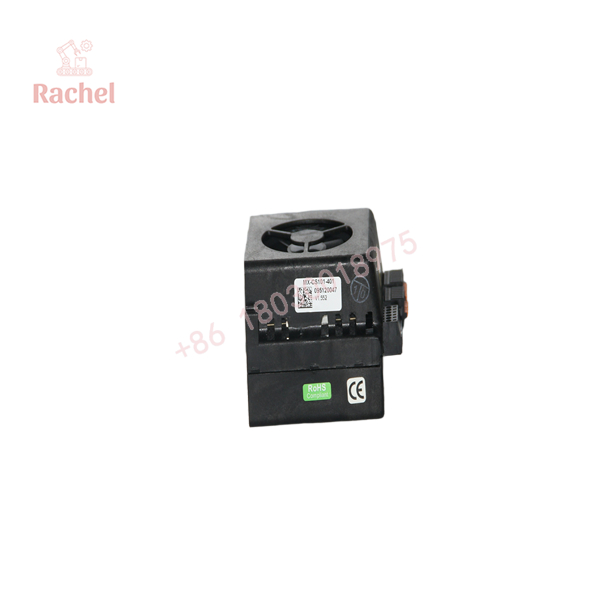
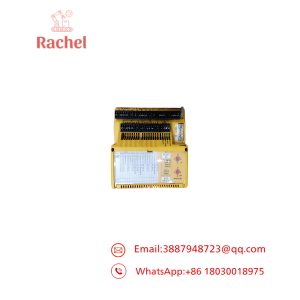
MX-CS101-401
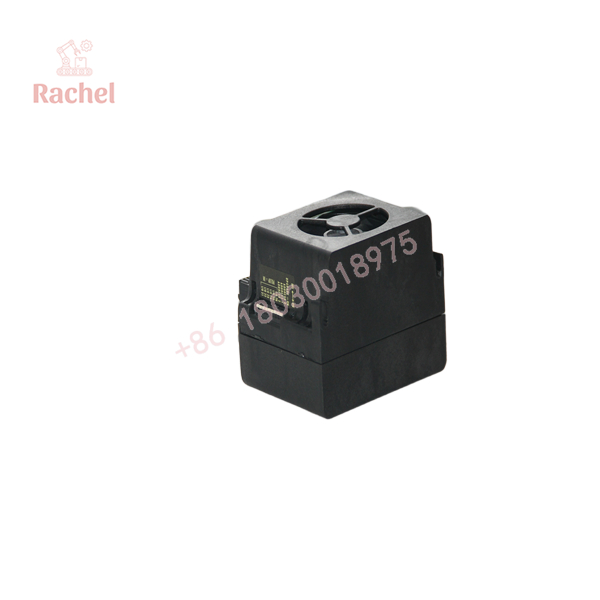
MX-CS101-401
Transparency SOP: Quality Assurance & Testing
We don’t just ship boxes; we test them on actual IMS test benches. Every refurbished or new surplus MX-CS101-401 module undergoes a strict 5-step engineering verification SOP:
- Inbound Visual & Component Audit: Microscopic inspection of the PCB surface-mount power MOSFETs, trace integrity, connector pin condition, and firmware revision labels.
- Power-On Voltage & Logic Checks: Bench-testing the 12-48 VDC logic power rails to verify onboard voltage regulators and diagnostic LED boot behavior.
- Serial Comms & Program Download Test: Establishing RS-232/RS-485 handshakes via IMS terminal software, reading device registers, and flashing a test motion program into local EEPROM memory.
- Full Motor Load & Burn-In Test: Hooking up a standard NEMA 23 bipolar stepper motor and running high-speed acceleration/deceleration microstepping profile loops under load for 4 hours to verify current stability.
- Clear Memory & Anti-Static Sealing: Wiping test programs, restoring factory boot parameters, and sealing the unit in heavy-duty ESD shielding wrap with custom foam packaging.
The Veteran’s Tech Trap Guide (Crucial Value-Add)
If you’re replacing an MX-CS101-401 module in the field, watch out for these technical traps:
- ⚠️ Matching Motor Current (Phase Settings): Never hook up a replacement MX-CS101-401 without checking the stored software current settings! The driver can push up to 2.0A RMS; if your stepper motor is rated for 0.5A, the driver will overheat and burn out the motor windings within minutes. Set the run/hold current in the configuration software before enabling the drive outputs.
- ❗ RS-232 vs RS-485 Pinout Confusion: The Micro-Lynx 4 platform uses dual serial interface lines on its terminal headers. Plugging a standard DB9 RS-232 cable directly into RS-485 differential pins can fry the transceivers. Verify your cable pinout adapter before hitting “Connect” in your terminal software.
- ⚠️ Back-EMF Voltage Spikes: Stepper motors operating at high speeds generate significant back-EMF when stopping rapidly. Ensure your 24/48V power supply has adequate output capacitance or a shunt regulator circuit installed—unregulated voltage spikes over 50 VDC will instantly destroy the drive’s internal switching FETs.
- ❗ Ground Loop Interference: Always ground the motor shell and the MX-CS101-401 chassis frame to a single common point. Ground loops between the 24V power supply earth and the serial programming PC can cause intermittent step-loss and corrupted program transfers.
Frequently Asked Questions (FAQ)
Q: Is the IMS MX-CS101-401 made by Schneider Electric or IMS?
A: Intelligent Motion Systems (IMS) original product lines (including the Micro-Lynx series) were acquired by Schneider Electric and rebranded under Schneider Electric Motion. The part numbers remained identical, and boards branded IMS or Schneider Electric are functionally and electrically drop-in replacements.
Q: Can I run this drive using standard Step/Direction signals from an external PLC?
A: Yes. While the MX-CS101-401 includes a full programmable motion controller, its digital inputs can be configured via software to accept external Step and Direction pulses from a master motion card or PLC.
Q: How do I load my motion program onto a new replacement board?
A: You can upload and download programs to the internal non-volatile EEPROM using IMS Micro-Lynx terminal/programming software over an RS-232 or RS-485 serial cable connection.
Q: What is the difference between the MX-CS101-401 and other MX-CS100 series boards?
A: Dash variations (-401 vs -400, etc.) designate specific firmware builds, hardware terminal connector styles, onboard current limits, or specialized I/O configurations. Always match the exact part number for drop-in replacement compatibility.
Q: What warranty coverage comes with this module?
A: Every MX-CS101-401 unit—whether New Surplus or OEM Refurbished—comes backed by our full 12-Month Replacement Warranty. If a hardware failure occurs under normal operating conditions within 365 days, we replace it directly from stock.
If you need help selecting accessories or configuring this drive for your setup, let me know and I can pull up wiring diagrams or cable specs for the Micro-Lynx 4 platform.

 Start Chat


