




Description
Product Introduction
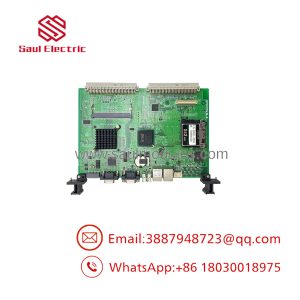
The Kawasaki 1GD-33 (50607-1084R03) is an advanced axis servo controller board manufactured specifically for Kawasaki E Series industrial robot controllers. Installed inside the main controller card cage, it serves as the motion execution engine, bridging high-level trajectory commands from the main CPU card to the power amplifier blocks that drive the robot arm’s joint motors.
Equipped with high-speed digital signal processors (DSPs), the 1GD-33 board continuously calculates real-time position, velocity, and torque feedback loops from optical encoders across multiple robot axes. To maintain tight spatial repeatability during high-speed payload movements, this module offloads heavy motion algorithm processing directly from the main processor. This dedicated control design guarantees rapid cycle times, ultra-smooth acceleration profiles, and immediate safety torque cutoff in the event of an axis collision.
Key Technical Specifications
| Parameter | Value |
| Board Model / Part Number | 1GD-33 / 50607-1084R03 |
| System Compatibility | Kawasaki E Series Robot Controllers (E10/12/13/20/22/30/40/70) |
| Core Function | Servo axis velocity and position loop processing |
| Feedback Interface | Absolute/Incremental optical encoder communication channels |
| Internal Communication | High-speed backplane bus to CPU and IPM power modules |
| Operating Voltage | Internal logic powered via controller backplane bus (+5 VDC / ±12 VDC) |
| Status Indicators | Onboard LED diagnostic indicators for board state and axis communication |
| Cooling Requirement | Enclosed cabinet forced-air cooling via rack fan units |
| Operating Temperature | 0°C to +45°C (32°F to 113°F) |
| Mounting Format | Multi-pin rack slot insertion with front-panel retention screws |
Application Scenarios & The “Trench” Experience
When an 8-axis welding or material handling robot throws an encoder synchronization fault at 1 AM, the entire body line grinds to a halt. In robotic automation, a failed servo drive control board halts all physical motion instantly, locking out the teach pendant and holding production host cells hostage.
- Automotive Body-in-White (BIW) – High-Speed Spot Welding – Executing millisecond-level path corrections and servo-gun pressure control during continuous body panel welding.
- Palletizing & Material Handling – High-Payload Transfer – Maintaining motion loop stability during heavy acceleration and deceleration phases with maximum arm reach.
- Precision Arc Welding – Continuous Path Trajectory Control – Interpolating multi-axis coordinated motion to ensure smooth weld bead placement along complex seams.
- Cleanroom & Semiconductor Transfer – Wafer Handling Manipulators – Precise position loop control to prevent vibration or jerk during sensitive glass and silicon transfer operations.
Field Case Study: Rapid Recovery on an Automotive Stamping Line
At a Tier-1 automotive stamping facility, a Kawasaki arm operating an automated press-feeder threw a fatal servo-loop communication error, freezing the arm mid-stroke inside a stamping die. The production line faced a 2,500-per-minute downtime penalty. Maintenance technicians identified an internal DSP execution failure on the primary 1GD-33 (50607-1084R03) controller board. A pre-inspected replacement board was sourced from local surplus inventory. Technicians powered down the E-Controller, unfastened the card cage screws, replaced the damaged 1GD-33 board, and restored power. The controller initialized cleanly, cleared the axis fault, and allowed the cell to resume full production in under 25 minutes—saving over 100,000 in downtime costs.
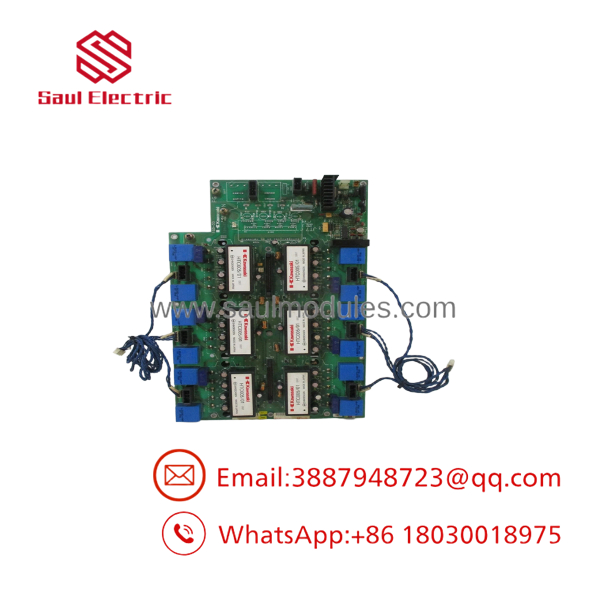
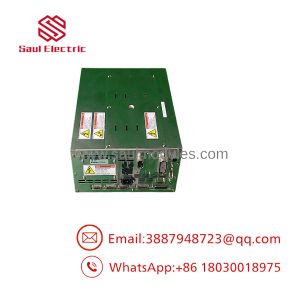
1GD-33 50607-1084R03
Transparency SOP: Quality Assurance & Testing
We don’t just ship boxes; we test them on actual Kawasaki E Series controller test rigs with live servo motors.
- Inbound Mechanical & Pin Integrity Audit: Detailed inspection of backplane multi-pin edge connectors, PCB trace conditions, surface-mount components, and original Kawasaki part label (50607-1084R03) authenticity.
- Card Cage Slot Power-On Test: Mounting the board in an energized Kawasaki E-Controller rack to verify logic rail startup, internal clock execution, and LED status initialization.
- Axis Motion Loop & Encoder Feedback Test: Connecting the controller to a multi-axis servo rig to execute simulated motion trajectories and verify clean encoder signal processing.
- Collision & Safety Cutoff Diagnostics: Forcing simulated motor overcurrent and position error conditions to verify that the board executes immediate hardware safety trips.
- Firmware & Register Interrogation: Checking onboard register states via Kawasaki AS Language system diagnostics to confirm zero latent memory errors or parameter faults.
- Anti-Static ESD Packaging: Sealing the verified board in heavy anti-static shielding bags with moisture desiccant prior to padded dispatch.
The Veteran’s Tech Trap Guide (Crucial Value-Add)
- ⚠️ Never Insert or Remove the Board Under Power: Always shut off the main disconnect on the E-Controller cabinet and wait for the amplifier bus discharge LEDs to extinguish before pulling the 1GD-33 board. Live-swapping this card will instantly blow the backplane bus transceivers or corrupt the onboard memory.
- ❗ Verify DIP Switch and Jumper Configurations: Before installing a replacement 1GD-33 board, carefully compare its onboard DIP switches and solder jumpers against the original card you removed. Misaligned jumpers can route encoder signals to the wrong channels or select incorrect bus termination resistances.
- ⚠️ Inspect Cable Harnesses for Pinch Points: If the replacement card throws immediate encoder alarms upon boot, check the internal card cage ribbon cables and external arm harness connectors. Damaged cable shielding often injects electrical noise that mimics a failed 1GD-33 board.
- ❗ Back Up Robot AS Language System Data First: While the 1GD-33 board primarily handles drive loops, changing hardware components on an E-Controller can occasionally require a cold restart or memory re-initialization. Always back up your robot program files (
.asor.svbackups) to a USB drive before performing hardware service.
Frequently Asked Questions (FAQ for Conversion)
Q: What is the relationship between model 1GD-33 and part number 50607-1084R03?
A: “1GD-33” is the hardware board series designation printed on the PCB, while “50607-1084R03” is Kawasaki’s specific OEM part/drawing number for this exact revision. They refer to the exact same physical board.
Q: Can I swap this board into any Kawasaki controller generation?
A: No. The 1GD-33 (50607-1084R03) is designed specifically for Kawasaki E Series controller architectures. It is not mechanically or electrically compatible with older C/D Series or newer F Series controllers.
Q: Is this module hot-swappable during robot operation?
A: No. Kawasaki robot motion control cards are not hot-swappable. Main power to the controller cabinet must be fully isolated before removing or installing the board.
Q: What condition are these boards sold in?
A: We offer both Factory Sealed New Surplus and fully bench-tested Clean Refurbished units. Every board passes our multi-axis test bench verification before entering inventory.
Q: What warranty coverage comes with this part?
A: All Kawasaki 1GD-33 50607-1084R03 boards include a full 12-month replacement warranty starting from the date of invoice.

 Start Chat


