





Description
Product Introduction
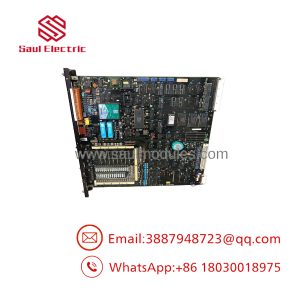
The Kawasaki 30C61D-B027 is a critical printed circuit board assembly manufactured for Kawasaki industrial robot control cabinets. Positioned inside the main controller card rack, this board serves as a core motion and communication processing engine. It acts as the bridge between high-level system software commands and the physical servo amplifier modules driving the robot arm’s joint motors.
Designed for high-reliability manufacturing environments, the 30C61D-B027 board processes real-time encoder feedback, calculates precise acceleration/deceleration trajectories, and maintains synchronization across multiple robot axes. By offloading complex servo loop algorithms from the main system CPU, it prevents latency spikes and ensures smooth, repeatable trajectory execution in applications like automated welding, palletizing, and machine tending.
Key Technical Specifications
| Parameter | Value |
| Model Number | 30C61D-B027 |
| Manufacturer | Kawasaki Robotics |
| System Function | Servo Axis Control & Logic Interface Board |
| Bus Interface | Native Kawasaki Backplane Slot Insertion |
| Operating Voltage | Low-voltage DC logic rails supplied via backplane (+5 VDC / ±12 VDC / +24 VDC) |
| Feedback Channels | Multi-axis high-speed optical encoder inputs |
| Status Display | Multi-LED array for power rails, communication state, and fault indicators |
| Cooling Requirement | Cabinet forced-air ventilation |
| Operating Temp Range | 0°C to +45°C (32°F to 113°F) |
Application Scenarios & The “Trench” Experience
When an industrial robot manipulator freezes during a critical assembly sequence, a faulty axis control board is often the silent culprit. A failure on the 30C61D-B027 halts trajectory processing, dropping servo power and throwing critical system alarms on the teach pendant.
- Automotive Body-in-White (BIW): Maintains smooth multi-axis coordination for high-speed spot welding and material transfer arms.
- Palletizing & Packaging Lines: Controls heavy payload acceleration profiles, preventing motor over-torque faults during high-inertia swings.
- Metal Stamping & Press Tending: Manages precise timing handshakes between press automation interfaces and manipulator motion profiles.
- Precision Arc Welding: Delivers high-frequency path interpolation to maintain uniform weld bead deposit rates along complex 3D paths.
Field Case Study: An automotive stamping supplier experienced intermittent “Servo Communication Fail” alarms on a robot handling press panel unloading. Swap tests on the external encoder cables and amplifiers failed to resolve the dropouts. Diagnostics identified degraded bus transceivers on the primary 30C61D-B027 controller card. A pre-tested replacement 30C61D-B027 board was installed into the rack slot. Upon powering up, the controller successfully re-established communication, cleared all pending axis errors, and restored the cell to full production in under 30 minutes—preventing tens of thousands of dollars in line stoppage penalties.
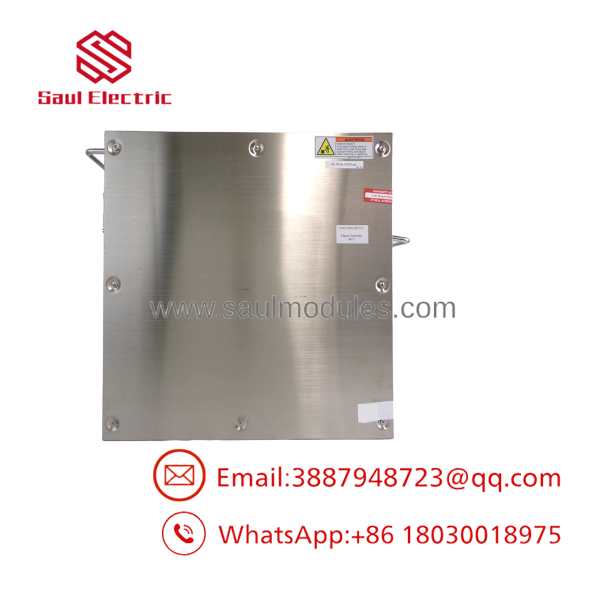
30C61D-B027
Transparency SOP: Quality Assurance & Testing
Every Kawasaki 30C61D- unit undergoes a strict multi-point verification process prior to warehouse dispatch:
- Visual & Mechanical Inspection: Inspection of all surface-mount components, edge connector gold fingers, PCB traces, and solder joints for signs of thermal stress or mechanical wear.
- Backplane Power-On Self-Test (POST): Insertion into an energized test rack to verify internal power rail distribution (+5V, +12V, +24V) and clean boot sequences.
- Loopback & Communication Stress Test: Testing input/output channels and internal bus transceivers under simulated high-traffic motion commands.
- Firmware & Register Check: Verifying board identity registers to ensure compatibility with standard Kawasaki AS language system software.
- ESD-Safe Packaging: Sealing the verified board inside heavy anti-static shielding bags with fresh moisture desiccant before final foam-cushioned box packaging.
The Veteran’s Tech Trap Guide (Crucial Value-Add)
⚠️ CRITICAL WARNING: Always isolate main power to the robot controller cabinet before removing or inserting internal rack boards. Hot-swapping the 30C61D- board can cause electrical arcing across the backplane gold fingers, destroying sensitive logic components on the board and adjacent cards.
- ❗ Match Board Jumpers & DIP Switches: Before sliding the replacement 30C61D- board into the controller slot, carefully examine all onboard jumpers and DIP switch blocks. Align them position-for-position with the board being replaced to preserve correct axis mapping and bus termination settings.
- ⚠️ Inspect Cable Connections First: If replacing this card due to intermittent encoder or communication faults, inspect the internal ribbon cables and harness connectors for pin corrosion or mechanical strain. A pinched cable can short out line drivers on a newly installed board.
- ❗ Perform a System Data Backup: Prior to replacing hardware components inside the main control cage, back up your robot’s software data (AS Language programs, tool transformations, and system variables) to an external storage drive.
Frequently Asked Questions (FAQ)
Q: Is the Kawasaki 30C61D- board hot-swappable?
A: No. Kawasaki robot controller rack cards are not hot-swappable. Main power must be completely shut off and locked out before servicing board assemblies.
Q: How do I verify if my issue is the 30C61D- board or the servo amplifier?
A: Check the front diagnostic LEDs on the 30C61D- board and the teach pendant fault codes. If the teach pendant reports bus communication time-out errors or board-level POST failure codes (rather than individual motor overcurrent alarms), the control board is the primary suspect.
Q: What condition are these parts supplied in?
A: Units are available in both Factory Sealed New Surplus and Clean Refurbished conditions. Every refurbished unit is fully tested on a live system bench.
Q: What warranty coverage is provided?
A: All Kawasaki 30C61D- boards come with a full 12-month replacement warranty from the date of purchase.

 Start Chat


