





Description
Product Introduction & Engineering Value
Kawasaki 50630-1155 is a legacy Kawasaki part number, but the publicly indexed technical information available for this exact number is insufficient to establish its precise function, electrical ratings, or controller family with confidence. I would not label it a CPU, robot controller, I/O module, or power supply without supporting documentation.
For procurement, the safest approach is exact-part-number matching. Record every marking on the original unit, including revision codes, serial information, connector labels, and the Kawasaki equipment model in which it is installed.
Technical Specifications
| Parameter | Specification |
|---|---|
| Manufacturer | Kawasaki |
| Part Number | 50630-1155 |
| Equipment Category | Industrial automation hardware |
| System Function | To be verified |
| Controller Family | To be verified |
| Input Voltage | To be verified |
| Output / I/O | To be verified |
| Communication Interface | To be verified |
| Connector Configuration | To be verified |
| Hardware Revision | Verify from actual unit |
| Firmware Dependency | System-dependent |
| Replacement Requirement | Exact part-number match recommended |
Technical identification note
A search for the exact string “Kawasaki 50630-1155” did not produce a reliable Kawasaki datasheet or manufacturer document establishing the component’s technical specifications. The search results were largely unrelated to Kawasaki industrial automation hardware.
Therefore, I would not manufacture specifications for this part number. That is especially important for a legacy industrial component where an incorrect voltage or pinout can damage both the replacement and the equipment.
Field Application & the “Trench” Experience
Suppose a maintenance engineer finds 50630-1155 on a failed Kawasaki cabinet component. The plant’s inventory system has the part number, but the original Kawasaki manual is unavailable.
The wrong move is to search only for “Kawasaki 50630-1155” and select the first visually similar item.
The correct approach is to photograph the complete label and trace the component through the cabinet drawing or equipment BOM. A second Kawasaki identifier, controller model, robot model, or assembly number can often establish the actual function.
Useful application contexts to verify
- Legacy Kawasaki robot cabinet: determine whether 50630-1155 belongs to the robot-control assembly.
- Industrial machine-control cabinet: identify the parent controller and electrical interface before replacement.
- Semiconductor or factory automation equipment: cross-reference the Kawasaki number against the equipment manufacturer’s BOM.
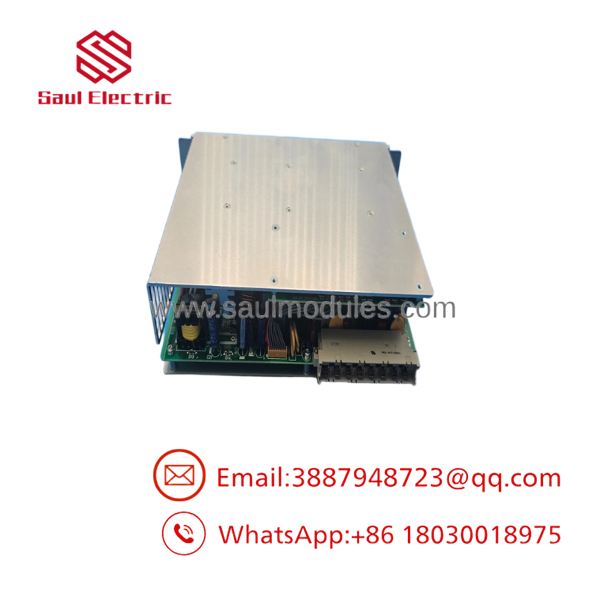
50630-1155
Transparency SOP: QA & Testing
For New Surplus or Refurbished Kawasaki 50630-1155, I recommend the following acceptance procedure:
- Identity check — Verify
50630-1155character by character. - Label capture — Photograph the entire nameplate, including secondary numbers and revision codes.
- Physical inspection — Examine connectors, PCB assemblies, terminals, mounting hardware, and evidence of corrosion or overheating.
- System identification — Confirm the parent Kawasaki controller, robot, or machine.
- Electrical verification — Establish the manufacturer’s voltage and pinout before applying power.
- Functional testing — Use an appropriate Kawasaki test fixture or compatible machine.
- Diagnostic verification — Check controller/system status and fault indications.
- QA documentation — Record the exact test conditions and results.
Do not bench-power this part until its electrical specification has been positively identified.
The Veteran’s Tech Trap Guide
⚠️ Trap #1 — Guessing the component function
The number alone does not provide enough evidence to call 50630-1155 a CPU, servo unit, I/O board, or power supply.
PRO TIP: The parent equipment model is often more useful than the part number when identifying obscure Kawasaki legacy hardware.
⚠️ Trap #2 — Ignoring secondary markings
Look for additional Kawasaki codes, assembly numbers, revision letters, and manufacturing labels. These can distinguish variants that share a similar base number.
⚠️ Trap #3 — Applying power before confirming the pinout
This is the biggest practical risk. Do not infer voltage or polarity from connector appearance.
⚠️ Trap #4 — Accepting a generic “Kawasaki tested” claim
Ask exactly what was tested. A visual inspection or continuity check is very different from functional testing in the correct Kawasaki system.
Dynamic FAQ
What is Kawasaki 50630-1155?
50630-1155 is a Kawasaki industrial automation part number, but the publicly available evidence I could verify does not establish its exact functional classification.
Is 50630-1155 a Kawasaki robot controller?
I would not confirm that classification from the part number alone. A controller designation should be supported by Kawasaki documentation, an equipment BOM, or the original nameplate.
What is the input voltage?
The input voltage is not reliably established from the available sources. Verify the original unit’s specifications before applying power.
Can another Kawasaki part replace 50630-1155?
Not automatically. The complete part number, hardware revision, electrical characteristics, connectors, firmware requirements, and parent-system compatibility must be checked.
How should New Surplus 50630-1155 be verified?
Request photographs of the actual unit, all identification markings, revision information, condition classification, functional-test results, and written warranty terms.
What information would allow positive identification?
The most useful information would be a clear photograph of the 50630-1155 nameplate, plus the Kawasaki robot/controller/machine model where the part is installed. With those details, the component can be cross-referenced much more reliably.
Is a warranty important for this part?
Yes. For an obscure legacy Kawasaki spare, request a written functional warranty rather than relying only on a “New Surplus” condition description.

 Start Chat


