



Description
Product Introduction & Engineering Value
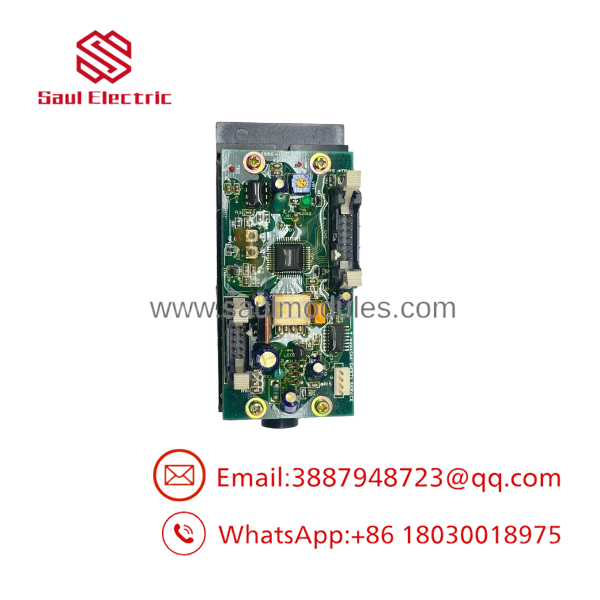
Kawasaki 63956-11201 should be treated as a legacy Kawasaki robot-control spare whose exact board function and controller compatibility need to be established from the physical assembly and parent controller. The part number alone does not provide enough evidence to safely assign a CPU, servo, I/O, or communication-board classification.
For procurement, that distinction matters. Match 63956-11201 against the installed PCB label, controller model, connector arrangement, and any secondary board markings before approving a replacement. Avoid substituting another Kawasaki board simply because its physical dimensions appear similar.
Technical Specifications
| Parameter | Specification |
|---|---|
| Manufacturer | Kawasaki |
| Part Number | 63956-11201 |
| Product Type | Kawasaki robot electronic PCB/assembly |
| Board Function | Requires controller-specific verification |
| Controller Compatibility | Requires verification |
| Board Revision | Not publicly verified |
| Processor | Not publicly verified |
| Memory | Not publicly verified |
| I/O Count | Not publicly verified |
| Communication Interface | Not publicly verified |
| Supply Voltage | Verify from applicable Kawasaki controller |
| Connector Configuration | Verify against actual board |
| Firmware | System-dependent |
| Lifecycle | Legacy / secondary-market spare |
Technical caution
There is insufficient reliable public documentation to assign detailed electrical specifications to 63956-11201. I would not publish an assumed voltage, processor, I/O count, or communication protocol as a confirmed specification.
That is particularly important for a legacy robot PCB.
63956-11201
Field Application & the “Trench” Experience
A maintenance team has an older Kawasaki robot controller with a failed electronic assembly. The technician removes the board and finds 63956-11201 on the identification label.
The temptation is to search the number, find a visually similar Kawasaki PCB, and install it.
That is risky.
The correct approach is to document the complete assembly before removal: part number, board markings, connectors, daughterboards, switches, jumpers, memory devices, and controller model. For an obsolete controller, those details can be more useful than a generic catalog description.
Niche application scenarios
- Legacy Kawasaki robotic cell: board-level replacement during controller repair.
- Automated material-handling equipment: maintenance of aging Kawasaki robot electronics.
- Production-line controller refurbishment: replacement of an unavailable PCB instead of the complete controller.
- Critical spare inventory: stocking a verified 63956-11201 assembly for an obsolete Kawasaki system.
Transparency SOP: QA & Testing
For New Surplus or Refurbished 63956-11201, I recommend a strict acceptance procedure:
- Part-number verification — Confirm
63956-11201. - Physical comparison — Compare PCB dimensions, mounting points, connectors, and component layout.
- Label inspection — Record every secondary identification number.
- Configuration capture — Photograph switches, jumpers, memory devices, and daughterboards.
- PCB condition check — Inspect for corrosion, damaged traces, cracked solder joints, and thermal damage.
- Controller compatibility check — Match the board to the original Kawasaki controller.
- Controlled power-up — Test only in the correct controller or qualified test fixture.
- Diagnostic verification — Confirm normal controller initialization.
- Functional verification — Test the board’s actual system function.
- Warranty documentation — Record the test result and warranty against the actual unit.
Do not accept a “tested” label without asking what was actually tested.
The Veteran’s Tech Trap Guide
⚠️ Trap #1 — Assuming the board function from the part number
There is not enough reliable public evidence to call 63956-11201 a CPU, I/O, servo, or network board. Keep the product description neutral until the controller documentation confirms its function.
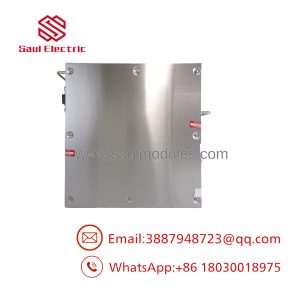
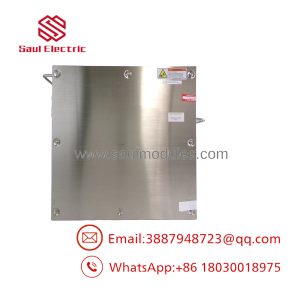
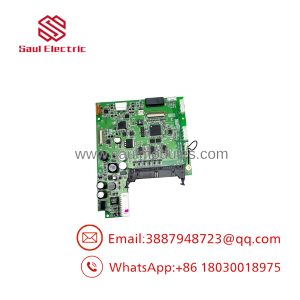
PRO TIP: Ask the supplier for a clear photograph of the complete PCB, including every label and connector.
⚠️ Trap #2 — Matching only the Kawasaki number
For legacy Kawasaki electronics, the parent controller model can be just as important as the PCB number. Record both.
⚠️ Trap #3 — Ignoring daughterboards
If the original 63956-11201 has an attached interface board or memory assembly, make sure the replacement includes the same hardware.
⚠️ Trap #4 — Treating used-working stock as New Surplus
A used-working PCB may have already spent years in a production environment. Ask the supplier to distinguish New Surplus, Used Working, Refurbished, and Repaired condition.
Dynamic FAQ
What is Kawasaki 63956-11201?
63956-11201 is a Kawasaki industrial electronic board/assembly used in robotic control equipment. Its precise functional classification should be confirmed against the applicable Kawasaki controller.
Is 63956-11201 a CPU board?
That should not be assumed without Kawasaki documentation or identification from the actual controller assembly.
Which Kawasaki controller uses 63956-11201?
The exact controller compatibility is not sufficiently established from reliable public information. The safest identification method is to match the board with the controller model and original assembly documentation.
Can another Kawasaki PCB be used as a replacement?
Not based on physical similarity alone. Verify the complete part number, revision, connectors, configuration hardware, firmware, and parent controller.
What should I provide when requesting a quotation?
Provide Kawasaki 63956-11201, the controller model, photographs of the installed board, all secondary labels, and photographs of the connectors. This gives the supplier enough information to distinguish the correct assembly from visually similar Kawasaki boards.
How should New Surplus authenticity be checked?
Ask for photographs of the actual unit, confirmation that it has never been installed, the original Kawasaki identification labels, packaging information if available, and a written warranty.
What testing should refurbished stock receive?
At minimum: PCB inspection, connector inspection, controlled power-up, controller initialization, system diagnostics, and functional testing in a compatible Kawasaki controller whenever practical.
What warranty should I request?
For a production-critical spare, request a written functional warranty with a defined coverage period. A supplier warranty should not be represented as a Kawasaki OEM warranty.

 Start Chat


