





Description
Product Introduction & Engineering Value
Kawasaki ND1236-0805-003 is a legacy industrial automation part number that should be identified from the physical nameplate and associated system documentation before replacement. The full suffix is important; do not treat it as interchangeable with a visually similar ND1236-series component.
For procurement, verify the exact assembly designation, electrical interface, controller/system family, connector arrangement, and revision. This is particularly important when sourcing New Surplus inventory where multiple historical Kawasaki configurations can appear similar.
Technical Specifications
| Parameter | Specification |
|---|---|
| Manufacturer | Kawasaki |
| Part Number | ND1236-0805-003 |
| Equipment Category | Industrial automation hardware |
| System Application | Kawasaki industrial control |
| Hardware Revision | Verify from physical label |
| Electrical Rating | Verify from applicable Kawasaki documentation |
| Input/Output Configuration | Verify before replacement |
| Communication Interface | Verify for exact assembly |
| Connector Configuration | Verify against original unit |
| Mounting Arrangement | System-dependent |
| Firmware/Software Dependency | Configuration-dependent |
| Replacement Method | Exact part-number match recommended |
Important identification note
I cannot responsibly assign a specific I/O count, voltage, communication protocol, or controller-series designation to ND1236-0805-003 from the part number alone. I would rather leave those fields for verification than publish an unsupported specification.
For a Kawasaki control-system spare, the complete nameplate and parent equipment information are normally required to establish exact compatibility.
Field Application & the “Trench” Experience
A realistic replacement situation involves an older Kawasaki automation cabinet where a control-system component fails during a planned maintenance window. The maintenance team has identified ND1236-0805-003 from the original hardware label, but an aftermarket listing describes another ND1236 component as equivalent.
That is where procurement errors happen.
The correct procedure is to compare the complete part number, physical connectors, electrical characteristics, system documentation, and installed configuration. A partial model-number match is not enough.
Niche application scenarios
- Robotic production-cell control: interface hardware within a Kawasaki automation cabinet.
- Automated material-handling equipment: control-system component associated with machine sequencing and interlocks.
- Industrial assembly equipment: legacy Kawasaki control hardware supporting machine-level automation.
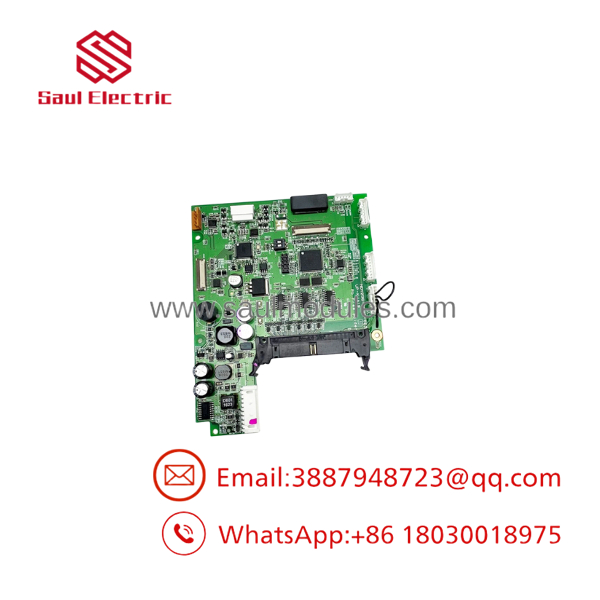
ND1236-0805-003
Transparency SOP: QA & Testing
For New Surplus or Refurbished ND1236-0805-003 stock:
- Part-number verification — Confirm every character of -0805-003.
- Nameplate inspection — Photograph manufacturer markings, revision codes, and serial information.
- Physical inspection — Check connectors, PCB surfaces, terminals, mounting points, and evidence of overheating.
- Electrical verification — Test only against the documented ratings for the exact component.
- System test — Where possible, install the unit in a compatible Kawasaki test environment.
- Interface verification — Check applicable I/O or communication functions.
- Diagnostic check — Confirm normal system status without active hardware faults.
- Documentation — Record the exact tested configuration and warranty.
For an unidentified legacy Kawasaki component, do not invent a bench-test procedure from the model number alone.
The Veteran’s Tech Trap Guide
⚠️ Trap #1 — Matching only “”
The suffix 0805-003 is part of the identification. Do not substitute another -series item simply because the housing looks similar.
PRO TIP: Require a photograph of the complete original label before purchasing.
⚠️ Trap #2 — Trusting marketplace specifications
Legacy industrial components are frequently listed using copied or incomplete descriptions. If a seller claims a voltage, I/O count, or communication protocol, ask for the manufacturer’s documentation supporting that specification.
⚠️ Trap #3 — Testing an unknown module with arbitrary voltage
Without verified electrical specifications, applying power can damage the module.
⚠️ Trap #4 — Ignoring the parent Kawasaki equipment
A spare part can be genuine Kawasaki hardware and still be unsuitable for a particular machine configuration. Verify the parent controller/system and revision.
Dynamic FAQ
WhKawasaki ?
is a Kawasaki industrial automation part number. Its exact hardware function should be confirmed from the physical unit and associated Kawasaki system documentation before replacement.
Whtem does belong to?
The part number alone is not sufficient to establish a specific Kawasaki controller or system family with confidence. The parent equipment model or a clear nameplate photograph should be used for positive identification.
What are the electrical specifications?
The exact voltage, current, I/O configuration, and communication characteristics should be verified against doction for . They should not be inferred from the part-number structure.
Can another -serie replace ?
Not without an engineering equivalency check. The complete ordering code, electrical interface, connectors, firmware/configuration requirements, and parent-system compatibility must match.
How shou Surplus be verified?
Request actual-unit photographs, complete identification markings, condition information, applicable electrical test results, and written warranty terms. If possible, request evidence of testing in the correct Kawasaki system.
What should I check before ordering a replacement?
At minimum, compare the , original nameplate, parent Kawasaki equipment model, connector arrangement, revision information, and system documentation.
Is a warranty available?
Warranty terms depend on the supplier and stock condition. For a legacy automation spare, obtain the warranty period and return conditions in writing before purchase.

 Start Chat


