





Description
Product Introduction & Engineering Value
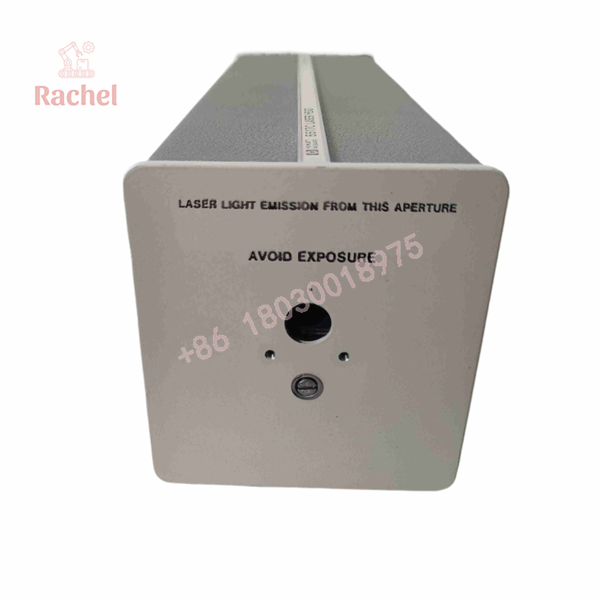
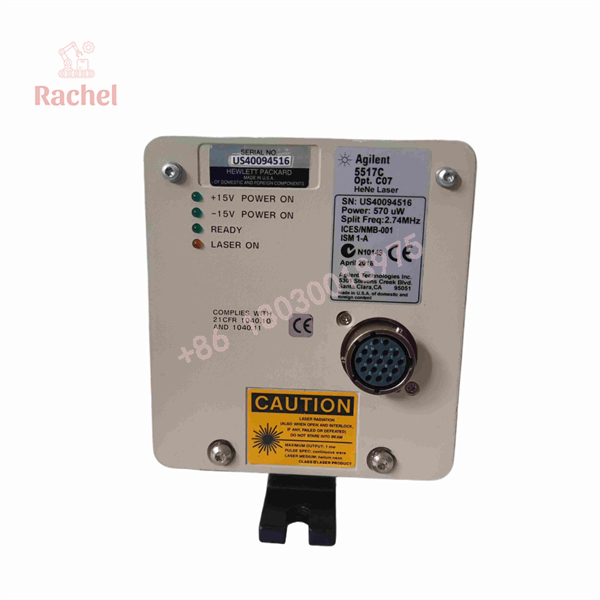
The 5517C is built around a higher heterodyne frequency than earlier 5517 variants. That distinction matters when matching the laser head to the interferometer electronics. Keysight lists a 2.4–3.0 MHz reference frequency, a 6 mm standard beam diameter, and a maximum linear velocity of approximately 711 mm/s under specified conditions.
For replacement work, the electronics pairing deserves particular attention. Historical HP documentation states that the higher-frequency 5517C requires compatible electronics such as the 5527B, rather than the older 5527A configuration. A physically interchangeable laser head is not necessarily a system-compatible laser head.
Technical Specifications
- Laser type: Class II helium-neon laser
- Nominal wavelength: 633 nm
- Reference frequency: 2.4–3.0 MHz
- Standard beam diameter: 6 mm
- Optional beam diameter: 3 mm with Option 003; 9 mm with Option 009
- Minimum output power: 180 µW standard specification
- Maximum output power: 1 mW
- Beam height: 79.5 ± 1.0 mm
- Maximum linear velocity: Approximately 711 mm/s with applicable system configuration
- Warm-up time: Approximately 90 minutes
- Weight: 3.4 kg / 7.5 lb
- Input power: +15 V ±0.3 V, up to 3.0 A; −15 V ±0.3 V, up to 0.3 A
Keysight’s archived 5517-series documentation specifies typical wavelength stability of 2 ppb over one hour and 20 ppb over the laser’s lifetime, with standard wavelength accuracy of ±0.1 ppm.
Field Application & The “Trench” Experience
A typical failure scenario is a precision motion stage that begins producing unstable position readings after years of operation. The interferometer electronics may still communicate correctly, but the optical reference signal has degraded enough to affect measurement stability. Replacing the 5517C can restore the optical source without redesigning the entire measurement chain—but only if the replacement laser head matches the existing frequency and system configuration.
One important historical compatibility detail is that the 5517C’s higher frequency difference was designed for the 5527B electronics. The older 5527A cannot simply be assumed to support the 5517C.
Specific application scenarios
- Semiconductor lithography motion stages — high-speed linear positioning where interferometric feedback is used for stage measurement.
- Flat-panel manufacturing equipment — precision positioning over large motion ranges.
- VME-based precision metrology systems — legacy measurement platforms requiring a compatible 5517-series laser source.
- Multi-axis interferometer configurations — Option 009 provides a 9 mm beam diameter for applications requiring a larger angular measurement range.
5517C
5517C
Transparency SOP: QA & Testing
For New Surplus 5517C inventory, the inspection process should focus on both the laser head and its optical performance:
- Identity check — verify the 5517C model marking and any option codes.
- Physical inspection — inspect the housing, optical aperture, connectors, mounting surfaces, and cable interface.
- Power-up verification — confirm the specified ±15 V supply requirements are met before energizing the unit.
- Warm-up observation — allow the laser head sufficient stabilization time; Keysight specifies approximately 90 minutes.
- Optical verification — where suitable test equipment is available, verify laser output and reference-frequency behavior.
- System compatibility test — confirm operation with the customer’s interferometer electronics before installation into production equipment.
A surplus unit should be identified honestly as unused original inventory. It should not be represented as factory-new production simply because its physical condition is excellent.
The Veteran’s Tech Trap Guide
⚠️ Trap #1 — Mixing up 5517B and 5517C.
They are not simply cosmetic variants. Historical HP documentation identifies the 5517C’s approximately 2.8 MHz frequency difference as the key distinction from the approximately 2.1 MHz 5517B, enabling higher motion rates with compatible electronics.
⚠️ Trap #2 — Installing a 5517C on 5527A electronics without checking compatibility.
The historical system documentation specifically states that a 5517C can be used with 5527B electronics but not with 5527A electronics for measurement. Verify the complete interferometer configuration before ordering a replacement.
PRO TIP: Record the laser-head option number before removing the existing unit. Beam diameter options can affect the optical configuration even when the base model remains 5517C.
⚠️ Trap #3 — Judging the laser by appearance alone.
A clean housing does not prove acceptable laser output, frequency stability, or measurement performance. For used or surplus equipment, optical testing is more meaningful than cosmetic inspection.
Dynamic FAQ
What is the Keysight 5517C?
The 5517C is a Class II helium-neon laser head used as the optical source in precision dual-frequency laser interferometer systems. It produces 633 nm laser light and is designed for higher-speed motion applications.
What is the 5517C reference frequency?
Keysight specifies a 2.4 to 3.0 MHz reference frequency for the 5517C.
Can a 5517C replace a 5517B?
Not automatically. The two models have different frequency characteristics, and the interferometer electronics must support the selected laser head. Historical HP documentation specifically distinguishes the 5517C from the 5517B in this respect.
Can the 5517C work with a 5527A?
The historical HP compatibility documentation states that the 5517C requires 5527B electronics for measurement and is not compatible with 5527A electronics for that purpose. Always verify the exact system configuration before replacement.
What beam diameter does the 5517C use?
The standard 5517C configuration has a 6 mm beam diameter. Keysight also documents a 3 mm Option 003 and a 9 mm Option 009.
Is a New Surplus 5517C covered by warranty?
Warranty depends on the supplier and the condition classification. A legitimate New Surplus listing should clearly state that the unit is unused original inventory and separately specify the warranty period and applicable testing. For critical metrology equipment, requesting the model/option label and test documentation before purchase is advisable.

 Start Chat


