





Description
Product Introduction & Engineering Value
The HP Agilent Keysight E1458 is a high-density digital I/O module designed for VXI-based automated test systems. Its 96 digital channels allow a single module to handle a large number of discrete signals, making it useful for stimulus generation, status monitoring, relay control, and interface testing.
For legacy test equipment, channel density is only part of the equation. The external connector configuration, port direction, logic levels, timing requirements, VXI addressing, and software interface must match the existing test application. A replacement that fits the chassis but does not match those details can create a significant commissioning problem.
Technical Specifications
| Parameter | Specification |
|---|---|
| Manufacturer | Hewlett-Packard / Agilent / Keysight |
| Model | E1458 |
| Instrument Type | Digital I/O module |
| Platform | VXI |
| Form Factor | C-size |
| Channel Count | 96 digital I/O channels |
| Port Organization | Six 16-bit ports |
| I/O Direction | Programmable digital I/O |
| Digital Logic | TTL-compatible digital interface |
| VXI Interface | Message-based VXI instrument |
| Programming | Register/programmatic control through the VXI system |
| Typical Application | Automated test, discrete signal simulation, monitoring, and control |
The E1458 is documented as a 96-channel digital I/O module, with the I/O organized into six 16-bit ports. The module is intended for high-density digital signal interfacing within VXI automated test systems.
Engineering note: Exact electrical limits, input thresholds, output drive characteristics, timing specifications, interrupt behavior, and connector pin assignments should be verified against the applicable E1458 hardware documentation before wiring the module into a production system.
Field Application & the “Trench” Experience
A legacy functional tester was being used to verify an electronic control assembly with dozens of discrete inputs and outputs. The tester’s VXI chassis was still healthy, but its digital I/O module had developed intermittent channel failures. The maintenance team initially considered replacing individual interface boards downstream.
That would have been the wrong move.
The E1458 was the common digital interface serving the test sequence. Once the faulty module was identified, the team replaced it, checked the VXI configuration, verified the port assignments, and ran a point-by-point I/O test against the tester’s known-good reference fixture.
The production system was restored without rewriting the test architecture.
Typical applications include:
- Automated relay and contactor testing, where many discrete control signals must be driven and monitored.
- ECU functional-test fixtures, with large numbers of binary status and control lines.
- Digital interface simulation, where the tester must emulate discrete signals presented to the device under test.
- Legacy avionics test racks, where high-density digital stimulus and response channels are required.
Transparency SOP: QA & Testing
For E1458 New Surplus or Refurbished inventory, visual inspection alone is not enough. A digital I/O module can appear perfect while having failed channels.
A practical acceptance procedure should include:
- Model verification — Confirm E1458 identification, serial number, revision, and assembly markings.
- Mechanical inspection — Examine the VXI connector, front-panel interface, ejectors, shielding, and PCB.
- Chassis recognition — Install the module in an appropriate VXI chassis and verify correct initialization.
- Input testing — Apply known logic states across representative channels and confirm correct detection.
- Output testing — Command representative outputs and verify the resulting logic state with suitable test equipment.
- Port verification — Exercise channels across the different 16-bit ports rather than testing only one section.
- Final documentation — Record the tested condition and identify whether the unit is New Surplus or Refurbished.
For a 96-channel module, testing only a handful of channels is not equivalent to a complete functional test.
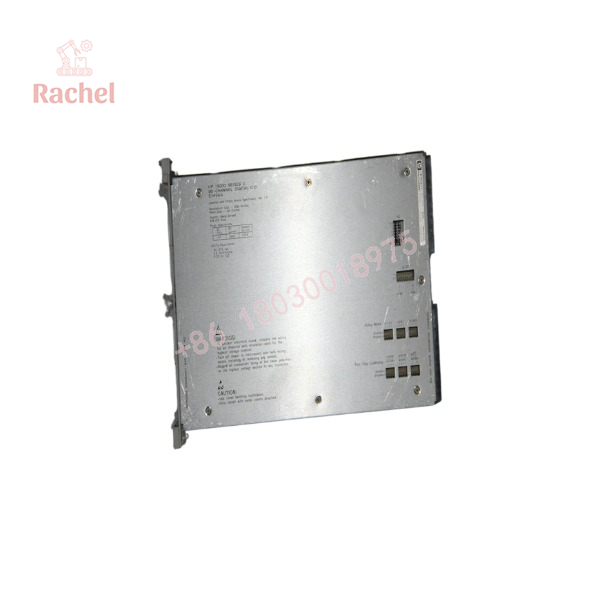
E1458
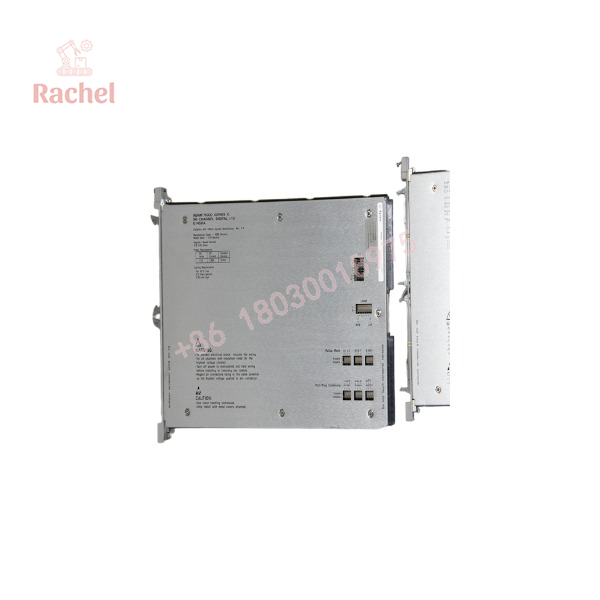
E1458
The Veteran’s Tech Trap Guide
⚠️ Trap #1 — Misreading the 96-channel specification.
The E1458’s channel organization matters. Do not assume that all 96 lines have identical electrical behavior or that every channel can be configured identically under every operating condition.
⚠️ Trap #2 — Forgetting external wiring.
Replacing the module without documenting the connector pinout and port assignment is asking for trouble. Photograph the wiring and label each harness before removal.
PRO TIP: Create a simple channel map before touching the failed unit: port → bit → external signal → expected state. This becomes invaluable during commissioning.
⚠️ Trap #3 — Testing only whether the software sees the module.
VXI recognition proves that the module communicates with the chassis. It does not prove that all digital channels function correctly. Channel-level testing is necessary.
Dynamic FAQ
Q: What is the Agilent E1458?
A: The E1458 is a high-density VXI digital I/O module with 96 digital I/O channels, organized as six 16-bit ports.
Q: Is the E1458 suitable for automated test systems?
A: Yes. Its high channel density makes it particularly useful for automated functional testers that need to generate and monitor many discrete signals.
Q: Can I use the E1458 for relay control?
A: It can be used as a digital control interface in suitable applications, but the actual load requirements must be checked against the module’s output electrical specifications. Do not connect a relay coil directly without confirming the required drive characteristics.
Q: Does the E1458 require a VXI chassis?
A: Yes. It is a modular VXI instrument rather than a standalone USB or bench-top digital I/O device.
Q: What should be tested on a refurbished E1458?
A: The VXI interface, representative input channels, output channels, all six port groups, connector integrity, and system communication should be checked. For critical applications, a full channel-by-channel test is preferable.
Q: What does New Surplus E1458 mean?
A: It normally means unused previously manufactured OEM inventory that entered secondary-market stock. It is different from refurbished equipment. The supplier should state the actual condition and warranty explicitly.

 Start Chat


