





Description
Product Introduction
The Kollmorgen 60WKS-CE240/22PB is an analog servo amplifier from the 60WKS family, intended for closed-loop industrial motion systems. The amplifier provides three-phase motor output and accepts feedback from DC, brushless, or three-phase tachometers as well as an RLG-type rotor-position sensor.
Its architecture is distinctly analog. Current, speed, and PI control functions are built into the amplifier, with two differential setpoint inputs and 24 V control logic using optocouplers. The four-quadrant output stage is useful where the motor must accelerate, decelerate, reverse, and handle regenerative operation without changing the basic drive architecture.
Key Technical Specifications
| Parameter | Specification |
|---|---|
| Manufacturer | Kollmorgen |
| Model | 60WKS-CE240/22PB |
| Alternate Model Format | 60WKS-CE24022PB |
| Product Type | Analog Servo Amplifier |
| Series | 60WKS |
| Supply | 3-phase power supply |
| Output Stage | 3-phase, 4-quadrant |
| Control Voltage | 24 V |
| Control Isolation | Optocoupler-isolated |
| Setpoint Inputs | 2 differential inputs |
| Controllers | Current / speed / PI |
| Tacho Input | DC, brushless, or 3-phase tachometer |
| Rotor Feedback | RLG-type rotor-position sensor |
| Enable Input | Yes |
| Expansion | Option PCB -01 slot |
| Auxiliary Supply | Generated from DC-link voltage |
The manufacturer-specific configuration is important here. This is not simply a generic 240 V digital servo drive. The available documentation describes analog setpoint control, tachometer feedback, rotor-position sensing, and a three-phase four-quadrant output stage.
One thing to watch out for is the model-number formatting. Listings variously show 60WKS-CE240/22PB, 60WKS-CE24022PB, and 60WKSCE240/22PB. For a replacement purchase, match the complete nameplate and wiring configuration rather than relying on a shortened database description.
Application Scenarios & The “Trench” Experience
The classic failure occurs at 2 AM.
A machine axis starts hunting, then trips during deceleration. The motor is mechanically sound. The controller’s command signal looks reasonable. Someone swaps the amplifier with a modern digital drive and discovers that nothing lines up: feedback wiring, enable logic, setpoint scaling, and regenerative behavior are all different.
That is why an exact 60WKS replacement can be far less disruptive than a drive modernization when production downtime is the immediate concern.
- Machine Tools — Servo Axis Control — Provides closed-loop speed/current control using analog setpoints and motor feedback.
- Material Handling — Reversing Motion — Four-quadrant operation suits axes requiring acceleration, braking, and frequent direction changes.
- Printing Machinery — Web or Roller Control — Analog setpoint and tachometer feedback can support tightly controlled legacy motion systems.
- Packaging Machinery — Servo Positioning — Suitable where an existing controller already provides the required analog motion command.
- Legacy Automation — Drive Replacement — Useful when maintaining an installed 60WKS architecture is preferable to redesigning the entire control interface.
Field case — plausible replacement scenario:
A production machine has been running for years with several 60WKS amplifiers. One axis begins producing a current fault during rapid deceleration.
The technician checks the motor, tachometer, feedback wiring, and mechanical load. The fault follows the amplifier.
The failed unit is identified as 60WKS-CE240/22PB.
A tested replacement is installed after recording the original setpoint wiring, enable configuration, feedback connections, and adjustment settings. The axis is then tested at low speed before the machine is returned to automatic operation.
No PLC rewrite. No wholesale drive migration.
That distinction matters when every hour of downtime has a production cost attached to it.
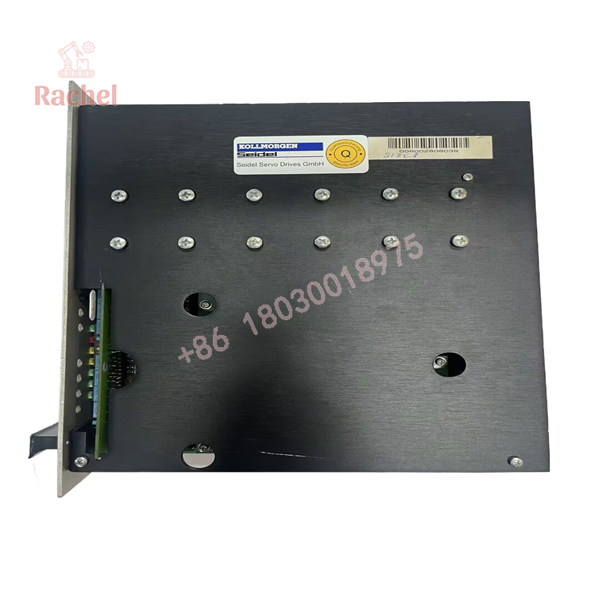
60WKS-CE24022PB
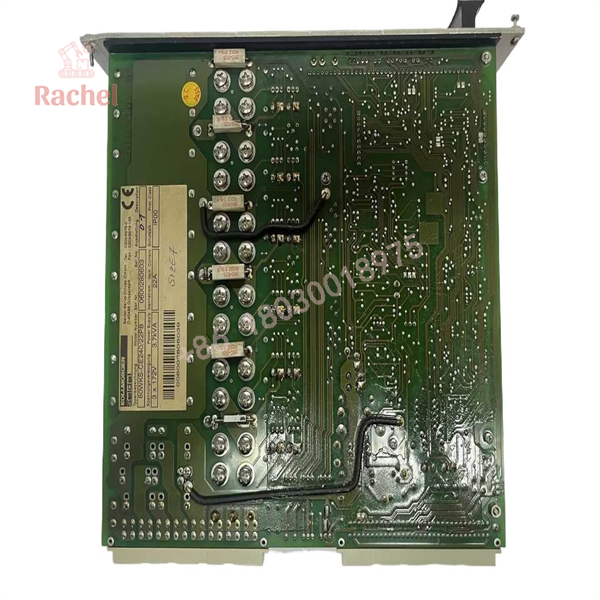
60WKS-CE24022PB
Transparency SOP: Quality Assurance & Testing
For a legacy analog servo amplifier, bench testing must include the control and feedback interfaces. A simple power-on test is inadequate.
- Inbound Inspection
- Verify the complete 60WKS-CE240/22PB nameplate.
- Inspect terminals, connectors, PCB assemblies, heat sink, and mounting hardware.
- Look for burnt components, cracked solder joints, corrosion, and signs of previous repair.
- Check cooling passages for contamination.
- Live Rig Testing
- Install the amplifier on an appropriate test setup.
- Verify three-phase input behavior and DC-link charging.
- Confirm the 24 V control interface.
- Test enable functionality.
- Apply controlled differential setpoint signals.
- Verify current and speed control response.
- Electrical Parameter Checks
- Check power-stage behavior under controlled load.
- Verify feedback inputs using the appropriate simulated or actual tachometer/rotor-position signals.
- Monitor output stability during acceleration and controlled deceleration.
- Check for excessive heating or abnormal current draw.
- Configuration Verification
- Record adjustment potentiometer positions where applicable.
- Verify the installed option PCB, if fitted.
- Document the motor feedback type used during testing.
- Match the replacement’s configuration to the original application.
- Final QC & Anti-static Packaging
- Record test results and hardware revision.
- Photograph the actual unit.
- Protect connectors and adjustment controls during shipping.
- Use ESD-safe packaging.
We don’t just ship boxes. An analog servo amplifier needs to demonstrate actual closed-loop behavior before it should be considered a production spare.
The Veteran’s Tech Trap Guide (Crucial Value-Add)
- ⚠️ Do not assume the motor feedback is interchangeable. The 60WKS documentation identifies inputs for DC, brushless, and three-phase tachometers plus an RLG-type rotor-position sensor. Verify the feedback device before energizing the replacement.
- ❗ Photograph every adjustment before removing the old amplifier. Analog servo amplifiers depend on setup values. If you lose the original current, speed, or PI-controller adjustments, commissioning can become a long trial-and-error exercise.
- ⚠️ Check regenerative operation. This is a four-quadrant amplifier. A machine with aggressive braking or frequent reversal can place substantial energy back into the DC link. Do not troubleshoot an overvoltage fault by simply increasing limits.
- ❗ Verify the option PCB. The 60WKS design provides an expansion slot for an optional PCB-01 containing functions such as ramp generation and limit-switch logic. A replacement without the same option configuration may not behave like the original machine.
Frequently Asked Questions (FAQ for Conversion)
Q1. What is the Kollmorgen 60WKS-CE240/22PB?
It is an analog servo amplifier in Kollmorgen’s 60WKS family. It provides three-phase motor control with current, speed, and PI control functions.
Q2. Is 60WKS-CE24022PB the same model as 60WKS-CE240/22PB?
The available listings use both forms for the same model designation. Nevertheless, verify the physical nameplate before procurement because Kollmorgen model suffixes can identify important configuration differences.
Q3. What feedback does it support?
The documented configuration supports DC, brushless, or three-phase tachometer inputs and an RLG-type rotor-position sensor input.
Q4. Does it use a digital fieldbus such as EtherNet/IP or EtherCAT?
Do not assume that. The documented architecture centers on analog differential setpoint inputs and discrete 24 V control logic, rather than a modern Ethernet-based servo interface.
Q5. Can the 60WKS-CE240/22PB be hot-swapped?
No. Treat it as a powered industrial drive. Isolate the drive and DC-link energy, verify the absence of hazardous voltage, and follow the machine’s lockout/tagout procedure before removing it.
Q6. Why is a surplus unit cheaper than a direct OEM replacement?
This is legacy motion-control hardware. Secondary-market inventory can include unused surplus, recovered units, repaired units, and tested service stock. Price alone tells you nothing about condition. Ask for the actual unit’s photographs, condition classification, functional test report, and warranty.
Q7. What should I verify before buying a replacement?
At minimum, verify 60WKS-CE240/22PB, motor voltage/current requirements, feedback type, setpoint wiring, option PCB configuration, hardware revision, and the adjustment settings of the existing amplifier. If the seller cannot provide those details, treat the replacement as unverified.

 Start Chat


