





Description
Product Introduction & Engineering Value
The FX0N-16EX is a 16-point discrete input expansion block for Mitsubishi’s legacy FX0N PLC platform. The documented FX0N-16EX-ES/UL version uses 24 VDC sink/source inputs, making it suitable for adding field-device input capacity without replacing the existing PLC CPU.
This is strictly a legacy-spares item now. Mitsubishi identifies the FX0N series as discontinued, with the FX0N-16EX-ES/UL included in the January 2006 production discontinuation. For an operating machine that still depends on FX0N hardware, a verified spare can be more practical than an immediate controls redesign.
Technical Specifications
| Parameter | FX0N-16EX-ES/UL |
|---|---|
| Manufacturer | Mitsubishi Electric |
| PLC Family | MELSEC-F |
| Series | |
| Module Type | Input extension block |
| Input Points | 16 |
| Input Signal | 24 VDC |
| Input Configuration | Sink / Source |
| Input Isolation | Photocoupler |
| Connection | Terminal block |
| Width | Approx. 70 mm |
| Depth | Approx. 87 mm |
| Weight | Approx. 0.3 kg |
| Operating Temperature | 0 to 55 °C class, depending on system configuration |
| Status | Discontinued |
Mitsubishi’s FX1N hardware manual lists the -16EX-ES/UL as a 16-point, 24 VDC sink/source input extension block, approximately 70 mm wide and 0.3 kg.
The manufacturer’s terminal-layout documentation shows dedicated input terminals for X0 through X7 across the two input groups, together with the associated common/S/S connection.
Important Model-Suffix Check
Do not shorten the purchasing specification to simply -16EX if the machine’s nameplate contains a suffix.
The documented -ES/UL is the 24 VDC sink/source version. Mitsubishi also produced other FX0N-16EX-related configurations in the broader product family, so the complete ordering code should be matched against the existing module.
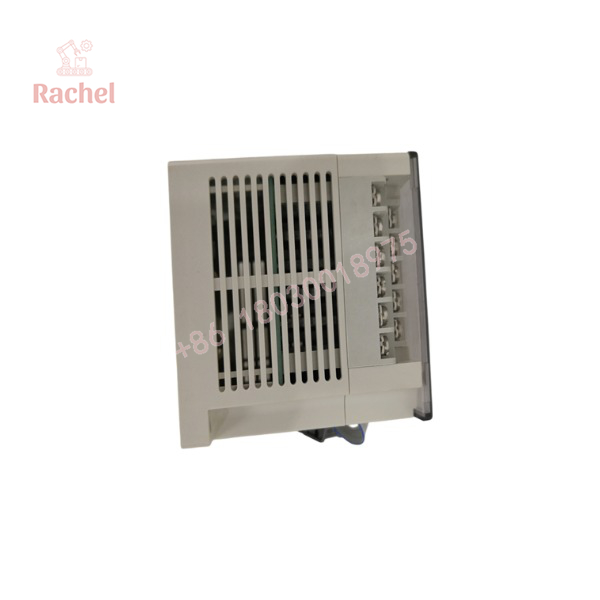
FX0N-16EX
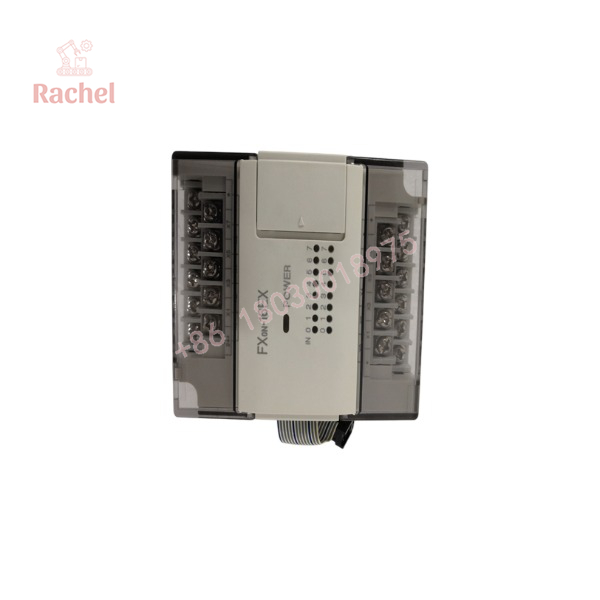
FX0N-16EX
Field Application & the “Trench” Experience
A typical failure scenario is not dramatic. One proximity sensor stops registering, then another input becomes intermittent. The maintenance team initially replaces sensors and checks field wiring. Eventually the common input circuitry on the expansion block becomes the suspect.
With an old FX0N installation, replacing the entire PLC just to recover 16 discrete inputs may introduce unnecessary programming, commissioning, and machine-validation work. A correctly identified can restore the original architecture with considerably less disruption.
Typical applications include:
- Packaging-machine sensor and limit-switch inputs
- Conveyor position and interlock monitoring
- Machine-tool auxiliary input expansion
- Material-handling equipment using legacy FX0N PLCs
Mitsubishi’s documentation confirms the FX0N-16EX-ES/UL as an FX0N expansion block, while its current lifecycle documentation identifies the FX0N family as discontinued.
Transparency SOP: QA & Testing
For New Surplus or Refshed inventory, the useful test is channel-by-channel.
1. Identification
- Verify the complete model number and suffix.
- Record serial number and manufacturing markings.
- Photograph the terminal block and extension connector.
2. Physical inspection
- Inspect the enclosure, terminal screws, connector, PCB, and mounting points.
- Look for oxidation, cracked plastic, contamination, and previous repair work.
3. Power/interface verification
- Confirm the module is being tested with a compatible FX0N/FX-series configuration.
- Do not apply an arbitrary external supply directly to the module.
4. Input test
- Apply the specified 24 VDC signal to each input.
- Check the corresponding input indication.
- Verify that all 16 channels are recognized by the PLC.
5. Functional test
- Confirm both input groups.
- Check for intermittent channels.
- Record test results for all 16 inputs.
The Veteran’s Tech Trap Guide
⚠️ Trap #1 — Assuming FX0N-16EX is still a current-production module.
It is not. Mitsubishi’s lifecycle information lists the FX0N series as discontinued in January 2006.
⚠️ Trap #2 — Confusing FX0N-16EX with FX2N-16EX.
Mitsubishi lists FX2N-16EX as the replacement for FX0N-16EX in its discontinuation documentation. That does not mean you should blindly substitute it without checking the complete PLC configuration.
⚠️ Trap #3 — Wiring by memory.
The 16-point module uses grouped input terminals. Photograph the wiring before removing the original unit. Mitsubishi’s manual provides separate terminal arrangements for the 16EX configuration.
PRO TIP: If the machine has been running for many years, keep at least one verified FX0N-16EX spare if the PLC system is operationally critical. The larger risk is no longer normal wear; it is the shrinking pool of compatible legacy hardware.
Dynamic FAQ
What is the Mitsubishi FX0N-16EX?
The is a 16-point discrete input expansion block for Mitsubishi’s legacy FX0N PLC family. The documented -ES/UL version uses 24 VDC sink/source inputs.
How many inputs does FX0N-16EX provide?
It provides 16 discrete input points. The terminal documentation identifies the X0-X7 input groups used by the module.
What input voltage does the FX0N-16EX use?
The -ES/UL is specified for 24 VDC input signals and supports sink/source input configurations.
Is FX0N-16EX still manufactured?
No. Mitsubishi lists the FX0N series as discontinued in January 2006, including the FX0N-16EX-ES/UL expansion block. Mitsubishi identifies FX2N-16EX as a replacement product in its lifecycle information.
Can FX2N-16EXlace ?
It is the manufacturer’s listed replacement family, but do not treat that as an automatic drop-in substitution. Verify the PLC generation, connector arrangement, power requirements, mounting, and system configuration before changing the installed hardware.
Is New Surplus FX0N-16EX acceptable?
Yes. For a legacy machine, New Surplus is often preferable to an unknown-condition used module. Verify the complete suffix and perform a full 16-channel functional test before putting the spare into critical service.
What warranty should I request?
Request coverage for all 16 input channels, terminal integrity, input indication, and operation in the intended PLC configuration. For refurbished stock, ask for documented channel-by-channel testing rather than a simple power-up check.

 Start Chat


