





Description
Product Introduction
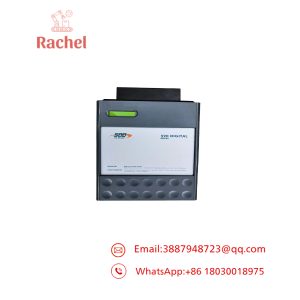
The MTL 8220-DI-IS is a 16-channel intrinsically safe digital input module engineered for the legacy MTL 8200 Series distributed process I/O platform. It reads discrete field signals—such as limit switch trip points, pushbuttons, and NAMUR proximity sensors—operating inside Zone 0, Zone 1, or Class 1 Div 1 hazardous locations. Process plants install this card to pull clean, spark-free status data back across the backplane to the host controller.
Instead of running long field cables back to massive marshalling cabinets stuffed with individual DIN-rail isolators, the 8220-DI-IS integrates galvanic isolation directly onto the card chassis. This density cuts cabinet foot-print dramatically while maintaining strict explosion-proof separation between field wiring and system power. It gives operators real-time contact monitoring without compromising safety in volatile gas or vapor environments.
Key Technical Specifications
| Parameter | Specification |
| Number of Channels | 16 isolated input channels |
| Module Type | Digital Input (Intrinsically Safe) |
| System Compatibility | MTL 8200 Series I/O backplanes |
| Hazardous Area Location | Zone 0 / Zone 1 / Class I, Div 1 |
| Supported Sensors | Dry mechanical contacts, NAMUR proximity switches |
| Line Fault Detection (LFD) | Open-circuit and short-circuit field wiring detection |
| Galvanic Isolation | Channel-to-system backplane isolation |
| Power Supply | System backplane powered via 24V DC bus |
| Channel Status | LED per channel for active input signaling |
| Operating Temperature | -20°C to +60°C |
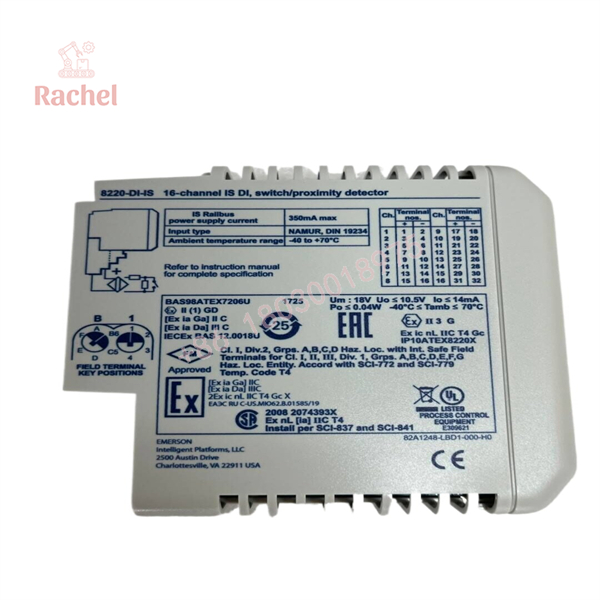
8220-DI-IS
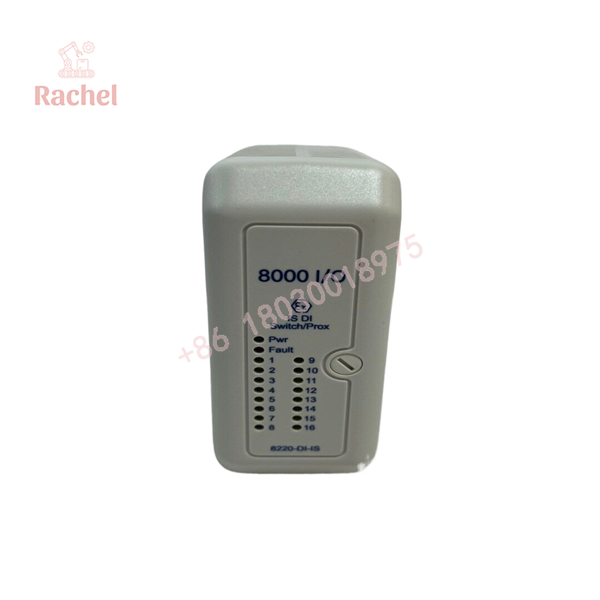
8220-DI-IS
Application Scenarios & The “Trench” Experience
It is 1:30 AM during a scheduled startup at a tank farm. The DCS trips on a false high-level interlock fault because Channel 4 on an old input card stopped processing state changes. The field valve is physically closed, but the control room screen shows it hanging open. The shift supervisor is threatening to hold the feed pumps, costing thousands in lost throughput every hour. You need a drop-in replacement module to verify the contact status immediately.
- Refinery Tank Farms – Monitors floating-roof high-level limit switches mounted on volatile hydrocarbon storage tanks.
- Offshore Oil Platforms – Reads deluge system valve position feedback switches in Class 1 Div 1 hazardous quarters.
- Chemical Processing Units – Interfaces with NAMUR proximity sensors on agitators and batch reactor access hatches.
Field Case Study: A synthetic resin plant experienced erratic interlock trips on their polymerizer unit after a heavy rainstorm caused moisture ingress in a field junction box. The resulting ground fault fried the input bus on an active 8220-DI-IS card. Because the 8200 series is legacy hardware, local distributors had no stock. We dispatched a tested, new-surplus unit from our warehouse on a night flight. The lead instrument tech swapped the card onto the backplane, cleared the line fault error, and got the reactor batch back online before sunrise.
Transparency SOP: Quality Assurance & Testing
We don’t just ship boxes; we test them on actual MTL racks. Here is how we verify every card:
- Inbound Physical Inspection: We inspect casing condition, guide rails, gold-plated edge connectors, and OEM serial tags for heat damage or pin deformation.
- Anti-Counterfeit Checks: We verify component date codes, board layout traces, and conformal coating under UV magnification.
- Power-On Self-Test (POST): The module is latched onto an active 8200 backplane rack to verify bus power initialization and comm controller handshake.
- Channel & LFD Signal Simulation: Every single channel is driven with dry contacts and variable resistor loads to verify state transitions, open-circuit fault triggers, and short-circuit diagnostics.
- ESD-Safe Processing: Cleaning with isopropyl solvent, wrapping in static-shielding bags, and packing in heavy-duty foam crates.
The Veteran’s Tech Trap Guide
In our field experience, replacing legacy I/O cards leads to unnecessary downtime if basic checks are missed. Watch out for these traps:
- ⚠️ Check Your Line Fault Detection (LFD) Resistors: If you are monitoring simple dry contacts and the new card reports an open-circuit fault on every channel, check your field junction box. NAMUR/LFD circuits require end-of-line (EOL) resistor networks (typically 1kΩ series / 10kΩ parallel). Without them, a closed contact looks like a dead short to the module.
- ❗ Mind the Backplane Edge Connector Pins: Don’t slam the module into the carrier slot. The backplane pins on older 8200 racks can bend easily if force is applied at an angle. Align the side guides carefully and push firmly until the latches click.
- ⚠️ Observe Static Protection Protocols: CMOS inputs on IS cards are sensitive to high-voltage static discharge. Always wear a grounded wrist strap before removing the card from its static shielding bag.
- ❗ Verify Module Keying Pins: Ensure the mechanical keying on the carrier base matches the 8220-DI-IS profile. Forcing a card into an incorrectly keyed slot will snap the plastic alignment posts on the back of the card housing.
Frequently Asked Questions
Q: Can I connect standard dry mechanical switch contacts directly to the MTL 8220-DI-IS?
A: Yes, simple volt-free mechanical contacts can be wired directly to the inputs. However, if you want full Line Fault Detection (open and short circuit monitoring), you must install EOL resistor networks near the switch in the field.
Q: Is the MTL 8220-DI-IS hot-swappable?
A: The module architecture supports live insertion on powered 8200 backplanes. However, depending on the hazardous zone classification of the enclosure, you may need a local hot-work permit before opening the panel door or pulling cards.
Q: Is this card brand-new from the factory?
A: The MTL 8200 series is a legacy line. We supply clean, pre-tested new-surplus stock and reconditioned units sourced from plant upgrades, excess project inventory, and decommissioned systems.
Q: What happens if a channel experiences a field short circuit?
A: The intrinsically safe current-limiting circuitry prevents hazardous energy from reaching the field. If Line Fault Detection is active, the card flags an LFD fault condition back to the host system and illuminates the channel diagnostic LED.
Q: What warranty do you provide with this module?
A: We cover all our new-surplus and reconditioned MTL cards with a full 12-month replacement warranty from the date of purchase. If a channel fails under normal operation, we ship a replacement immediately.

 Start Chat


