





Description
Product Introduction & Engineering Value
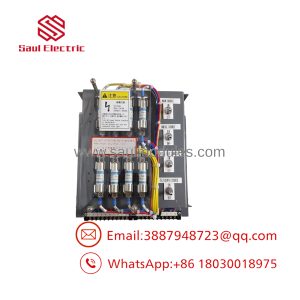
The NABCO TBU-III-C3 is a safety-system module for the legacy TBU-III marine control platform. This is not a generic PLC I/O card. The available product references specifically classify C3 as a Safety System Module, so replacement should be approached as a system-level safety component rather than a plug-in substitute for another TBU-series card.
The TBU-III family includes distinct C1, C2, C3, C4, and W configurations. Current supplier catalogs do not provide enough verified circuit-level information to establish interchangeability between these variants. Match the complete model designation before procurement.
Technical Specifications
| Parameter | Specification |
|---|---|
| Manufacturer | NABCO |
| Model | TBU-III-C3 |
| Product Type | Safety System Module |
| System Family | TBU-III |
| Application | Marine control / engine safety system |
| Functional Category | Safety control |
| Associated Variant | TBU-III-C3 |
| Additional Reference | 02418 |
| Installation | Existing TBU-III system |
| Replacement Level | Complete module |
| Electrical Ratings | Not reliably published |
| Communication Details | Not publicly verified |
| Compatibility | Exact TBU-III configuration required |
Public references confirm the Safety System Module designation but do not provide verified voltage, current, I/O, or communication specifications. Those values should be obtained from the applicable NABCO system documentation rather than inferred from the model number.
Field Application & the “Trench” Experience
A vessel operating a legacy TBU-III control system develops an intermittent safety-system fault during pre-departure testing. The first temptation is to replace the entire control assembly. An experienced maintenance team takes a different approach.
They isolate the fault, document the installed module, and find TBU-III-C3 on the identification label. Before ordering a spare, they compare the C3 designation against the system documentation and confirm that the replacement is actually a C3 module—not C1, C2, C4, or TBU-III-W.
That distinction is important because the TBU-III family contains several separately identified system configurations.
Practical application scenarios include:
- Main-engine safety-system maintenance
- Legacy TBU-III control-system refurbishment
- Emergency spare replacement during vessel overhaul
- Shipboard safety-control system troubleshooting
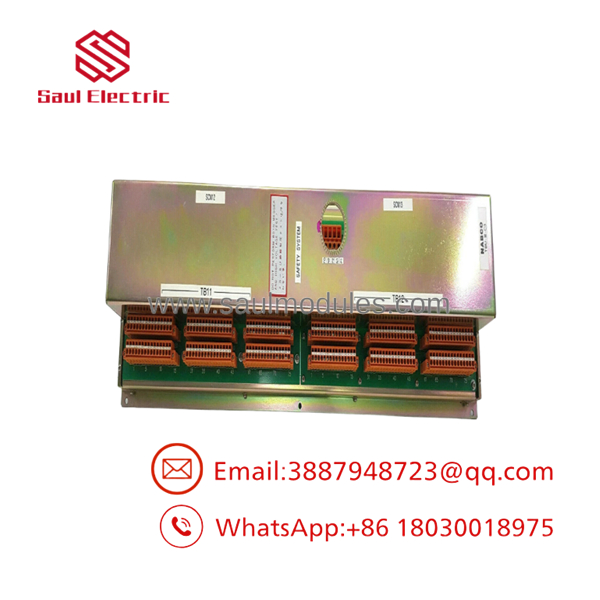
TBU-III-C3
Transparency SOP: QA & Testing
Because this is identified as a safety-system module, QA should be more demanding than a basic visual inspection.
1. Identification
- Confirm
NABCO TBU-III-C3. - Record all labels and serial numbers.
- Check for the additional
02418reference where applicable. - Compare the replacement with the installed module.
2. Physical inspection
- Inspect connectors and terminal interfaces.
- Check enclosure and mounting hardware.
- Look for corrosion, moisture, impact damage, or unauthorized repairs.
3. Electrical evaluation
- Verify power circuits against the original system documentation.
- Perform appropriate continuity and insulation checks.
- Inspect internal components where service procedures permit.
4. Functional verification
- Test the module in an appropriate TBU-III test environment where available.
- Verify safety inputs/outputs and system response according to the vessel’s commissioning procedure.
- Perform a complete system-level safety test after installation.
Current marketplace listings show used TBU-III-C3 modules available, with some sellers describing them as fully operational. One current listing also provides a 30-day return period. These are seller-specific conditions and should not be interpreted as an OEM NABCO warranty.
The Veteran’s Tech Trap Guide
⚠️ Do not substitute TBU-III-C1, C2, C4, or TBU-III-W because the housing looks similar.
The available catalogs explicitly list these as separate TBU-III system variants.
⚠️ Do not treat this as an ordinary control PCB.
It is specifically described as a Safety System Module. Installation and commissioning should follow the vessel’s approved safety-system procedure.
⚠️ PRO TIP: Record the exact module designation before removal.
Photograph the front label, connectors, revision markings, and any secondary identification such as 02418.
⚠️ A successful power-up is not a safety test.
A module can energize normally while a safety input, output, diagnostic circuit, or internal channel remains defective. Complete functional verification is required.
Dynamic FAQ
Q1. What is the NABCO ?
The NABCO is identified by current marine automation suppliers as a Safety System Module for the NABCO TBU-III platform.
Q2. What system does belong to?
It belongs to the NABCO TBU-III control/safety-system family. Related listings include TBU-III-C1, C2, C4, and TBU-III-W.
Q3. Is interchangeable with TBU-III-C2 or C4?
Do not assume interchangeability. They are separately identified TBU-III variants. Compatibility should be established from the installed system documentation and module identification.
Q4. What is reference 02418?
The reference 02418 appears in current supplier catalog data alongside the NABCO Safety System listing. It should be treated as an additional identification reference rather than assumed to be the primary NABCO part number.
Q5. Is New Surplus available?
Availability varies. The current marketplace references reviewed show used modules, including listings described as operational. New Surplus availability should be confirmed from the specific supplier.
Q6. How should buyers verify authenticity?
Request photographs of the actual module, showing the NABCO marking, complete designation, serial/revision information, connectors, and any secondary reference such as 02418. Do not rely solely on a generic catalog photograph.
Q7. What warranty should buyers expect?
Warranty terms are supplier-specific. A current used listing provides a 30-day return period, but that is a seller policy—not evidence of an OEM NABCO warranty. Confirm the warranty and test status in the quotation before purchase.

 Start Chat


