





Description
Product Introduction
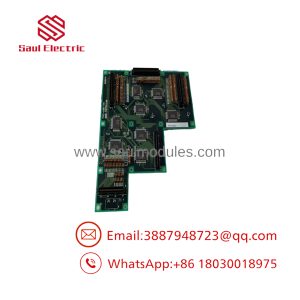
The NABCO TBU-III-W is a specialized terminal base interface module engineered for demanding exterior and vestibule automatic door installations. Manufactured by Nabtesco, this board sits inside the overhead operator casing and acts as the robust physical bridge between field devices—such as motion sensors, presence beams, and electric deadbolts—and the main drive computer.
The “W” designation marks this variant for harsh environmental conditions and expanded wiring clearance. Featuring factory conformal coating across all surface-mount traces, the TBU-III-W resists moisture condensation, humidity spikes, and industrial dust buildup that quickly ruin standard indoor interface boards. It provides localized signal filtering to strip out induced electrical noise from long exterior cable runs before sending clean trip signals to the master CPU.
Key Technical Specifications
| Parameter | Specification |
| Model Code | TBU-III-W |
| Operating Voltage | 24V DC (supplied directly via operator main bus) |
| Environmental Protection | Factory conformal-coated circuit board against moisture/corrosion |
| Terminal Configuration | Dual-row screw terminal blocks with high-retention wiring clamps |
| I/O Channel Capacity | Up to 16 discrete signal lines (Activation, Safety, Lock, Auxiliary) |
| Signal Protection | Integrated freewheeling diodes and transient voltage suppressors (TVS) |
| Mounting Format | Track-mount baseplate with isolation standoffs |
| Operating Temperature | -22°F to 140°F (-30°C to +60°C) |
Application Scenarios & The “Trench” Experience
The “Trench” Reality
It’s 6:45 AM during a driving torrential rainstorm. Driven rain seeped into the outer aluminum header box of a busy hotel main entrance slider. The old non-coated base card shorted out, leaving the doors locked open and blowing cold wet air straight into the lobby. A standard replacement board would rust out in months under those conditions. Installing a conformal-coated TBU-III-W unit bridges the field wiring cleanly, handles the damp environment without trace breakdown, and gets the entryway operating reliably before morning check-out rush.
Target Applications
- Exterior Hotel & Commercial Entrances – Door headers directly exposed to outdoor humidity, wind-driven moisture, and rapid temperature shifts.
- Transit Center & Parking Structure Entrances – High-vibration environments where exhaust fumes, moisture, and road dust accumulate inside the operator track.
- Cold Storage Outer Vestibules – High-condensation doorways where frozen air meets humid ambient room temperatures.
Field Replacement Case
A coastal regional airport experienced chronic false safety beam triggers across four main sliding door lanes every winter morning when condensation formed inside the header track. Technicians swapped out the original degraded base units for bench-tested surplus TBU-III-W cards. The moisture-resistant coating completely stopped the parasitic current leakage across the terminal pins, eliminating false trips instantly.
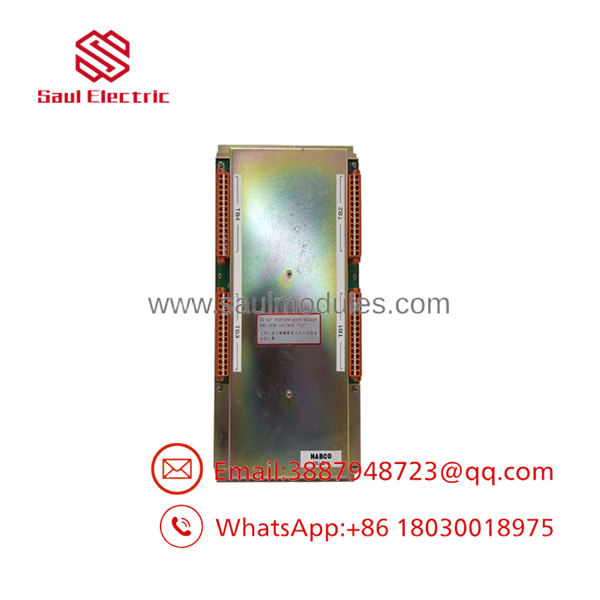
TBU-III-W
Transparency SOP: Quality Assurance & Testing
We test every replacement card on dedicated rigs to ensure complete reliability:
- Inbound Visual & Trace Inspection: Microscopic evaluation to confirm conformal coating integrity, pad health, and lack of corrosion on screw terminals.
- Dielectric & Continuity Verification: Point-to-point resistance checks to ensure zero short circuits or degraded trace insulation paths.
- Power & Bus Handshake Test: Board mounting on a live Nabtesco test operator chassis under full 24V bus power to confirm stable voltage rail distribution.
- Signal Channel Diagnostic: Simulating sensor trips, safety beam breaks, and lock feedback across all channels to verify crisp relay/logic state changes.
- ESD Cleaning & Packaging: Solvent bath cleanup of terminal contacts, followed by heat-sealing in static-shielding ESD bags with moisture desiccant.
The Veteran’s Tech Trap Guide
⚠️ Trap 1: Check Your Cable Entry Drip Loops
When replacing a TBU-III-W after a water ingress failure, fix the root cause first! If you don’t form a proper drip loop on the incoming sensor cables outside the header box, rainwater will run down the wire jacket and drip directly onto your new board’s screw terminals.
❗ Trap 2: Striped Screws and Loose Clamping
These terminal blocks are sized for 18-22 AWG field wire. Don’t force heavy 14 AWG solid copper wire into these terminals, or you will crack the solder pins underneath the board. Use stranded wire with ferrules, and hand-tighten only.
⚠️ Trap 3: Do Not Scratch the Conformal Coating
If you use sharp metal probes or screwdrivers roughly across the board surface, you will scrape off the protective clear coating. Once that silicone shield is gouged, ambient humidity will start corroding the bare copper traces underneath.
Frequently Asked Questions
Q: What does the “W” suffix stand for on the TBU-III-W?
The “W” typically denotes weatherization/water-resistance features (specifically conformal coating on the board traces) and a wider terminal layout for heavier exterior field wiring runs compared to the standard indoor TBU-III variant.
Q: Is the TBU-III-W drop-in compatible with a standard TBU-III-C1?
Physically and electrically, they share similar pinout logic and interface connectors. However, you should always check the terminal terminal layout width and mounting bracket clearance in your specific header box before swapping models.
Q: Does replacing this board clear error codes on the main door CPU?
Replacing the board fixes the physical hardware connection path. However, if the main CPU locked out due to a prior hard short, you may need to recycle main AC power to the master operator box to reset the microprocessor error state.
Q: Can I hot-swap this board without shutting off power?
No. To be honest, pulling ribbon connectors or terminal plugs under 24V power risks sparking the main bus, which can destroy the sensitive input channels on the main CPU card. Always turn off main power first.
Q: What warranty comes with this surplus unit?
Every pre-tested TBU-III-W module comes backed by our full 12-month direct replacement warranty from our stocked surplus inventory.

 Start Chat


