



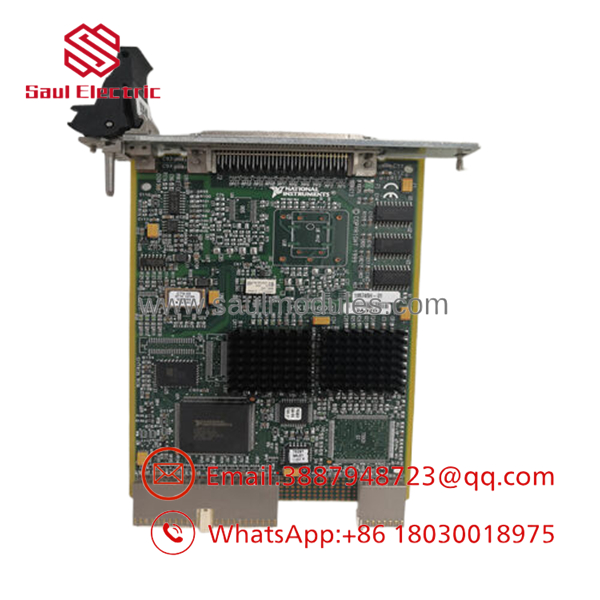
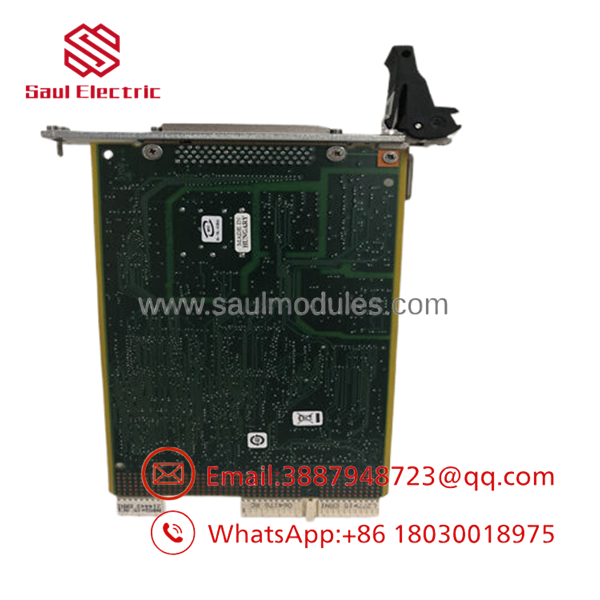


Description
Product Introduction & Engineering Value
When configuring high-speed test benches, few issues are as frustrating as timing drift and phase misalignment across asynchronous subsystems. The PXI-6602 timing module directly solves these synchronization headaches by routing clock and gate signals through the backplane with nanosecond-level precision.
By isolating timing operations from processor-side software latency, this hardware platform ensures highly repeatable measurements. Its integrated NI-TIO ASIC handles pulse-width modulation, quadrature encoder decoding, and frequency division directly on the silicon. This design delivers deterministic behavior even in highly complex data acquisition environments.
Technical Specifications
- Counter/Timer Channels: 8 independent channels
- Resolution: 32-bit
- Max Source Frequency: 80 MHz
- Digital I/O Lines: 32 bidirectional channels (TTL/CMOS compatible)
- Onboard Timebase Stability: 50 ppm
- Physical Connector: 68-pin female SCSI-II style (Centronics style pinout)
- DMA Support: Yes, up to 3 channels allocated dynamically
- I/O Logic Levels: 5V TTL nominal input range
- Power Requirements: +5 VDC (1.5 A typical, 2.5 A maximum)
Field Application & The “Trench” Experience
During an overhaul of a turbine testing stand for a naval propulsion system, our team hit a major wall: the existing PLC-based tracking loop was dropping critical pulses from the high-speed optical shaft encoders during transient acceleration runs. The millisecond scan rates of standard industrial I/O simply could not keep up with the 120,000 RPM bursts. By inserting a PXI-6602 card into our monitoring chassis, we offloaded the encoder quadrature parsing directly to the card’s NI-TIO hardware counters. The zero-overhead edge detection completely resolved the skipped pulses, letting the team map transient torque behavior without data loss.
Niche Application Scenarios
- High-Speed Flow Metering: Interfacing with liquid turbine meters in fuel calibration loops to count micro-pulses and calculate precise volumetric flow rates.
- Propulsion Speed Profiling: Decoding dual-channel quadrature outputs from optical rotary encoders to calculate instantaneous angular velocity on test beds.
- Coherent Pulse Generation: Sending gated trigger trains to high-performance laser systems used in aerodynamic combustion imaging.
Transparency SOP: QA & Testing
We treat each surplus or refurbished PXI-6602 card with a thorough inspection process before it ever leaves our facility:
- Visual Inspection: We inspect the physical card under magnification to check for microscopic component degradation, cold solder joints, and connector pin alignment.
- Chassis Loopback Diagnostic: The module is populated in a PXI chassis to run standard self-tests in NI Measurement & Automation Explorer (MAX).
- Signal Frequency Validation: We inject an external 80 MHz reference clock into every physical channel, testing the hardware counters against known calibration standards to confirm error-free pulse capture.
- Static Digital I/O Testing: We toggle each of the 32 digital I/O channels through a loopback terminal block to verify correct logical high/low transitions and verify the integrity of the line drivers.
The Veteran’s Tech Trap Guide (Crucial Value-Add)
⚠️ The 5V TTL Logic Trap: The PXI-6602 relies on classic 5V logic. If you feed modern 24V industrial sensor signals directly into this module without an intermediate signal conditioning block (like an SCXI or custom opto-isolator card), you will instantly destroy the front-end inputs. Always verify your signal voltages before connecting them.
PRO TIP on DMA Contention: The PXI-6602 supports 3 DMA channels. If your software configuration attempts to run more than 3 buffered, high-speed input/output tasks simultaneously, NI-DAQmx will throw a resource allocation error. To prevent this, configure your additional channels to use interrupt-driven or programmed I/O transfers instead.
Dynamic FAQ
- Q: Is this PXI-6602 module compatible with standard PXI Express (PXIe) hybrid slots?
- A: No, the is a legacy PXI peripheral module featuring standard backplane connectors. It must be installed in a dedicated standard PXI peripheral slot or the legacy-compatible slot of a PXI/PXIe chassis. It will not physically fit or plug into a PXI Express Hybrid slot.
- Q: Do I need specialized software to program this module?
- A: The is fully supported by the NI-DAQmx driver framework. You can program and configure it in LabVIEW, ANSI C, C#, or Python without requiring custom driver development.
- Q: Does this card provide onboard sensor excitation power?
- A: The 68-pin connector provides a +5 VDC user output pin (fused at 1A). This pin can power simple encoders or proximity sensors, but high-power active instrumentation will require an external power supply.
- Q: What warranty coverage do you offer on “New Surplus” units?
- A: Every new surplus and refurbished module comes with our comprehensive 2-year warranty. If any functional hardware issues arise during that window, we will repair or replace the card.

 Start Chat


