





Description
Product Introduction
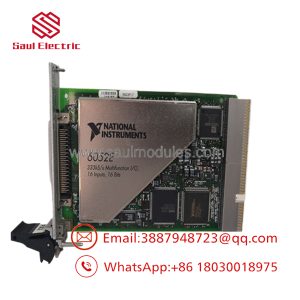
The National Instruments PXI-6713 is a high-speed PXI analog output module designed for deterministic waveform generation, closed-loop control, sensor simulation, and automated test systems. It combines eight simultaneous analog output channels with digital I/O, hardware counters, and PXI timing resources, making it suitable for synchronized multi-channel signal generation.
Unlike entry-level analog output cards, the PXI-6713 updates all output channels simultaneously at rates up to 1 MS/s. In our field experience, this capability is critical for hardware-in-the-loop (HIL) simulation, motor control validation, and synchronized stimulus-response testing where channel skew cannot be tolerated.
Key Technical Specifications
| Parameter | Value |
|---|---|
| Manufacturer | National Instruments |
| Model | PXI-6713 |
| Product Type | PXI Analog Output Module |
| Bus Interface | PXI / CompactPCI |
| Analog Output Channels | 8 |
| Output Resolution | 12-bit |
| Maximum Update Rate | 1 MS/s |
| Output Voltage Range | ±10 V |
| Digital I/O | 8 TTL/CMOS lines |
| Counter/Timers | 2 × 24-bit, 20 MHz |
| Trigger Features | PXI Trigger Bus, Digital Trigger, External Clock |
| Connector | 68-pin SCSI-II |
| Operating Temperature | 0°C to +50°C |
Application Scenarios & The “Trench” Experience
The control algorithm was perfect.
The software passed every simulation.
Then the hardware test failed.
Not because of the controller—but because the replacement output board couldn’t update every channel simultaneously.
I’ve seen this happen during servo tuning on a hydraulic test bench. Engineers spent nearly two days adjusting PID parameters before discovering that a lower-performance replacement DAQ board introduced timing differences between output channels.
The original PXI-6713 solved the problem immediately.
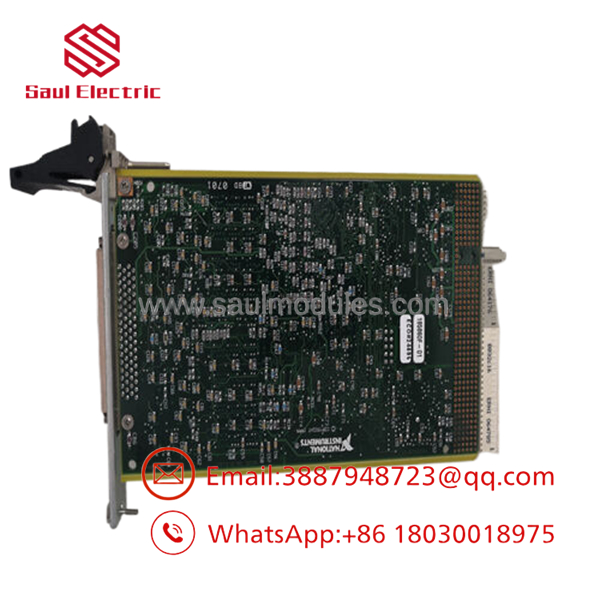
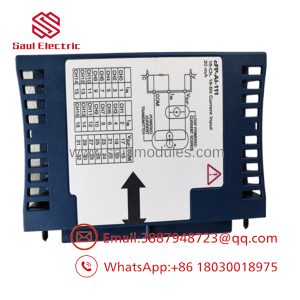
- PXI-6713
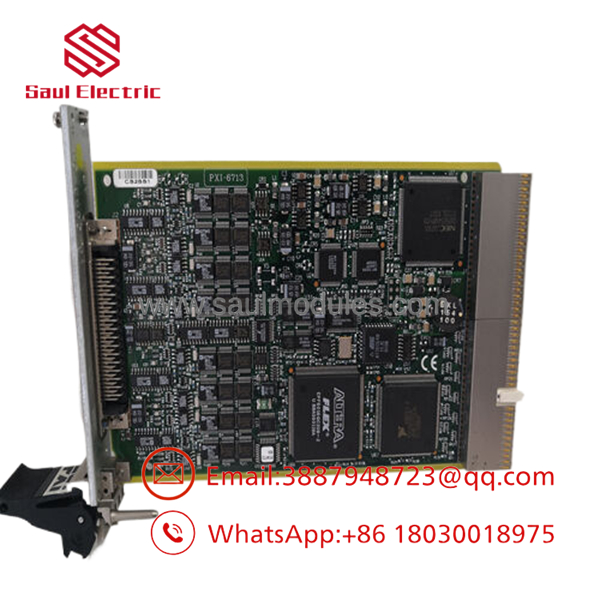
- PXI-6713
Typical Applications
Automotive Testing – Hardware-in-the-Loop (HIL)
Generates synchronized actuator commands for ECU validation and dynamic vehicle simulations.
Power Electronics – Power Supply Control
Produces deterministic analog control signals for converter, inverter, and power supply testing.
Aerospace – Flight Control Simulation
Outputs synchronized analog signals for actuator and avionics verification.
Industrial Automation – Servo and Motion Testing
Controls multiple analog drive references with deterministic timing.
Research Laboratories – Sensor Simulation
Generates programmable voltage waveforms that emulate pressure, temperature, displacement, and process sensors.
Field Replacement Example
An industrial automation laboratory experienced unstable servo responses after replacing a failed PXI analog output card with a lower-cost alternative.
Voltage accuracy remained within specification.
Timing did not.
After reinstalling a tested , all eight analog outputs updated simultaneously and the original controller tuning performed exactly as expected. No software modifications were required.
Transparency SOP: Quality Assurance & Testing
We don’t just ship boxes; we test them in an operational NI PXI chassis.
1. Inbound Inspection
- Verify NI labels, serial numbers, and part numbers.
- Inspect the 68-pin connector for bent pins.
- Examine PCB condition and shielding.
- Check for evidence of unauthorized repairs.
2. Live Rig Testing
- Install in a compatible PXI chassis.
- Verify detection in NI MAX.
- Test all eight analog output channels.
- Verify digital I/O functionality.
- Confirm counter/timer operation.
3. Electrical Parameter Checks
- Measure output accuracy across the ±10 V range.
- Verify simultaneous channel updates.
- Test waveform generation at multiple frequencies.
- Confirm trigger synchronization.
4. Firmware & Driver Verification
- Verify compatibility with supported NI-DAQmx versions.
- Record hardware revision.
- Perform onboard self-test before shipment.
5. Final QC & Anti-Static Packaging
- Complete functional verification.
- Package using ESD-safe materials.
- Protect the SCSI connector during shipping.
- Provide test documentation upon request.
The Veteran’s Tech Trap Guide
⚠️ Don’t assume every analog output board behaves the same.
Many lower-cost replacements multiplex updates between channels. The performs simultaneous multi-channel updates, which is essential for deterministic control.
❗ Verify your NI-DAQmx version before replacing the hardware.
Driver mismatches are one of the most common causes of installation failures on legacy PXI systems.
⚠️ Inspect the 68-pin SCSI connector carefully.
One bent pin can disable an output channel or create intermittent signal problems that resemble software bugs.
❗ Watch the chassis timing configuration. Trust me.
If the PXI Trigger Bus or external clock isn’t configured correctly, the analog outputs may appear unstable even when the hardware is functioning normally.
⚠️ Plan for lifecycle support.
The has reached end-of-life. If your production test system depends on this hardware, maintaining validated spare inventory is usually far less disruptive than redesigning a qualified test platform.
Frequently Asked Questions (FAQ)
Q1: What is the primary function of the ?
A: It generates eight simultaneous analog voltage outputs for waveform generation, closed-loop control, sensor simulation, and automated test applications. It also includes digital I/O and hardware counters.
Q2: Is the an analog input module?
A: No. It is an analog output module. If your application requires analog acquisition, consider NI PXI analog input devices such as the PXI-6115 or related multifunction DAQ modules.
Q3: What output voltage range does the module support?
A: The provides ±10 V analog outputs with 12-bit resolution and a maximum update rate of 1 MS/s.
Q4: Does the module support hardware synchronization?
A: Yes. It supports PXI Trigger Bus, external clocking, and digital triggering, making it suitable for synchronized multi-instrument PXI systems.
Q5: Is the still available from NI?
A: No. NI lists the as no longer available. Existing systems are typically maintained using tested surplus or refurbished modules.
Q6: Why is surplus inventory less expensive than buying directly from the OEM?
A: Most surplus modules come from laboratory upgrades, production-line modernization, or unused maintenance inventory. The lower price reflects the sourcing channel rather than reduced capability. Functional testing, calibration verification, and traceability are more important than whether the module is new or surplus.
Q7: What warranty is typically offered?
A: Most reputable industrial automation and electronic test equipment suppliers provide a 12-month warranty on professionally tested surplus or refurbished modules. Before purchasing, request the NI MAX self-test results, hardware revision details, and functional test documentation.

 Start Chat


