





Description
Product Introduction
The Parker Hannifin COMPAX 2500SF3 is identified in secondary-market listings as a member of the COMPAX servo drive family. Parker’s legacy COMPAX 2500S documentation describes a digital servo drive designed for closed-loop motor control in industrial machinery. The exact meaning of the SF3 suffix should be verified against the unit’s nameplate and the correct product manual before ordering.
For maintenance engineers, the main consideration is matching the replacement drive to the installed motor, feedback device, supply voltage, and control interface. The legacy COMPAX architecture uses a separate 24 VDC control supply and supports defined motor feedback and I/O configurations. Do not assume that features advertised for newer Parker servo platforms apply to this model.
Key Technical Specifications
| Parameter | Specification |
|---|---|
| Manufacturer | Parker Hannifin |
| Product Family | COMPAX |
| Model Identifier | COMPAX 2500SF3 |
| Product Type | Digital servo drive; exact suffix-specific configuration requires verification |
| Documented Related Model | COMPAX 2500S |
| Main Supply | 230 VAC-class supply for the documented COMPAX 2500S |
| Main Supply Configuration | Single-phase or three-phase, subject to the applicable model specification |
| Control Supply | 24 VDC ±10% for the documented COMPAX 2500S |
| Continuous Output Current | 6.3 A for the documented COMPAX 2500S |
| Peak Output Current | 12.6 A for the documented COMPAX 2500S |
| Feedback Options | Incremental encoder and other supported feedback configurations, depending on model |
| Control Functions | Closed-loop servo motor control; verify the exact position and velocity interface for the unit |
| Communication | Legacy COMPAX documentation includes RS-485 interfaces on applicable models |
| Enclosure Protection | Confirm the exact model’s rating against the applicable manual |
| Installation | Industrial control cabinet; follow the OEM mounting, grounding, and cooling requirements |
The electrical values above are references for the documented COMPAX 2500S, not guaranteed specifications for every unit labeled COMPAX 2500SF3. Parker’s legacy technical specifications should take precedence over generic reseller listings.
Important: Do not apply 400 VAC to a drive intended for a 230 VAC-class supply. The COMPAX user guide explicitly warns against applying three-phase 400 VAC to the documented 25XXS configuration. Verify the exact model’s input voltage before wiring.
Application Scenarios & The “Trench” Experience
A production machine stops midway through a cycle. The PLC appears healthy, but the servo drive reports a fault and the motor no longer follows its commanded position. At that point, swapping the drive without checking the feedback wiring, DC bus, and motor parameters can turn a localized fault into a longer outage.
The COMPAX 2500SF3 may be relevant to the following applications if the installed machine documentation confirms the model and configuration.
- Packaging Machinery — Servo-Driven Indexing — Provides closed-loop motor control for positioning mechanisms where repeatable movement is required.
- Printing Equipment — Feed and Registration Axes — Supports servo motion in legacy machines that use a compatible COMPAX drive and feedback arrangement.
- Industrial Assembly — Precision Positioning — Can serve as a replacement candidate where the original machine uses the corresponding COMPAX configuration.
- Material Handling — Synchronized Motion — Supports motor control in compatible automated handling equipment; verify the machine controller’s command interface.
- Machine Tooling — Legacy Servo Maintenance — May help restore an existing axis without redesigning the complete control cabinet, provided the replacement is electrically and functionally equivalent.
These are potential application categories for the documented COMPAX family, not confirmed installations of the exact SF3 variant.
Illustrative field case study
A packaging machine develops intermittent servo faults after years of operation. The maintenance team suspects the drive because the alarm occurs during acceleration. However, the motor cable and encoder connector have also been exposed to vibration.
Before ordering a replacement, the team records the complete drive label, supply wiring, motor data, feedback type, and fault code. The replacement candidate is checked against the original drive’s electrical ratings and interface requirements.
After installation under the approved maintenance procedure, the engineers verify motor direction, feedback polarity, current limits, and low-speed operation before returning the axis to production.
The lesson is straightforward: a servo drive is part of a configured motor-control system, not a standalone interchangeable box.
This is a hypothetical example, not a documented customer deployment.
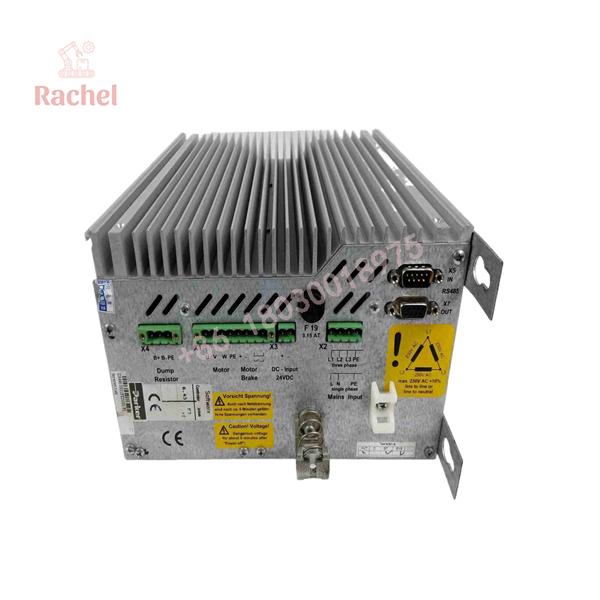
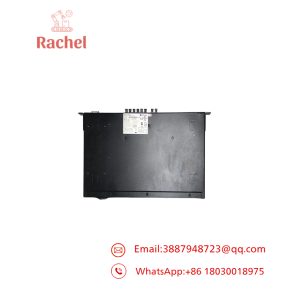
COMPAX 2500SF3
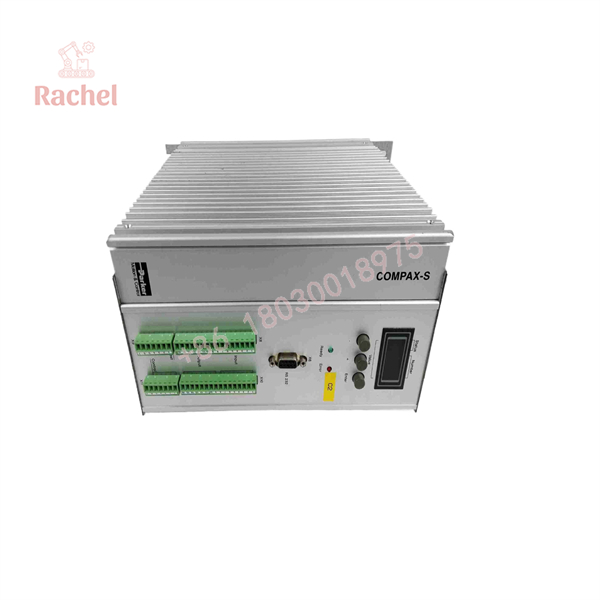
COMPAX 2500SF3
Transparency SOP: Quality Assurance & Testing
For a legacy servo drive, a successful power-up is not enough. The unit must be assessed for physical condition, electrical health, diagnostic behavior, and compatibility with the intended motor and controller.
1. Inbound Inspection
- Record the full model designation, serial number, hardware revision, and nameplate ratings.
- Inspect terminals, connectors, enclosure, cooling components, and signs of overheating.
- Confirm whether the unit is new surplus, used, or refurbished.
2. Controlled Power-Up
- Use a suitable test setup and the verified OEM supply voltage.
- Check the status display and diagnostic indicators.
- Confirm that the drive completes its startup sequence without abnormal behavior.
3. Electrical Checks
- Inspect power terminals, grounding, and control-supply connections.
- Check for visible component damage and signs of electrical stress.
- Do not apply insulation-resistance test voltages to connected electronic circuitry unless the OEM explicitly authorizes the procedure.
4. Feedback and Functional Testing
- Where a compatible test bench is available, verify supported feedback inputs and control signals.
- Test the drive with an appropriate motor or approved simulation equipment.
- Check fault handling and basic command response against the applicable manual.
5. Configuration and Final QC
- Record the hardware and software information available from the unit.
- Document test conditions and results.
- Package the drive to protect connectors and electronics during shipping.
- Provide available test records and written warranty terms.
Procurement note: Ask the supplier whether the unit was only powered on or was actually tested with a compatible motor and feedback system. Those are different levels of verification.
The Veteran’s Tech Trap Guide
Warning 1: Verify the suffix before ordering.
The exact 2500SF3 designation is not fully established by the available OEM references. Photograph the complete nameplate and compare it with the existing unit. A listing that simply says “COMPAX 2500” is not enough to establish compatibility.
Warning 2: Check the supply voltage.
The documented COMPAX 2500S has specific 230 VAC-class supply requirements. Do not assume that every COMPAX model accepts the same input voltage. Incorrect mains wiring can destroy the drive and create an electrical hazard.
Warning 3: Match the motor and feedback device.
Check the motor’s rated current, encoder or resolver type, feedback wiring, and braking requirements. A drive can power up correctly and still fault as soon as the motor is enabled if the feedback configuration is wrong.
Warning 4: Allow for DC bus discharge.
Servo drives can retain hazardous voltage after the incoming supply is disconnected. Follow the OEM’s specified discharge time and verify the absence of hazardous voltage before opening or servicing the unit. Do not rely on the display going dark as proof that the drive is safe.
Frequently Asked Questions (FAQ for Conversion)
Q1. What is the Parker COMPAX 2500SF3?
It is identified by secondary-market suppliers as a COMPAX-family servo drive. Parker’s published documentation covers the related COMPAX 2500S, but the exact SF3 suffix requires confirmation against the original nameplate and applicable manual.
Q2. Can I replace a COMPAX 2500SF3 with a COMPAX 2500S?
Not without a compatibility review. Compare the full model number, supply ratings, output-current requirements, feedback interfaces, connector assignments, and control configuration. Similar family names do not establish direct interchangeability.
Q3. What input voltage does the COMPAX 2500SF3 require?
The documented COMPAX 2500S uses a 230 VAC-class main supply and a separate 24 VDC control supply. Because the exact SF3 variant has not been independently verified, confirm the ratings on the unit’s nameplate before applying power.
Q4. Does the drive support Ethernet, EtherCAT, or PROFINET?
Do not assume so. The available legacy COMPAX 2500S documentation identifies older interface arrangements, including RS-485. Modern protocols listed for newer Parker drive families should not be attributed to this model without specific OEM documentation.
Q5. Is the COMPAX 2500SF3 hot-swappable?
No live-removal capability should be assumed. It is a powered servo drive with hazardous mains and DC bus circuitry. Isolate the supply, follow the OEM discharge procedure, and verify the circuit is safe before disconnecting the unit.
Q6. Does a 12-month warranty come standard with surplus stock?
No. Warranty terms depend on the supplier and the actual condition of the unit. Obtain written confirmation of the warranty period, coverage, exclusions, and return policy before placing the order.
Q7. Why might a surplus COMPAX drive cost less than a new OEM unit?
Surplus stock may originate from unused maintenance inventory, decommissioned equipment, or secondary-market suppliers. Lower pricing can be useful when maintaining legacy machinery, but it may come with limited traceability or manufacturer support. Request actual-unit photographs, test records, condition details, and warranty terms.

 Start Chat


