





Description
Core Product Summary
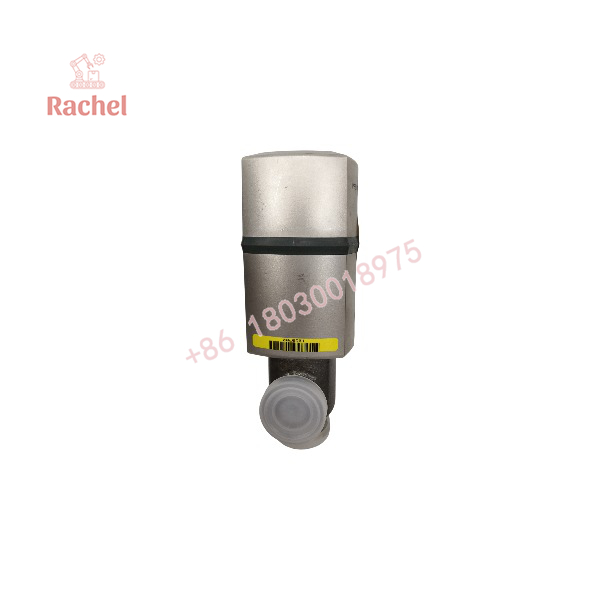
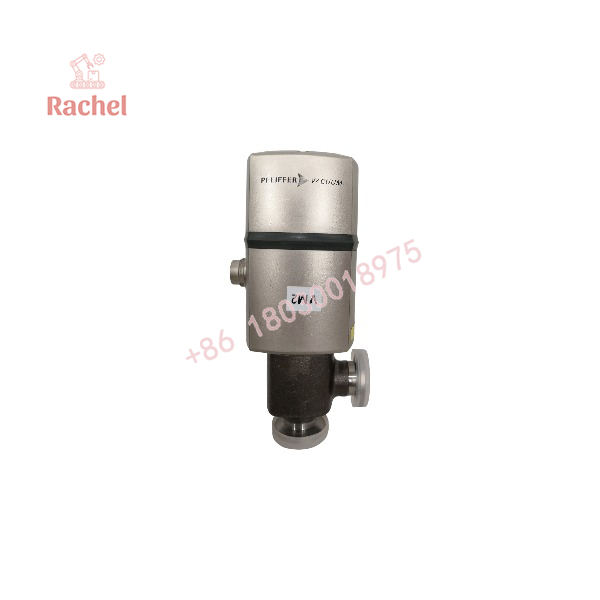
The Pfeiffer Vacuum EVR 116 is an electrically actuated control valve for vacuum systems. Used with a compatible controller, such as the Pfeiffer RVC 300, it can regulate pressure through variable gas flow on the upstream side or variable conductance on the downstream side. The valve incorporates motor-control electronics and accepts a 0–10 VDC control signal; the documentation also describes operation through an integrated interface or an optional RS-232 interface.
For replacement procurement, verify the complete nameplate information and ordering number. The EVR 116 technical documentation identifies PF I39 931 as the base part number, while the manufacturer’s product listing specifies PF I39 931 A for a DN 16 ISO-KF motorized variant.
Technical Specifications
| Parameter | Specification |
|---|---|
| Manufacturer | Pfeiffer Vacuum |
| Model | EVR 116 |
| Product type | Motorized gas control valve |
| Ordering number | PF I39 931 A; verify nameplate |
| Connection flange | DN 16 ISO-KF |
| Operating principle | Motorized needle-valve control |
| Pressure range | (1 \times 10^{-8}) mbar to 2.5 bar absolute |
| Leak tightness | (1 \times 10^{-9}) mbar·l/s |
| Gas flow range, inlet filter | (5 \times 10^{-6}) to 1,250 mbar·l/s |
| Gas flow range, inlet and vacuum-side filters | (5 \times 10^{-6}) to 1,000 mbar·l/s |
| Power supply | 24 VDC ±10% |
| Power consumption | 12 VA |
| Current consumption | 500 mA; 20–30 mA at rest |
| Control voltage | 0–10 VDC |
| Compatible controller documented | Pfeiffer Vacuum RVC 300 |
| Needle stroke | 11.5 mm |
| Closing / opening time | Approximately 3 / 4 seconds |
| Integrated status sensing | Valve open, valve closed, needle moving |
| Protection rating | IP40 |
| Operating ambient temperature | +5 to +40 °C |
| Valve housing material | Stainless steel 1.4435 |
| Needle material | Stainless steel 1.4301 |
| Filter material | Stainless steel 1.4404 |
| Seal material | FPM |
| Dead volume | 0.03 cm³ |
| Weight | Approximately 0.75 kg |
Flow specifications are based on the manufacturer’s stated test conditions for air. Actual flow depends on pressure differential, filter configuration, and process conditions. Confirm the installed variant before using these figures for engineering design.
Engineering Selection Highlights
- Wide gas-flow adjustment range: Designed for fine regulation across a broad range of gas throughput.
- Integrated motor-control electronics: Converts the control signal into a defined valve position.
- Analog control: Supports a 0–10 VDC control signal; the documented characteristic indicates the valve is closed below approximately 0.5 V and fully open at approximately 9 V.
- Vacuum-system pressure regulation: Supports upstream control through variable gas flow or downstream control through variable conductance.
- Valve-position feedback: Integrated sensors indicate open, closed, and moving states.
- Vacuum-compatible construction: Stainless-steel wetted components and FPM seals are documented. Verify chemical compatibility with the actual process gas.
- Controller integration: The RVC 300 is a documented controller option. Confirm interface type, wiring, and software configuration before commissioning.
Product Overview
Motorized valve for vacuum pressure control
The EVR 116 adjusts the position of its valve needle to regulate gas flow. In a vacuum system, this allows pressure control by changing the quantity of gas entering the system or by varying conductance between the process chamber and pumping system. The valve is designed to operate with a compatible control unit rather than as a standalone pressure controller.
Electrical control and feedback
The documented 0–10 VDC input provides analog valve-position control. The unit also includes status sensing for the open position, closed position, and needle movement. Pfeiffer documentation describes control through an integrated interface and an optional RS-232 interface, depending on the configuration. Verify the exact communication option on the installed unit before designing a connection.
Installation and maintenance considerations
The standard connection is DN 16 ISO-KF. The operating instructions recommend positioning the valve seat toward the vacuum chamber. Before installation, confirm the gas-flow direction, flange compatibility, supply polarity, controller configuration, and process-gas compatibility.
Contamination and seal wear can affect valve performance. The manufacturer identifies seals as wear items and warns against using the valve with liquid gases. Repairs and internal servicing should follow the manufacturer’s procedures and be performed by appropriately qualified personnel.
EVR116
EVR116
Applications
The EVR 116 is intended for vacuum-system gas-flow and pressure regulation, including:
- Vacuum chambers requiring controlled gas admission
- Upstream pressure-control arrangements
- Downstream pressure-control arrangements
- Laboratory and industrial vacuum equipment
- Vacuum process systems using compatible pressure controllers
- Gas-flow adjustment where a motorized valve position is required
The actual suitability of the valve depends on process gas, pressure conditions, required flow range, and controller configuration.
Frequently Asked Questions
1. What is the Pfeiffer Vacuum EVR116 used for?
It regulates gas flow and pressure in vacuum systems through motorized adjustment of the valve opening.
2. What is the operating voltage?
The specified supply is 24 VDC ±10%.
3. Which controller can operate the EVR116?
The RVC 300 is a documented compatible control unit. Confirm the required interface and configuration for the installed system.
4. What is the control-signal range?
The technical documentation specifies 0–10 VDC analog control. Interface-based control is also described for supported configurations.
5. What is the pressure range?
The documented range is (1 \times 10^{-8}) mbar to 2.5 bar absolute. Application limits must also account for the process gas and operating conditions.
6. What flange does the valve use?
The specified connection is DN 16 ISO-KF.
7. Can the EVR116 be used with liquid gases?
No. The operating instructions explicitly exclude liquid-gas applications.
8. What should be checked when replacing an existing unit?
Verify the full model and ordering number, flange type, electrical supply, control interface, flow requirements, seal compatibility, and the configuration of the existing controller.




 Start Chat


