





Description
Product Introduction
The Photonetics 3646 HE 1540 (often labeled as TUNICS-OM 3646 HE 15) is a premium tunable laser source module engineered for precision optical component testing and telecommunications R&D. Operating in the telecom C-band window around a 1540 nm center wavelength, this module features a High Energy (HE) optical design that delivers elevated output power combined with exceptional side-mode suppression and ultra-narrow linewidth.
Designed to slide into the Photonetics / NetTest modular optical test chassis, the 3646 HE 1540 utilizes a high-stability External Cavity Laser (ECL) architecture. It allows optical engineers to perform precise sweep-testing of DWDM multiplexers, optical filters, Fiber Bragg Gratings (FBG), and optical amplifiers (EDFAs) with high signal-to-noise performance.
Key Technical Specifications
| Parameter | Value |
|---|---|
| Manufacturer | Photonetics (later NetTest / GN Nettest) |
| Series / Platform | TUNICS-OM Modular Test System |
| Full Model Code | 3646 HE 1540 (3646 HE 15) |
| Laser Architecture | External Cavity Laser (ECL) |
| Center Wavelength | 1540 nm (Nominal C-band coverage) |
| Power Output Class | High Energy (HE) enhanced power emission |
| Optical Connector Type | FC/APC (angled physical contact, precision optical output) |
| Tuning Mechanism | Manual micro-meter dials (Power & Wavelength fine adjust) |
| External Modulation Input | SMA / BNC Modulation Port (Direct diode / Cavity mod) |
| Safety Class | Class 3B / IEC 825-1 Laser Product |
| Form Factor | Plug-in optical module for TUNICS-OM mainframe |
| Weight | Approx. 3.2 lbs (1.45 kg) |
Application Scenarios & The “Trench” Experience
Imagine a telecom component manufacturing lab testing high-density DWDM demux filters for long-haul optical networks. A low-power or wide-linewidth laser source introduces measurement blur, making it impossible to resolve sharp filter edge roll-offs or calculate precise Insertion Loss (IL) and Polarization Dependent Loss (PDL). Inserting a high-purity source like the Photonetics 3646 HE 1540 into the test rig delivers a high-energy 1540 nm beam with high side-mode suppression ratio (SMSR). The fine manual tuning controls enable engineers to lock onto precise ITU grid channels and analyze optical filter passbands with sub-picometer resolution.
- DWDM Component Characterization: Tests channel passbands, isolation, and insertion loss of multiplexers, demultiplexers, and AWGs around 1540 nm.
- Optical Fiber Sensor Interrogation: Serves as a narrow-linewidth optical pump/source for reading Fiber Bragg Grating (FBG) strain and temperature sensors.
- EDFA & Optical Amplifier Testing: Supplies high-power seed laser signals to evaluate gain profiles and noise figures in Erbium-Doped Fiber Amplifiers.
- Photonic R&D Laboratories: Used in university and industrial optics labs for coherent optical communication, interferometry, and laser spectroscopy.
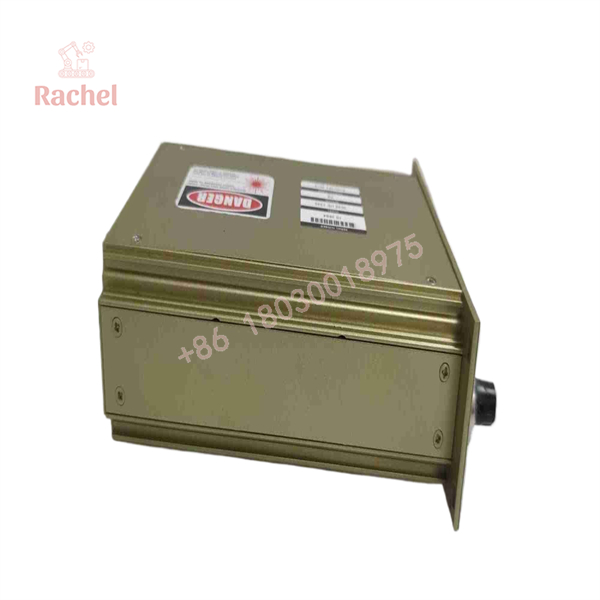
3646 HE 1540
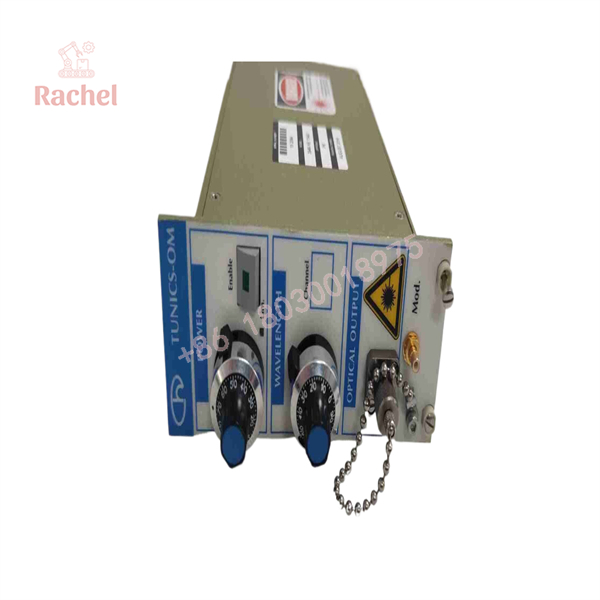
3646 HE 1540
Transparency SOP: Quality Assurance & Testing
Every Photonetics 3646 HE 1540 module undergoes comprehensive optical spectrum and power analysis before dispatch:
- Inbound Mechanical & Connector Audit: Visual inspection of housing metalwork, front panel lock screws, alignment pins, and optical connector ferrules under an optical microscope.
- Optical Ferrule Cleaning & Inspection: Precision dry and solvent cleaning of the FC/APC optical port to eliminate dust or oil contamination on the fiber end-face.
- Power Output & Stability Verification: Optical power meter measurement to confirm the module reaches its rated “High Energy” (HE) milliwatt emission level across its tuning range.
- Wavelength Accuracy & Linewidth Check: High-resolution Optical Spectrum Analyzer (OSA) sweep to verify 1540 nm center wavelength calibration, side-mode suppression ratio (SMSR >40 dB), and mode-hop-free operation.
- Modulation Port Functionality: External signal generator connected to the modulation port to confirm clean intensity/frequency response.
- ESD & Protective Optical Packaging: Fitted with protective dust caps, vacuum-sealed in anti-static ESD shielding bags, and cushioned in custom foam shipping cartons.
The Veteran’s Tech Trap Guide (Crucial Value-Add)
In our field experience, precision optical test modules require strict handling protocols to avoid permanent hardware damage:
- ⚠️ Laser Safety Warning (Class 3B Emission): Never look directly into the FC/APC optical output port or connected fiber end-faces! The 1540 nm infrared beam is completely invisible to the human eye but causes instant, permanent retinal damage. Always use an IR sensor card or optical power meter to verify laser emission.
- ❗ FC/APC Connector Mating Only: The optical connector on this module is polished to an 8∘ angle (FC/APC). Connecting a flat-polished FC/UPC or FC/PC cable will crush the fiber core, scratch the internal ferrule, and degrade the optical output power permanently.
- ⚠️ Avoid Forced Mechanical Over-Tuning: When adjusting the front-panel wavelength or power dials, stop immediately upon reaching the mechanical end-stops. Forcing the dials past their limit will slip internal grating gears or misalign the external cavity optics.
- ❗ Allow Thermal Stabilization Time: External Cavity Lasers (ECLs) are extremely sensitive to ambient temperature shifts. Allow the module to warm up inside the powered TUNICS mainframe for at least 20–30 minutes to achieve sub-picometer wavelength drift stability.
Frequently Asked Questions (FAQ)
Q: What does the designation “HE” stand for in the model code 3646 HE 1540?
A: “HE” stands for High Energy. This indicates the module is factory-built with an optimized optical amplifier or high-power laser diode configuration to output significantly higher optical milliwatts than standard TUNICS-OM modules.
Q: Can the 3646 HE 1540 module operate standalone without a mainframe?
A: No. The 3646 HE 1540 is a plug-in module designed to draw internal DC power supply rails and control signals from a Photonetics / NetTest TUNICS-OM modular mainframe chassis.
Q: How do I clean the optical output port on the front panel?
A: Use a dedicated 2.5 mm optical connector cleaning swab moistened with reagent-grade isopropyl alcohol (IPA), or an automated optical ferrule reel cleaner. Never use metal tools or compressed air cans that contain liquid propellants.
Q: Is the wavelength tuning on this module motorized or manual?
A: The 3646 HE series features precision front-panel mechanical tuning dials for manual wavelength and power adjustments, while also responding to mainframe bus commands when controlled remotely via GPIB.
Q: What warranty coverage is provided with this optical module?
A: We supply this unit with a full 12-month operational warranty. If the module experiences laser diode degradation, power drops, or mechanical tuning failure under normal operating parameters within one year, we provide an immediate repair or replacement.

 Start Chat


