





Description
Product Introduction
The ProSoft 3100-MCM is a single-slot in-rack Modbus communication module designed for the Allen-Bradley 1771 I/O chassis. Built to bridge the gap between Allen-Bradley PLC-5 processors and foreign field devices, the 3100-MCM enables seamless serial data exchange with power meters, variable frequency drives, flow computers, and third-party PLCs without adding complex external protocol converters.
Operating as an intelligent coprocessor on the 1771 backplane, the module handles all Modbus frame assembly, error checking (CRC/LRC), and polling tasks independently. This minimizes execution overhead on the main PLC-5 processor while exchanging data via standard Block Transfer Read/Write (BTR/BTW) ladder instructions.
Key Technical Specifications
| Parameter | Value |
|---|---|
| Rack Compatibility | Allen-Bradley 1771 I/O Chassis (PLC-5 Platform) |
| Protocol Support | Modbus RTU Protocol & Modbus ASCII Protocol |
| Operating Modes | Modbus Master, Modbus Slave, or Dual Slave |
| Serial Ports | 2x Isolated PRT1 & PRT2 Serial Ports |
| Physical Interface | RS-232, RS-422, or RS-485 (Jumper Configurable) |
| Baud Rates | 300 bps to 38.4 kbps |
| Backplane Current Draw | 0.5A @ 5V DC |
| Data Transfer Method | Block Transfer Read (BTR) / Block Transfer Write (BTW) |
| Operating Temperature | 0°C to 60°C (32°F to 140°F) |
| Storage Temperature | -40°C to 85°C (-40°F to 185°F) |
| Weight | Approx. 1.5 lbs (0.68 kg) |
Application Scenarios & The “Trench” Experience
Picture a power generation plant running a legacy Allen-Bradley PLC-5 controller that needs to gather real-time electrical data from a newly installed bank of digital power meters over RS-485 Modbus RTU. The PLC-5 lacks native Modbus communication ports, and replacing the entire control system would cost hundreds of thousands of dollars in revalidation and downtime. Sliding a ProSoft 3100-MCM module into an open 1771 slot allows the maintenance team to integrate all power meters into the existing ladder logic in a single shift—preserving the existing PLC-5 infrastructure while gaining full visibility over plant energy consumption.
- Power Generation & Substation Monitoring: Polls digital multimeters, protection relays, and transformer monitors over Modbus RTU.
- Oil & Gas Flow Measurement: Interfaces PLC-5 racks with field flow computers, tank gauging systems, and pressure transmitters.
- Variable Frequency Drive (VFD) Integration: Sends speed references and reads run/fault status from non-Allen-Bradley VFDs over RS-485 serial loops.
- SCADA & Building Automation Bridging: Acts as a Modbus Slave to feed PLC-5 memory registers directly to third-party DCS or SCADA master stations.
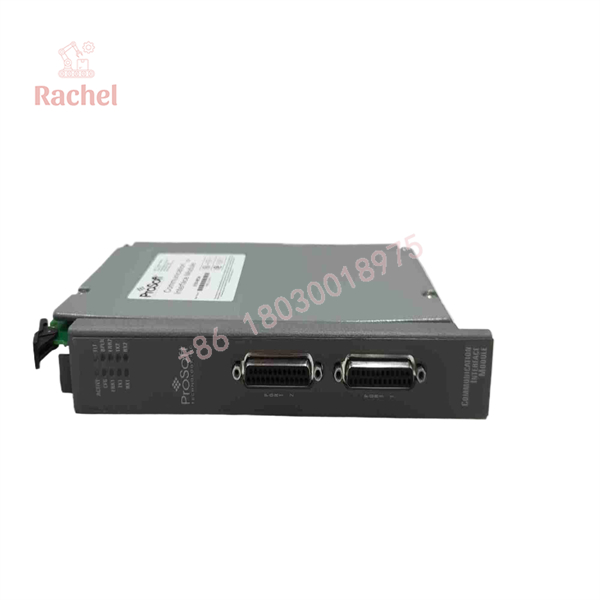
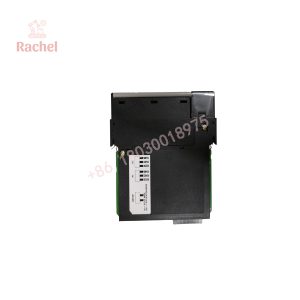
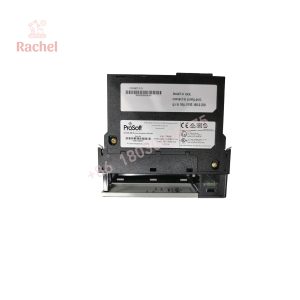
3100-MCM
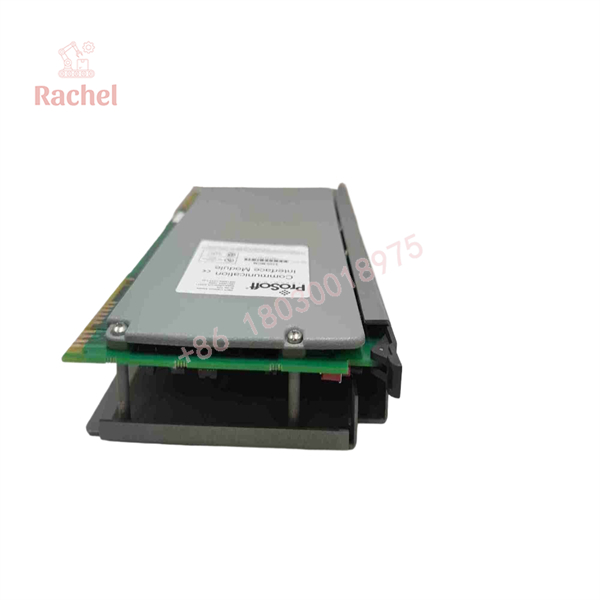
3100-MCM
Transparency SOP: Quality Assurance & Testing
Every ProSoft 3100-MCM module undergoes rigorous hardware and protocol testing before dispatch:
- Inbound Visual & Physical Audit: Inspection of 1771 edge connectors, jumper blocks, faceplate LEDs, and port terminal connections for wear or corrosion.
- Backplane Power & Self-Test: Module is seated in a 1771 chassis to verify proper LED boot sequences (OK, ERR, PRT1, PRT2 status indicators).
- Serial Port Loopback & Protocol Verification: Active Modbus Master and Slave testing on both serial ports using RS-232/RS-485 diagnostic software across all standard baud rates.
- PLC-5 Block Transfer Execution: Loaded into a live PLC-5 rack running Block Transfer Read (BTR) and Block Transfer Write (BTW) ladder logic to verify reliable backplane data buffer exchange.
- Port Isolation & Load Testing: High-noise stress test on serial lines to confirm line termination resistors and opto-isolation circuits function under load.
- Anti-Static & ESD Packaging: Sealed in static-shielding bags and packed in custom foam-lined cartons for transit protection.
The Veteran’s Tech Trap Guide (Crucial Value-Add)
In our field experience, configuring 1771-based ProSoft modules involves several common pitfalls:
- ⚠️ Configure Hardware Jumpers Before Installation: Physical jumpers on the module circuit board dictate whether PRT1 and PRT2 operate as RS-232, RS-422, or RS-485. Setting these jumpers incorrectly will result in total communication failure or RS-485 driver contention.
- ❗ Verify Termination Resistors on RS-485 Networks: When wiring multi-drop RS-485 loops, ensure proper 120Ω termination resistors are placed across the physical ends of the line. Omitting termination causes signal reflection errors and intermittent
CRC Faults. - ⚠️ Double-Check Block Transfer Buffers: The module relies on precise BTR/BTW block lengths (64 words standard) in the PLC-5 program. A mismatch between the module configuration block size and the PLC ladder logic transfer length will halt communication updates entirely.
- ❗ Watch Out for Modbus Addressing Offsets: ProSoft modules use standard Modbus 1-based register addressing (e.g.,
40001), whereas some field devices use 0-based addressing (40000). If your data appears shifted by one register, check the address offset settings in your command list.
Frequently Asked Questions (FAQ)
Q: What is the main difference between the ProSoft 3100-MCM and the 3100-MCHI?
A: The 3100-MCM is specifically configured for Modbus Master/Slave serial protocols, whereas the 3100-MCHI is designed for general-purpose custom serial ASCII communications.
Q: Do I need special software to program the 3100-MCM?
A: No. The module is configured entirely by writing configuration data blocks from the PLC-5 memory registers to the module using standard Block Transfer Write (BTW) instructions in RSLogix 5.
Q: Can both ports on the 3100-MCM operate as Modbus Masters simultaneously?
A: Yes. Depending on the firmware configuration loaded via the block transfer initialization, both ports can be configured independently as Masters, Slaves, or a combination of both.
Q: Is the 3100-MCM compatible with ControlLogix systems?
A: Not directly in a 1756 rack. However, if the 3100-MCM remains in a 1771 rack connected via 1756-RIO or 1756-DHRIO modules, ControlLogix can access the module data over Remote I/O block transfers. (For direct 1756 racks, use a ProSoft MVI56-MCM).
Q: What warranty coverage comes with this module?
A: We cover this unit with a full 12-month operational warranty. If it experiences hardware defects or communication failures under standard operating conditions within one year, we provide an immediate replacement or repair.

 Start Chat


