





Description
Product Introduction & Engineering Value
When a vessel’s automation system depends on older SAM Electronics/Lyngsø Marine I/O hardware, the main engineering problem is rarely finding a generic analog input card. The important issue is reproducing the original signal interface, channel allocation, scaling, and physical integration. The SAM Electronics AEM402 provides eight differential analog input channels for voltage and current measurement, with four channels additionally supporting resistance/PT100 measurement.
The module uses a 12-bit analog-to-digital converter with selectable gain from 1 to 256, allowing relatively different field-signal levels to be conditioned before conversion. Its documented marine approvals and 0–55°C operating range also make the original module relevant to shipboard control and monitoring applications.
Technical Specifications
Analog Input Architecture
- Number of inputs: 8 differential analog inputs
- Channels 1–4: ±10 V or 0–20 mA
- Channels 5–8: ±10 V, 0/4–20 mA, or resistance/PT100
- Resistance range: PT100 / approximately 0–2 kΩ
- A/D converter: 12-bit
- Specified conversion accuracy: 10-bit accuracy at 12-bit resolution
- Input gain: Selectable from 1 to 256
- Resistance excitation/current pulse: Adjustable to 5 mA, 10 mA, or 20 mA
- Expansion: Up to six additional MXM401 and/or MXM402 modules
- Supply rails: +5 V, +15 V, and −15 V
- Ambient operating temperature: 0 to 55°C
- Weight: Approximately 550 g
- Mounting: DIN European-standard support rails
- Type number: 962.004.200
The original technical sheet gives the module’s power-rail requirements as +5 V/5 mA, +15 V/5 mA, and −15 V/43 mA.
Important: Do not interpret the AEM402 as a conventional modern 24 VDC universal AI module. Its documented internal supply rails and signal-conditioning architecture are specific to the older Lyngsø Marine/SAM Electronics system.
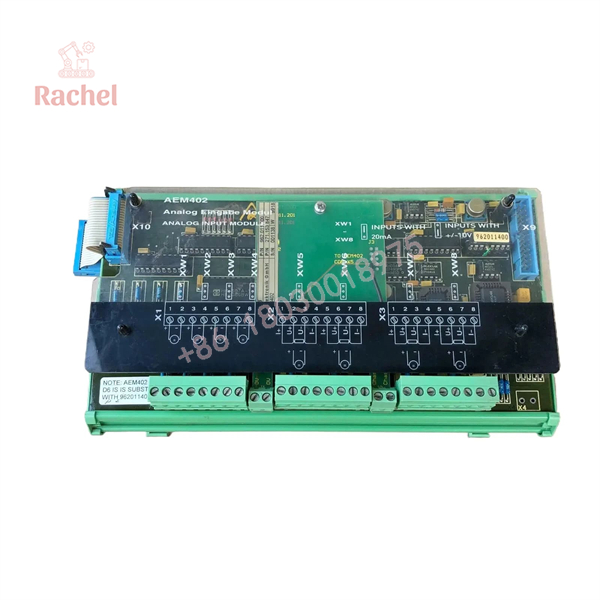
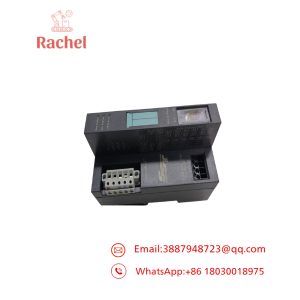
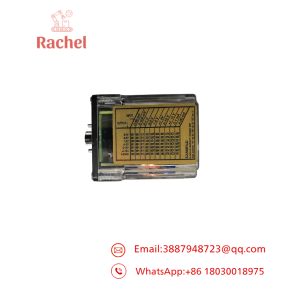
AEM402
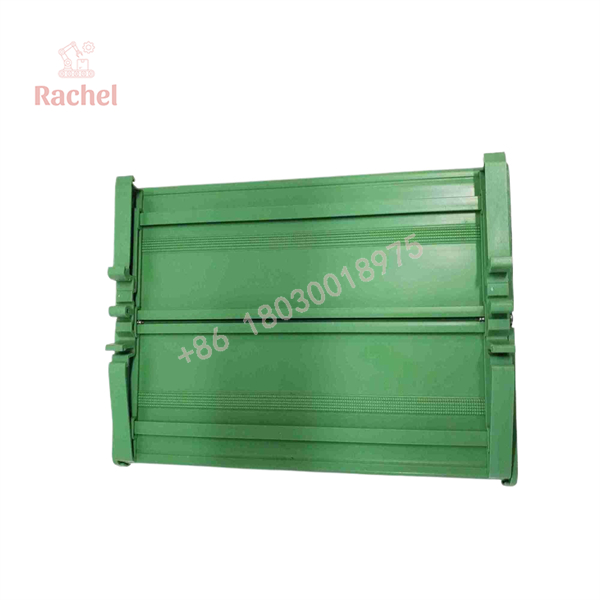
AEM402
Signal Processing and System Integration
The AEM402 uses a multiplexed analog acquisition architecture. Field inputs are routed through selectable voltage/current interfaces before amplification and conversion by the 12-bit ADC. The published circuit documentation shows selectable amplification stages and separate input conditioning for voltage, current, and resistance measurement.
For resistance measurement, the module provides an adjustable current pulse. This allows applicable channels to be used for PT100 or other resistance-based measurements rather than limiting the card to current-loop instrumentation.
The module can also serve as the base interface for expansion with MXM401 and/or MXM402 modules. The documented architecture allows up to six additional expansion modules through the expansion connection.
This matters when replacing an installed unit: the replacement should be checked against the original system’s expansion arrangement rather than evaluated as an isolated eight-channel analog card.
Field Application & Marine Automation Experience
Typical Vessel Application
A common AEM402 application is the acquisition of engine-room instrumentation such as pressure transmitters, temperature sensors, tank-level transmitters, and machinery monitoring signals. Existing Lyngsø Marine terminal documentation shows AEM402 channels assigned to 4–20 mA pressure/level signals and PT100 temperature measurements, including main-engine and tank-related instrumentation.
Practical Integration Scenarios
Engine-room monitoring
4–20 mA transmitters can be connected to AEM402 channels for pressure, level, or other process measurements. The terminal documentation provides examples of AEM402 channels assigned to starting-air pressure and tank-level measurement.
Machinery temperature monitoring
PT100 sensors can use the resistance-capable AEM402 channels. Existing system documentation shows channels assigned to main-engine and machinery temperature measurements using PT100 inputs.
Legacy vessel retrofit
For vessels retaining older SAM Electronics/Lyngsø Marine automation equipment, an original AEM402 can be preferable to redesigning the complete analog acquisition layer. The physical module, terminal wiring, signal conditioning, and system configuration can remain aligned with the original installation.
QA & Testing SOP
For a replacement AEM402, visual inspection alone is not sufficient.
Step 1 — Identity Verification
Confirm all available markings against the vessel’s installed documentation:
- SAM Electronics identification
- Lyngsø Marine identification
- 962.004.200
- 271.138.714.H or the exact revision appearing on the original module
- Serial number and revision markings
Commercial listings show that AEM402 units can carry different SAM/Lyngsø identification references, so the complete label should be recorded before procurement.
Step 2 — Physical Inspection
Check:
- PCB condition
- Terminal strips
- Connector pins
- Rail-mounting hardware
- Corrosion or salt contamination
- Evidence of previous repair
- Burn marks or overheated components
- Damaged adjustment components
Marine service history makes corrosion and connector condition particularly important.
Step 3 — Electrical Testing
A proper bench test should verify the applicable input paths using known voltage/current sources and resistance simulation.
Recommended checks include:
- ±10 V input response
- 0–20 mA input response
- 4–20 mA response on applicable channels
- PT100/resistance measurement channels
- ADC conversion behavior
- Input-channel isolation where applicable
- Supply-rail current draw
- Expansion interface operation
New Surplus Verification
For a unit sold as New Surplus, verify that the physical module matches the ordered part number and that its condition has not been confused with tested-used inventory. “Factory sealed” and “factory warranty” are not interchangeable claims; one current listing explicitly notes that factory warranty may not apply even to a sealed unit.
Veteran’s Tech Trap Guide
⚠️ Trap 1 — Buying by “AEM402” Alone
AEM402 is the model designation, but available documentation and commercial listings associate it with specific part numbers such as 962.004.200 and 271.138.714.H. Always compare the complete label before approving a replacement.
⚠️ Trap 2 — Assuming All Eight Channels Are Identical
They are not configured identically in the documented design.
Channels 1–4 support voltage/current measurement, while channels 5–8 additionally support resistance/PT100 measurement. Substituting a channel without checking the original wiring and sensor type can create a measurement problem even when the replacement card itself is functional.
⚠️ Trap 3 — Treating It Like a Modern 24 VDC AI Card
The AEM402 documentation specifies +5 V, +15 V, and −15 V supply rails. A generic 24 VDC analog input module is therefore not a drop-in substitute simply because it accepts 4–20 mA signals.
PRO TIP: Before removing the failed card, photograph the module label, terminal wiring, jumper/switch positions, and expansion connection. For an obsolete marine automation system, this information can be more valuable than the model number alone.
Frequently Asked Questions
What is the SAM Electronics AEM402?
The AEM402 is an analog input module used in SAM Electronics/Lyngsø Marine shipboard automation systems. It provides eight differential analog inputs and uses a 12-bit A/D converter.
What is the part number for the AEM402?
The technical documentation identifies 962.004.200 as the Lyngsø Marine type number. Commercial listings also associate the AEM402 with SAM Electronics part number 271.138.714.H. Always verify the physical label because revision-specific identifiers may differ.
Does the AEM402 support 4–20 mA signals?
Yes. The documented configuration supports 0/4–20 mA measurement on applicable analog input channels. Channels 1–4 are specified for ±10 V or 0–20 mA, while channels 5–8 also support resistance/PT100 measurement.
Can the AEM402 measure PT100?
Yes. Four of the eight inputs are documented as capable of resistance measurement, including PT100, with the applicable measurement range extending to approximately 0–2 kΩ.
Is a used AEM402 suitable as a replacement?
It can be, provided the exact part number/revision and system configuration match and the module passes electrical testing. For marine spare parts, condition should be stated explicitly as new surplus, refurbished, or tested used rather than relying on the model number alone.
How should New Surplus AEM402 authenticity be verified?
Check the original manufacturer’s markings, type number, SAM/Lyngsø part number, serial number, physical construction, and documentation. Request clear photographs of the actual module rather than relying only on catalog images. New-surplus status also does not automatically mean that the original manufacturer’s warranty remains valid.
What is the warranty on a replacement AEM402?
Warranty terms depend on the supplier and the actual condition of the unit. A quotation should state the warranty period and whether it covers functional failure after installation, rather than simply describing the item as “tested” or “new.”

 Start Chat


